

Formula 1 arrived in Madrid with enormous expectations. The new MADRING had been presented as one of the major projects of the season — a modern hybrid street circuit, a vast event complex, the spectacular La Monumental banking and an entirely new television backdrop. After its first race weekend, however, the impression was far less straightforward. Parts of the circuit certainly look impressive, but the race itself was rather dull, genuine opportunities for close racing were limited, and Madrid itself was almost lost behind the advertising, walls, tunnels and technical infrastructure.
Kimi Antonelli became the first winner of a Spanish Grand Prix at MADRING. The Mercedes driver claimed his eighth victory of the season ahead of Max Verstappen and Lando Norris. Yet for much of the first half of the race Norris appeared to be the strongest contender for victory, with the final outcome shaped largely by the timing of the Virtual Safety Car and the subsequent pit-stop strategy.
Qualifying was better than the race
The practice sessions had already demonstrated that mistakes at MADRING could be costly. FP3 featured several serious incidents: Lewis Hamilton crashed his Ferrari, while Oliver Bearman’s high-speed accident caused a second red flag. The damage to Bearman’s car was sufficient to prevent him from taking part in qualifying.
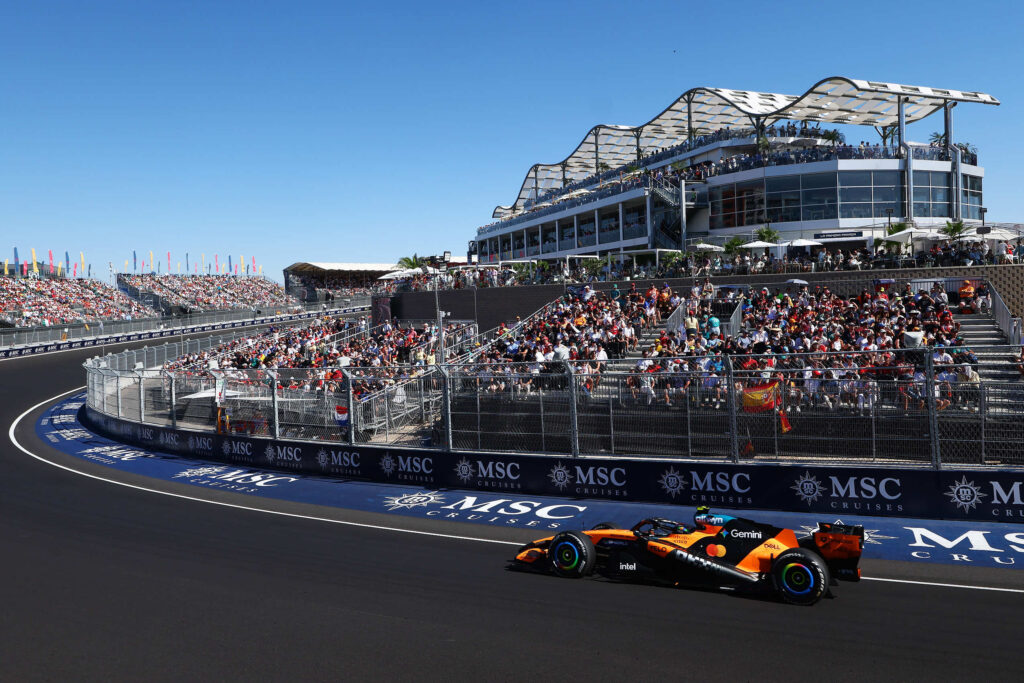
Over a single lap, MADRING proved considerably more interesting than it would over a race distance. Qualifying was extremely close, with the battle for the first pole position in the circuit’s history continuing until the final seconds. Hamilton surprisingly led after the opening Q3 attempts before Antonelli moved ahead, but Norris ultimately had the final word.
The McLaren driver produced a 1:31.824 lap to beat Antonelli by just 0.011 seconds. Norris later described it as one of the best laps of his career. Verstappen qualified third, 0.140 seconds behind, followed by Hamilton, Charles Leclerc, George Russell and Oscar Piastri.
For the Spanish crowd, qualifying was considerably less successful: both Carlos Sainz and Fernando Alonso were eliminated in Q1. Heading into Sunday, the obvious expectation was a fight between Norris and Antonelli, with Verstappen waiting to take advantage. Yet another question was already becoming difficult to ignore: where exactly were they going to overtake?
The race: plenty of strategy, not much racing
The start produced one of the liveliest sequences of the entire Grand Prix. Norris retained the lead, while Antonelli and Verstappen almost immediately found themselves using areas outside the intended racing line. Antonelli cut the opening chicanes and returned a position, while Verstappen was also forced to let rivals through after his own excursion in order to avoid a possible penalty.
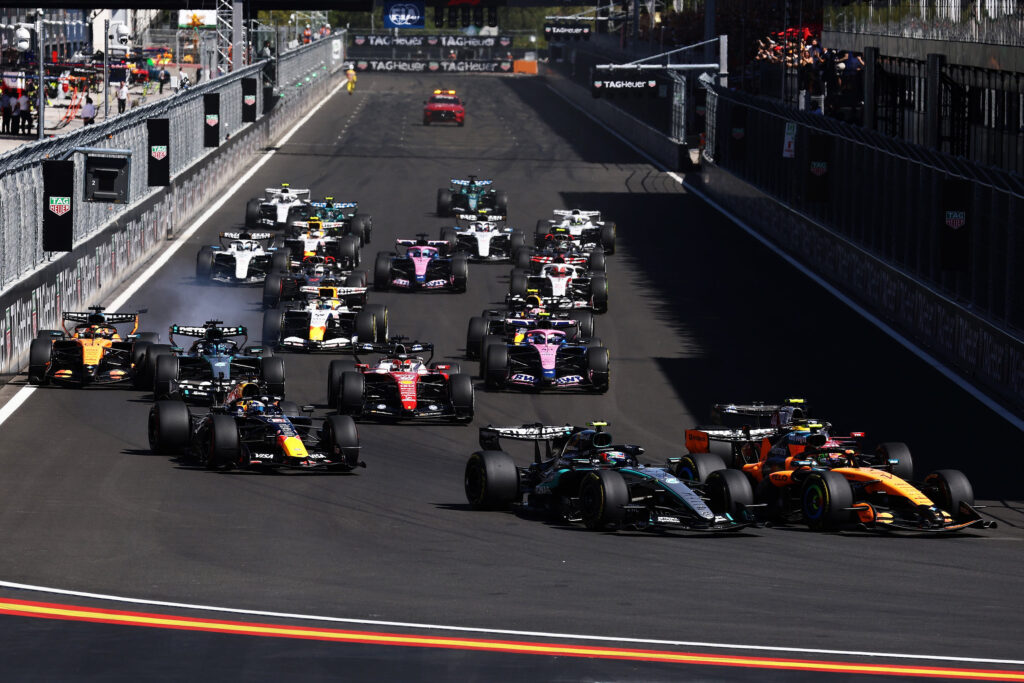
Those opening laps highlighted one of MADRING’s more frustrating characteristics. Throughout the weekend, drivers repeatedly failed to negotiate the chicane as intended and simply cut across it. When this happens occasionally, it is part of motor racing. When viewers repeatedly watch the same sequence, however, it quickly becomes tedious. Instead of watching an overtaking battle, the audience is left waiting for the stewards to decide whether a driver gained an advantage and should return a position.
Meanwhile, Norris began to pull clear. By lap ten he had built an advantage of around five seconds over Antonelli, with Verstappen roughly another six seconds behind the Mercedes. McLaren appeared to have the race firmly under control.
Hamilton’s race unravelled much earlier. He reported brake problems in the opening laps, rapidly lost pace and soon retired. Brake trouble later stopped Lance Stroll’s Aston Martin as well.
Stroll’s stoppage on lap 15 triggered the decisive moment of the Grand Prix: the Virtual Safety Car. Antonelli, Verstappen and Russell were able to take advantage and pit. Norris had already passed the pit entry when the VSC was deployed and therefore missed the opportunity. McLaren brought him in one lap later, but the VSC ended just before his stop, while a slow pit stop further compounded the damage. The former race leader returned to the circuit in fifth.
In practical terms, the first Madrid Grand Prix was decided at that moment. After the race, Norris pointed out that there was little he could have done differently: he had started from pole, controlled the race and lost the lead through circumstances outside his control. He also suggested that the way the VSC operates should be reconsidered when its timing can provide such a substantial advantage simply because one driver happens to be in a more favourable part of the circuit.
Leclerc, who had started on the hard tyre, remained on track and formally inherited the lead while Ferrari hoped for another neutralisation. It never arrived. After his late pit stop, Antonelli took definitive control of the race.
There was at least the prospect of a genuine fight among the leaders towards the end. Norris closed right onto Verstappen, with only fractions of a second separating them in the closing laps, but even with a clear pace advantage the McLaren was unable to complete a pass around this layout.
Antonelli calmly brought the Mercedes home to victory. Verstappen finished second, 4.351 seconds behind, with Norris third and only 0.738 seconds behind the Red Bull. Leclerc finished fourth and Russell fifth.
Perhaps the most revealing assessment came from the winner himself, who acknowledged after the race that Norris had deserved victory on pure pace. It summed up the Grand Prix rather well: the result was decided not by an attack for the lead, but by a handful of seconds surrounding the deployment of the Virtual Safety Car.
A good television picture does not necessarily make a good circuit
MADRING’s main visual attraction is La Monumental, the long banked section with an inclination of up to 24 per cent. For television, it works extremely well. The cars carry considerable speed through the banking, the cameras emphasise the circuit’s profile and the large grandstands create an impressive sense of scale.
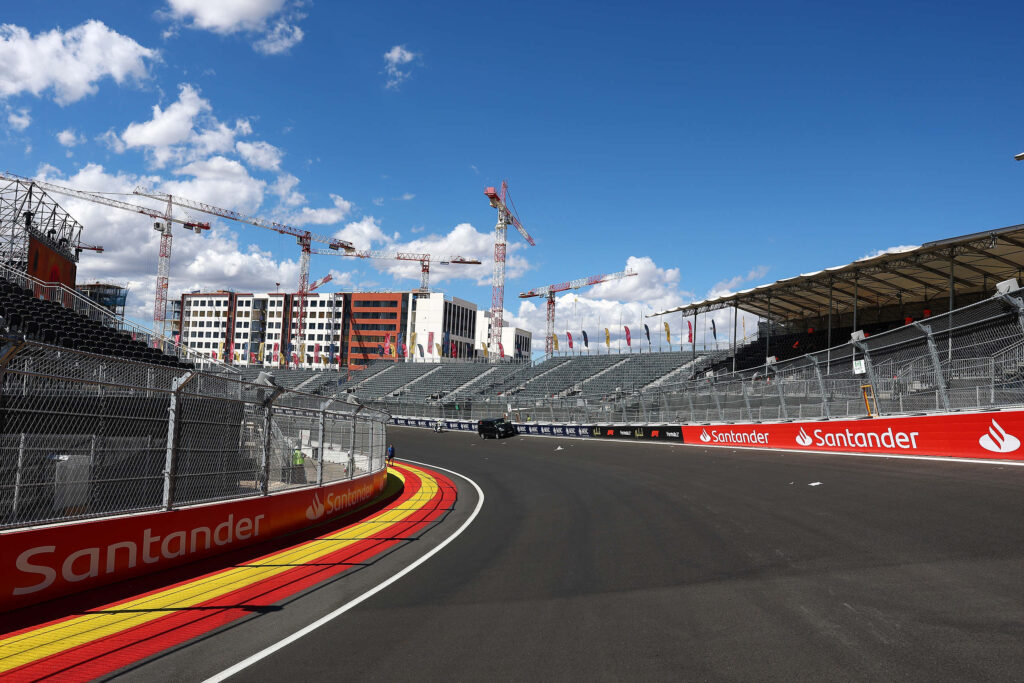
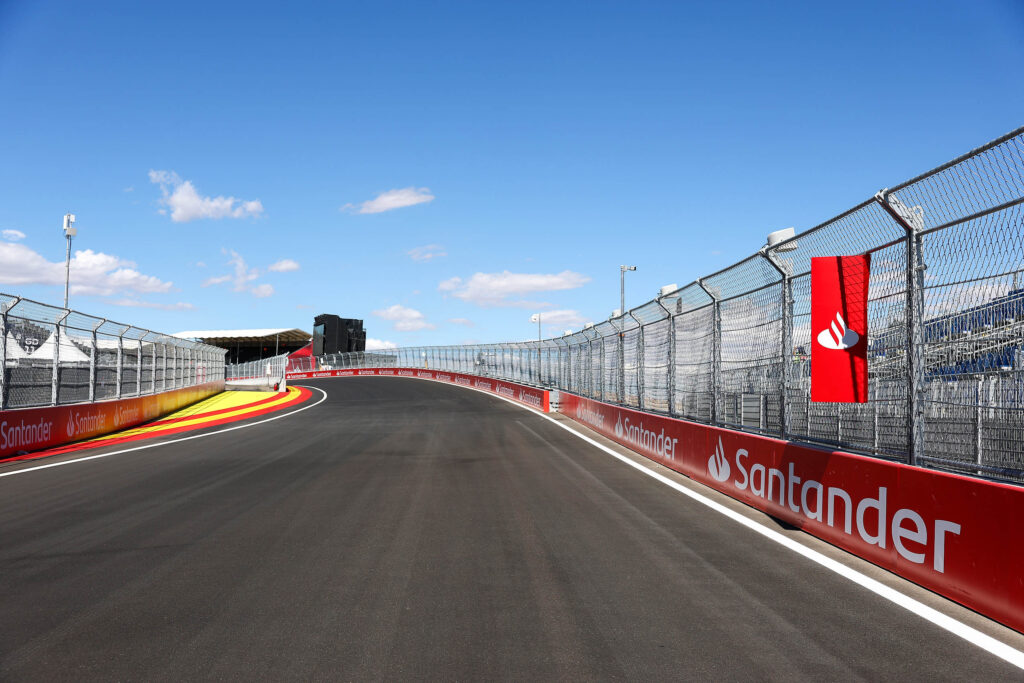
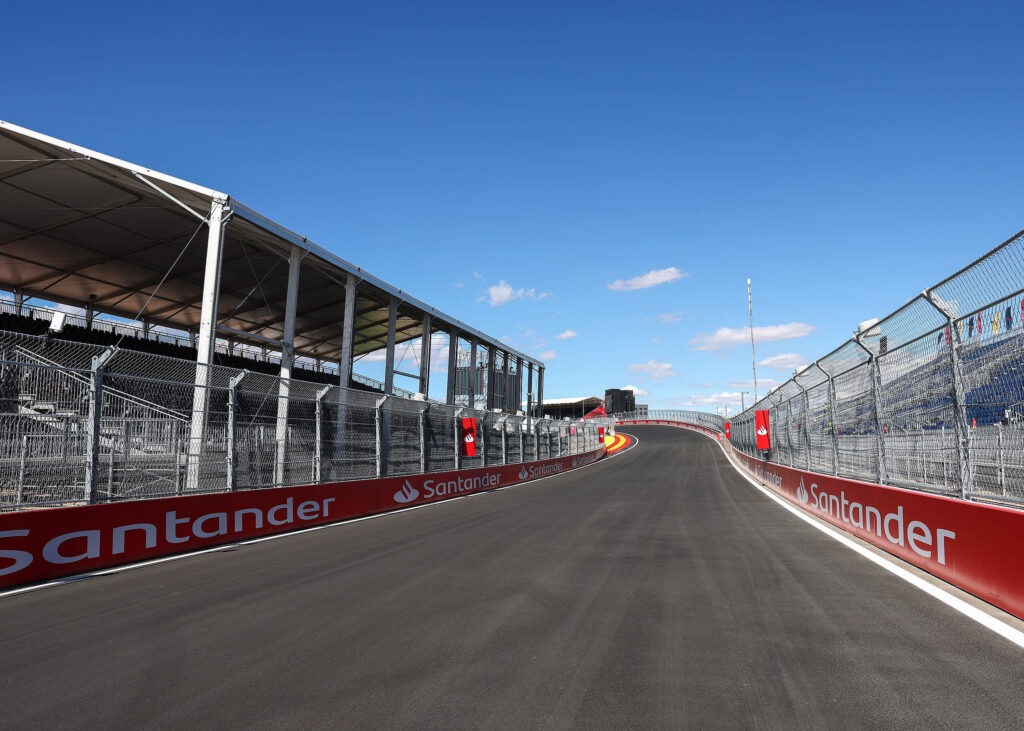
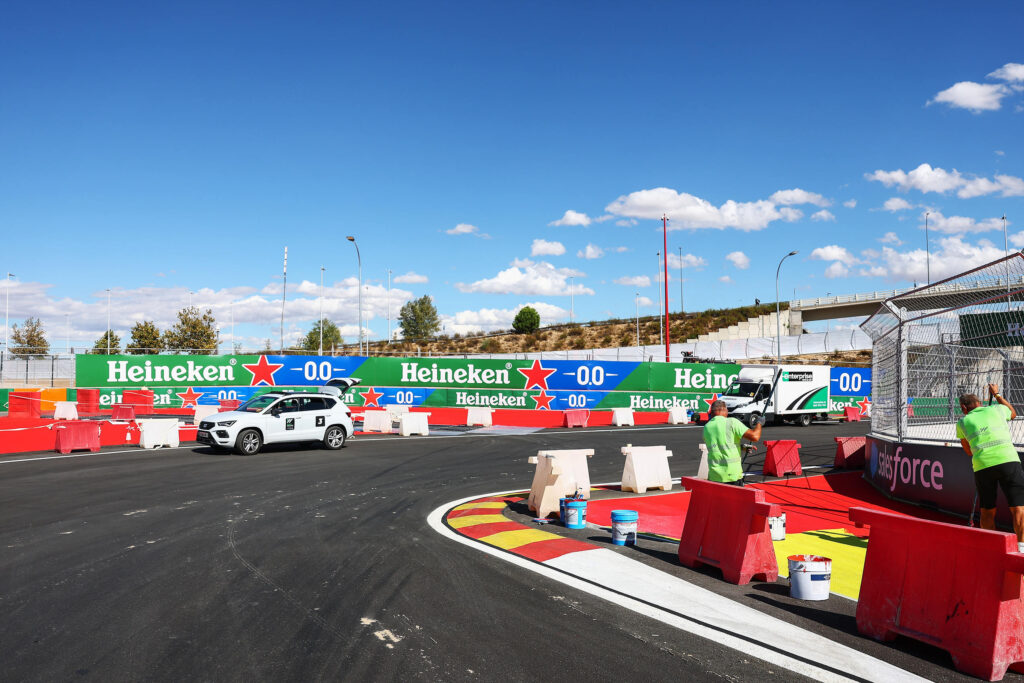
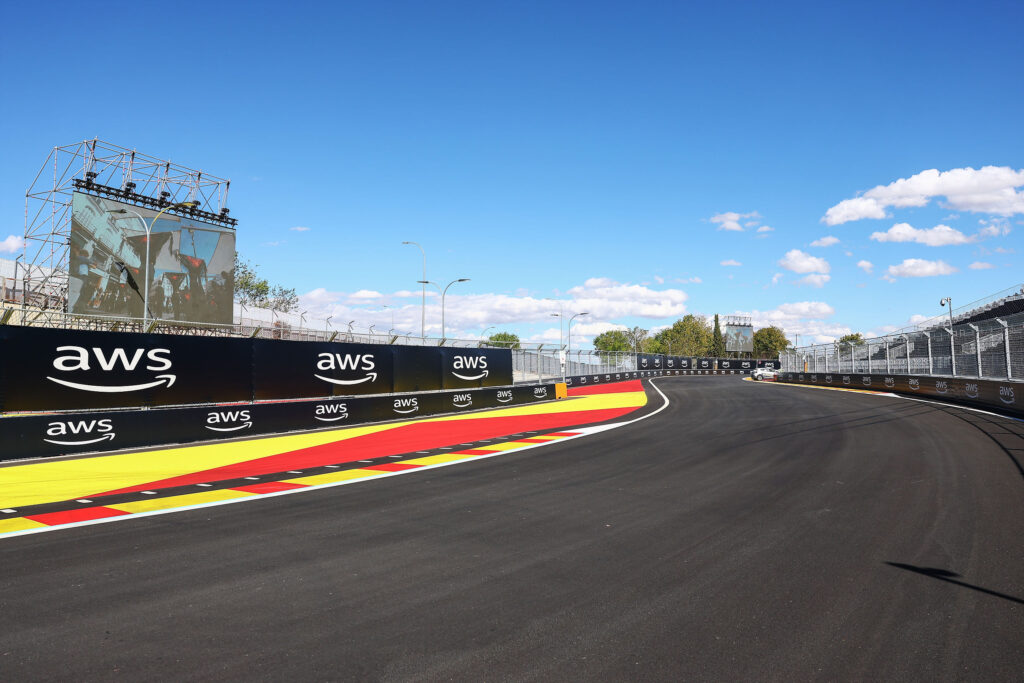
This is where MADRING begins to develop an identity of its own. But a spectacular television shot and a good racing circuit are not necessarily the same thing. Even before the race, Verstappen had questioned where meaningful overtaking was supposed to happen. After the Grand Prix, the criticism became more specific.
Norris suggested removing Turns 18 and 19, extending the straight and creating a more pronounced hairpin that could at least provide drivers with a genuine overtaking opportunity. The fact that changes to the layout were being discussed almost immediately after the inaugural Grand Prix says a great deal about the problem. Reports following the race indicated that the MADRING organisers were prepared to consider FIA recommendations and modifications to several sections before Formula 1 returns.
There is another unusual feature: the exceptionally long pit lane. The time loss during a stop is so substantial that teams have an additional incentive to minimise the number of pit stops. On a circuit already short of natural overtaking opportunities, this is another factor that can encourage a predictable race.
The inaugural Grand Prix ultimately confirmed what had already become apparent during practice: MADRING is interesting over one fast lap, but considerably less convincing over a full race distance.
Plenty of advertising, not much Madrid
MADRING’s most obvious visual weakness is that the circuit currently has remarkably little connection with the city whose name it carries. A street or hybrid street circuit normally draws at least part of its identity from its surroundings. Monaco cannot be separated from Monte Carlo, Baku from its old city and broad avenues, or Singapore from its illuminated urban skyline.
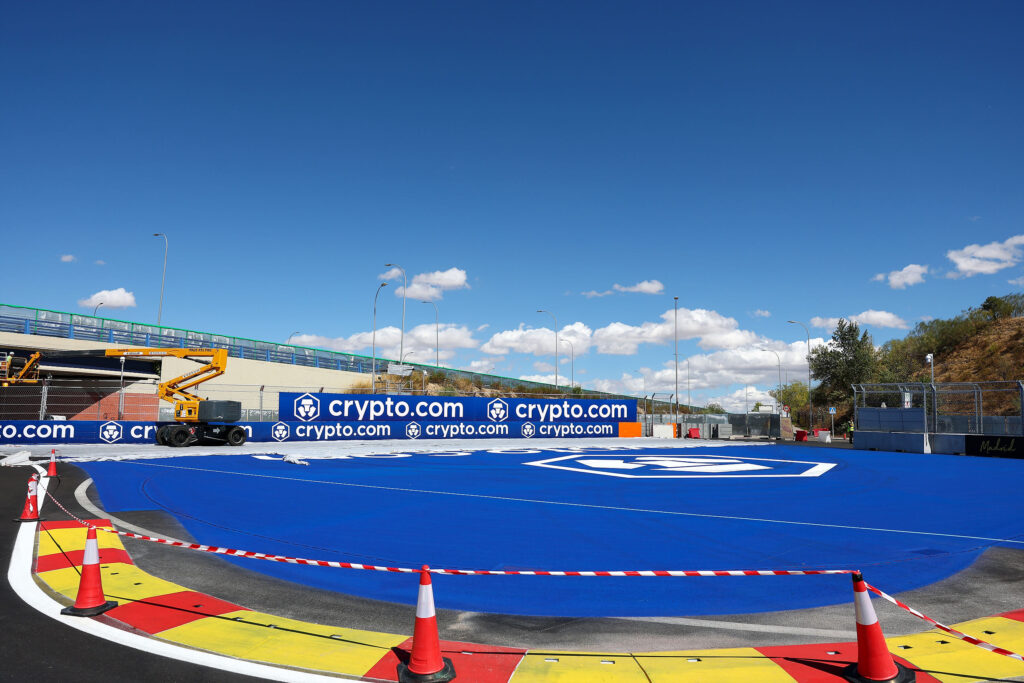
In Madrid, large sections of the circuit run through an environment almost completely enclosed by advertising structures, temporary buildings and technical infrastructure. Cars repeatedly travel between walls, disappear into tunnel sections and emerge into another advertising corridor. As a result, viewers often know that the race is taking place in Madrid primarily because of the event’s name rather than because the city is visible on screen.
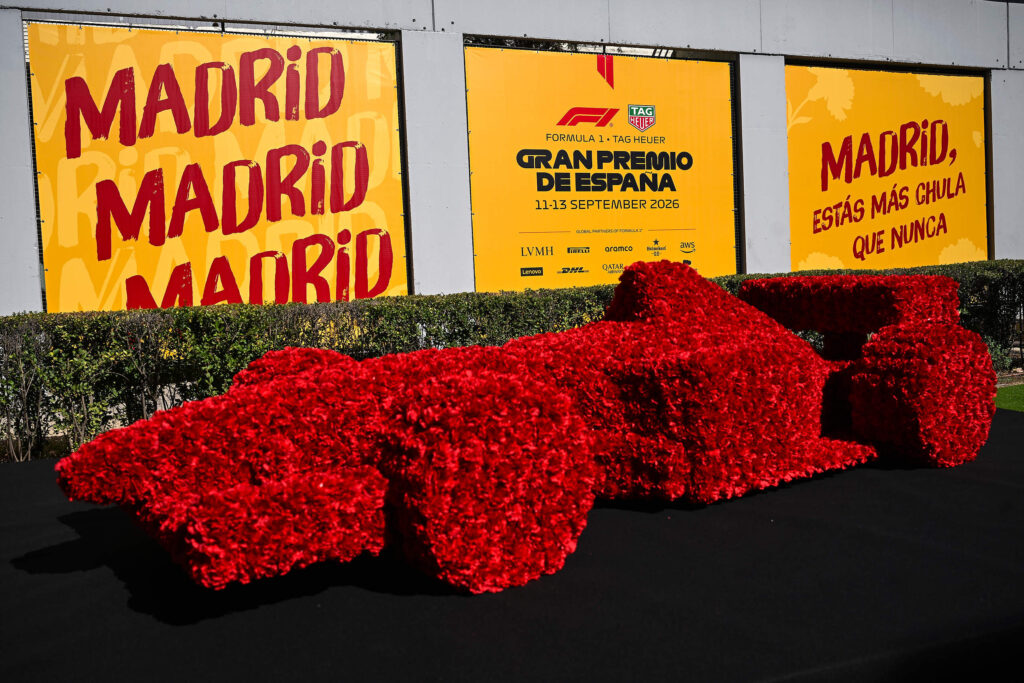
This is particularly striking given how heavily the organisers promote the Madrid identity. The city itself appears on screen considerably less often than the sponsors’ logos. For now, MADRING feels more like a huge Formula 1 commercial complex located in Madrid than a circuit that genuinely belongs to Madrid.
MADRING and Sochi: a similar concept, a different result
Watching MADRING inevitably brings back memories of Formula 1’s former Russian venue in Sochi. The circuits themselves are different, but the underlying concept has clear similarities. Sochi Autodrom was not a conventional street circuit either: it ran through the Olympic Park, between sporting venues and purpose-built infrastructure. MADRING similarly combines existing roads and newly constructed sections within a major event complex.
Sochi was quite rightly criticised as a racing layout. Its numerous 90-degree corners and limited overtaking opportunities did not always produce exciting Grands Prix. In that respect, MADRING encountered a surprisingly similar problem at its first attempt.
The Russian event, however, was organised with considerably greater coherence. The Olympic Park had been designed to handle enormous numbers of people, providing broad open spaces, straightforward pedestrian routes, large entrance areas, a railway station beside the complex and enough room to separate the movement of spectators, personnel and event participants. The circuit also remained visually connected to its location, with Olympic venues, open spaces and the mountains regularly appearing in television coverage.
Sochi was also an artificially created environment, but the Olympic Park worked with the Grand Prix. Madrid currently produces the opposite impression: the circuit often appears to have been squeezed between existing infrastructure and then enclosed by advertising. Sochi could certainly be criticised for the quality of its racing, but as a major international event the Russian Grand Prix felt considerably more coherent.
Questions over safety
Despite its modern appearance, MADRING is not necessarily as forgiving as the television images might suggest. Several sections are relatively narrow, fast stretches are enclosed by walls and technical structures, and there is little open space available. The crashes involving Hamilton and, particularly, Bearman during practice demonstrated that mistakes here can carry a significant price.
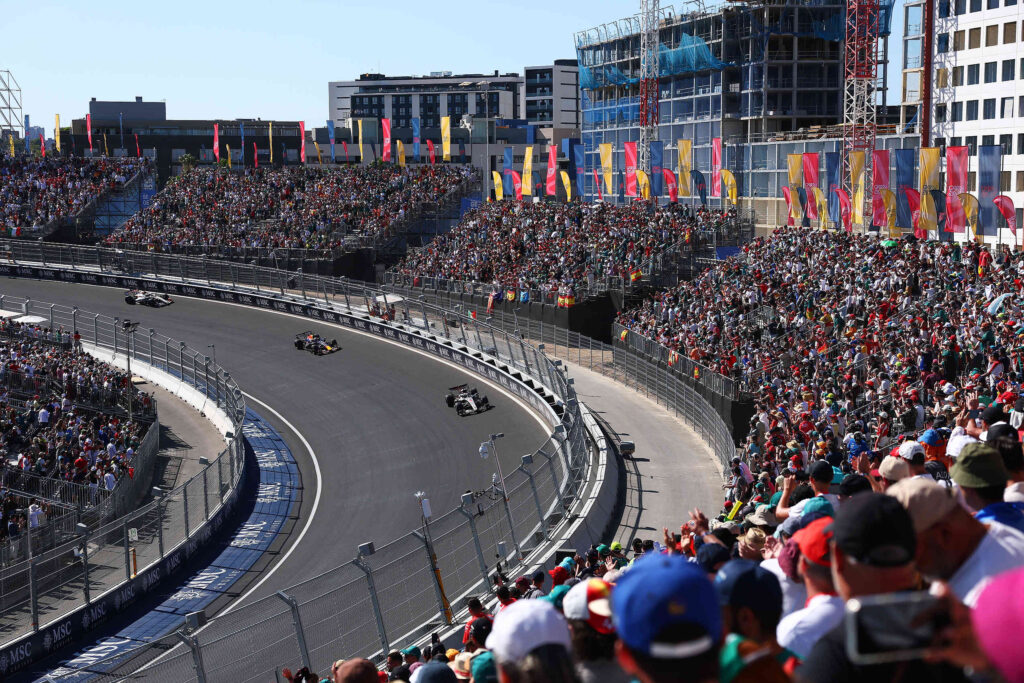
The repeated cutting of the chicane should not be dismissed merely as an amusing racing detail either. If drivers systematically fail to use the trajectory intended by the circuit design, the design itself deserves examination. It is both tedious for viewers and raises questions about how successfully that section works under real racing conditions.
A new circuit is ultimately tested not by computer simulation or promotional presentations, but by real racing. The first weekend suggested that some aspects of MADRING will still require adjustment.
The photographer incident
The most troubling organisational incident of the weekend involved an accredited photographer. Images circulated widely on social media showing a man, identified as a police officer by the author of the original post, restraining a photographer with an arm around the neck area. Spanish photographer and journalist Daniel Atán Romar reported that the confrontation occurred when the photographer attempted to reach the podium through a passage designated for photographers.
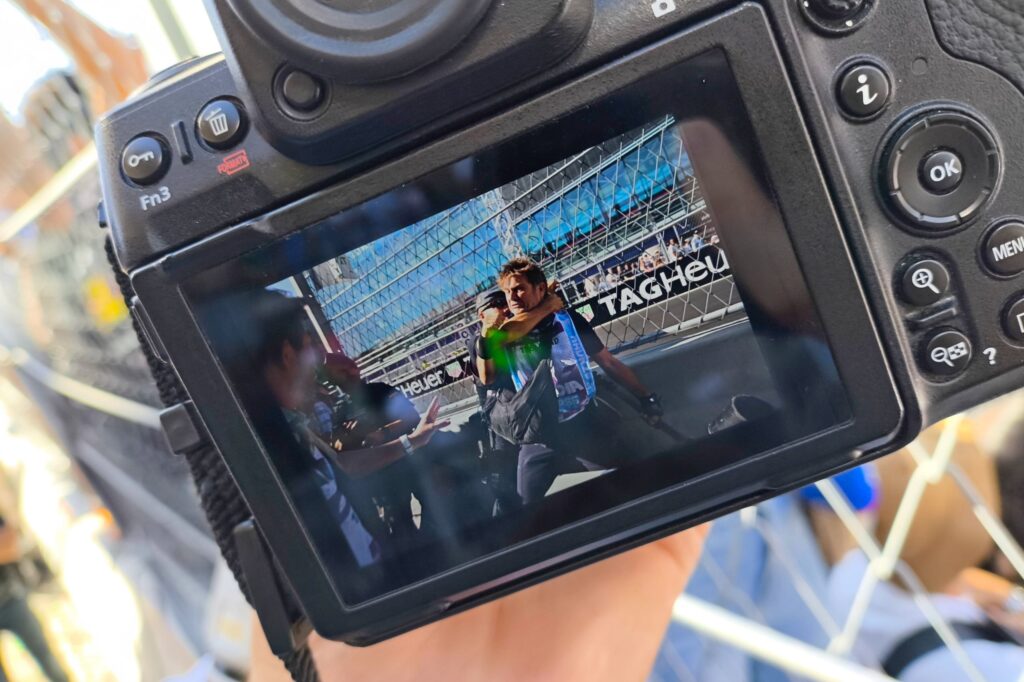
A single image cannot establish everything that happened immediately before the physical confrontation. Nevertheless, the nature of the restraint requires an explanation. An accredited photographer is not simply a spectator carrying a camera. A photographer is a professional participant in a Grand Prix weekend, just as journalists, engineers, mechanics, team personnel and race officials are participants in their respective roles. Each has different responsibilities and access permissions, but a disagreement over a route should be resolved by checking accreditation, explaining the correct access and, if necessary, refusing entry to a particular area — not by applying force to someone’s neck.
Imagine for a moment that a security officer had restrained Lewis Hamilton or a team principal in the same way simply because of a misunderstanding over where that person was permitted to go. It would immediately become an international controversy. The fact that the person involved was a photographer should not alter the basic standard of acceptable treatment.
At a major international sporting event, routine control of accredited personnel is better handled by properly trained event-security staff. They should understand accreditation categories, media routes and the rules governing access to the paddock, pit lane and podium area. More importantly, they should be prepared to work calmly with large numbers of people. Police are essential for public safety, crime prevention and genuine security threats. A disagreement over which route an accredited photographer should use to reach the podium should never become a use-of-force incident.
Among photographers and fans who regularly work at or attend Spanish circuits, stories about difficult interactions with individual police and security personnel have long formed part of paddock folklore — and rarely in a positive sense.
Another episode from a MotoGP weekend in Barcelona several years ago remains particularly memorable. Vehicles belonging to members of the media were broken into in the media parking area and professional photographic equipment was stolen. For a motorsport photographer, this is not simply the loss of a camera: it can mean losing tens of thousands of euros’ worth of essential professional equipment. Little practical assistance followed, and colleagues and members of racing teams ultimately helped affected media personnel with equipment so that they could continue working during the event.
Against that background, the MADRING incident leaves an especially unpleasant impression. When professional equipment is stolen from members of the media, the practical capabilities of the police can appear remarkably limited. Yet when an accredited photographer attempts to reach the place where he is supposed to work, physical determination suddenly seems considerably easier to find.
Spain has no shortage of genuine police work, from theft and property crime to the problem of unlawful property occupation commonly known as ocupación. Police presence at a major international event is unquestionably necessary, but primarily where police powers are actually required. Routine interaction with accredited participants should be handled by trained specialists capable of distinguishing a genuine security threat from an ordinary working situation.
MADRING’s first test
It would be unfair to condemn MADRING permanently after a single Grand Prix. The circuit has potential. La Monumental looks excellent on television, a qualifying lap genuinely demands precision, and the location beside a huge city with extensive public transport offers obvious advantages.
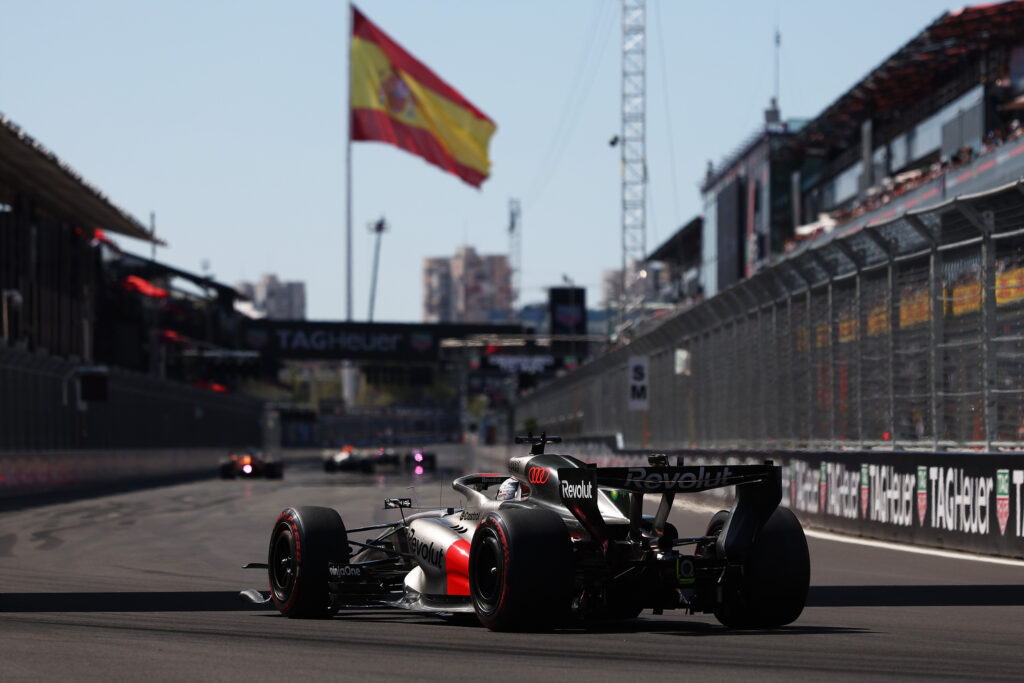
But the first weekend also exposed weaknesses. Qualifying was considerably more interesting than the race itself. Overtaking opportunities were limited, the enormous pit lane further discouraged strategic variety, and repeated chicane-cutting quickly changed from an unusual feature into a monotonous sight. Behind the walls, tunnels and enormous amount of advertising, Madrid itself almost disappeared.
This is no longer simply an impression formed during the inaugural race. Drivers are openly calling for changes, while the organisers appear willing to modify the layout before Formula 1 returns. To some extent that is a normal part of developing an entirely new circuit, but it is also an acknowledgement that the original MADRING configuration was far from perfect.
Questions over aspects of safety and organisation remain, while the incident involving the photographer cannot simply be dismissed as a normal first-year problem.
The inaugural MADRING was modern, expensive and, at times, genuinely spectacular. For now, however, it is considerably more convincing as a Formula 1 television and commercial product than as an outstanding racing circuit.
The next Spanish Grand Prix will show whether the organisers can retain the spectacular presentation, address the weaknesses of the layout and add what matters most — better racing and organisation worthy of a Formula 1 World Championship event.

