

The 2026 MotoGP United States Grand Prix in Austin was far more than just another stop on the calendar. It was the kind of race weekend that clarified the balance of power in the championship and gave the season a sharper narrative. Circuit of the Americas has long been regarded as one of the toughest tracks in MotoGP: a demanding venue that combines heavy braking zones, rapid changes of direction, long acceleration zones, and relentless physical pressure on both rider and machine. On a circuit like this, true title contenders are exposed in full view.
That was exactly what happened in Texas. The American round delivered everything fans expect from MotoGP: a tight qualifying battle, a dramatic sprint, crashes, penalties, shifting momentum, and a commanding Sunday performance in which Marco Bezzecchi turned Aprilia’s pace into a statement victory. After Austin, it became much harder to describe his form as simply a strong start to the season. This weekend suggested something much more serious — a genuine championship charge.
Austin as a Test of Maturity
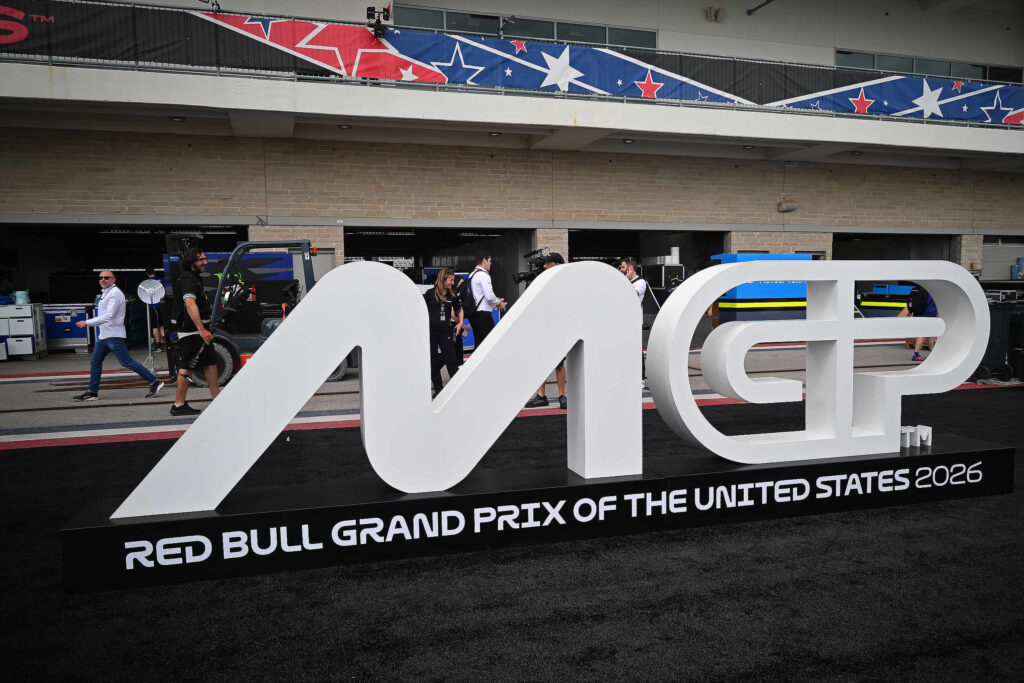
Circuit of the Americas has never been a track where sheer horsepower or bravery alone can win the race. It demands a broader package: precision, patience, tire management, physical endurance, and the ability to stay balanced through every sector. That is why Austin has often served as a revealing checkpoint in the season. It shows who is ready for a title fight and who is still relying on flashes of speed rather than consistent control.
Against that backdrop, Aprilia looked especially convincing. The team arrived in the United States already carrying momentum, but in Texas it showed the full range of its strengths. The bike had one-lap speed, stability over race distance, and the versatility to suit different riding styles. It allowed its riders to attack when necessary, defend when required, and control the pace when it mattered most. That combination became the foundation of an almost perfect weekend.
Qualifying Set the Tone
Saturday morning immediately made one thing clear: this would not be a straightforward weekend for any one manufacturer. Qualifying was intense, and from the first runs it was obvious that the fight at the front was tightly packed. Ducati remained a threat, KTM stayed in the picture, and Aprilia continued to underline that its progress was anything but accidental.
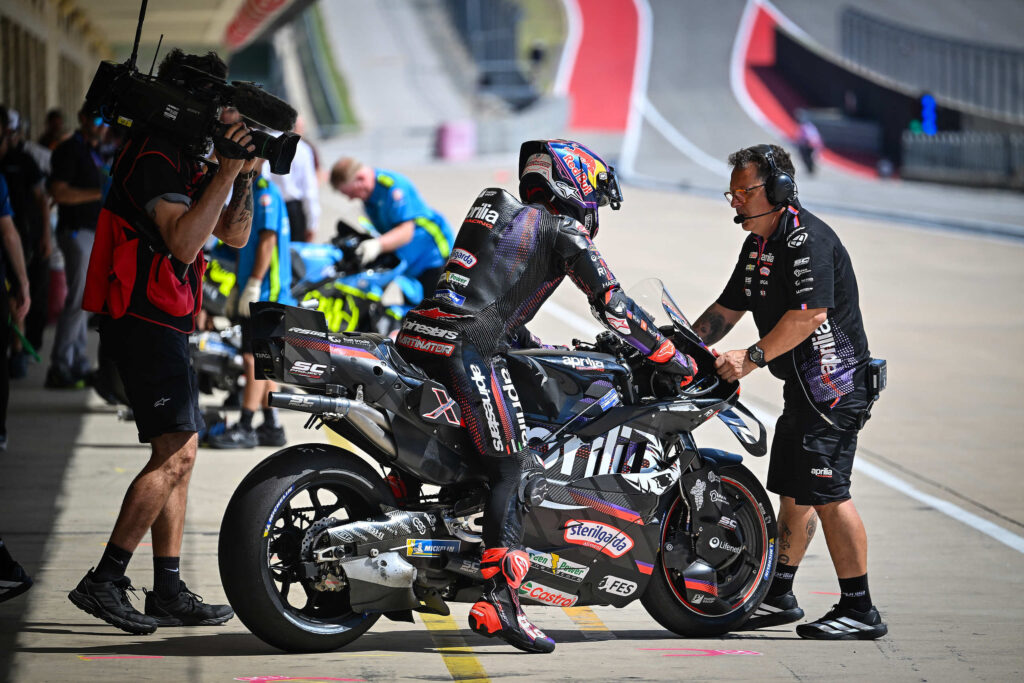
Qualifying in modern MotoGP is no longer only about securing track position. It is also about sending a message. In Austin, that message was simple: the front group is so closely matched that even the smallest mistake can reshape the weekend. Raw pace is no longer enough. Riders and teams must now combine speed with discipline, and that truth was visible in every session.
For Aprilia, qualifying did not represent total domination, but it did confirm something perhaps even more important. The team had the speed to fight for the top positions in every type of session. Over the course of the weekend, that consistency would prove more valuable than any single starting slot.
The Sprint Turned Saturday Into Drama
If qualifying created tension, the sprint transformed it into full drama. The short race in Austin was nervous, aggressive, and chaotic — exactly the sort of contest the circuit tends to produce. There was little room for patience. Riders had to commit early, force the issue, and accept that risk was part of the bargain.
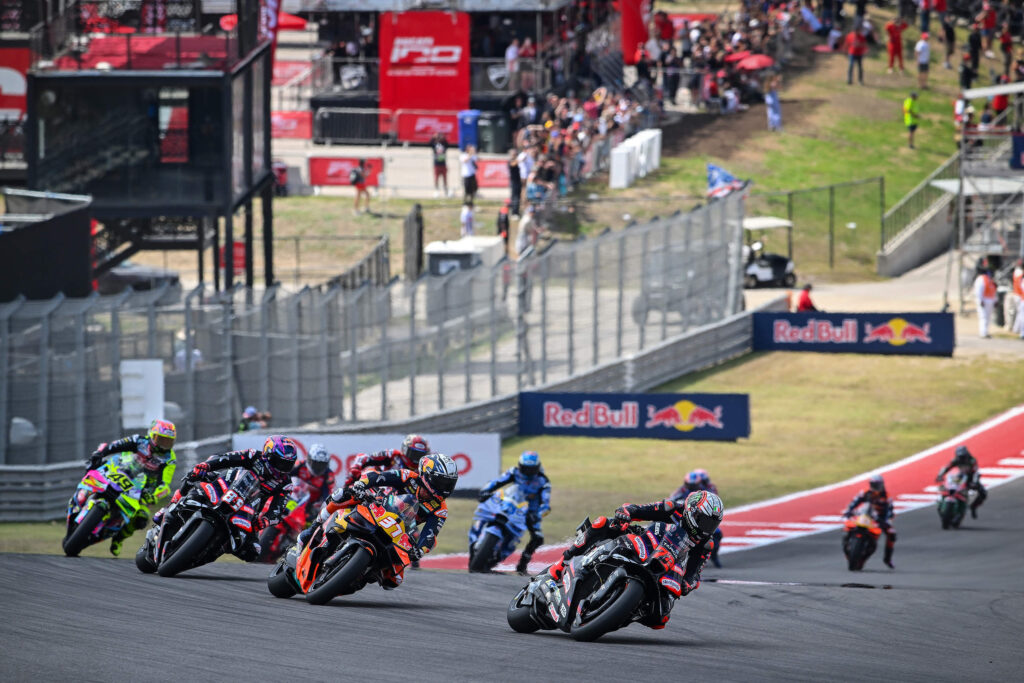
Jorge Martin emerged as the central figure of the sprint. His victory was hugely significant for Aprilia, because it showed that the team could win not only with smooth race pace, but also in the sharp, high-pressure format of a sprint race where the margin for error is even smaller. Martin rode with confidence and aggression, handled the pressure, and took control when the decisive moment came.
Yet another equally important storyline came from Marco Bezzecchi’s disappointment. After a difficult sequence and a crash, his Saturday ended far below expectations. On the surface, that might have looked like the first real warning sign for the championship leader. Internal pressure was building, momentum seemed to shift toward his teammate, and the weekend suddenly appeared more complicated. In the end, however, that setback only made his response on Sunday more meaningful.
The sprint became a condensed version of everything Austin had to offer. There were incidents, penalties, broken hopes, and abrupt turns in the story. For some riders it was the beginning of a rise; for others it was a missed opportunity. But the key takeaway was that Aprilia remained at the center of the weekend’s narrative. Even when the race turned messy, the team still set the tone.
Sunday Belonged to Bezzecchi
The main race brought far greater clarity. If Saturday had left room for interpretation, Sunday removed it completely. Marco Bezzecchi delivered the kind of performance that separates a fast rider from a true championship leader.
After his sprint disappointment, a response was expected. What no one could be certain of was the scale of that response. Bezzecchi answered in the strongest possible way. He did not appear rushed, emotional, or desperate to erase Saturday with immediate aggression. Instead, he rode with authority from the start, settled into his rhythm, and gradually removed any realistic chance for his rivals to challenge him.
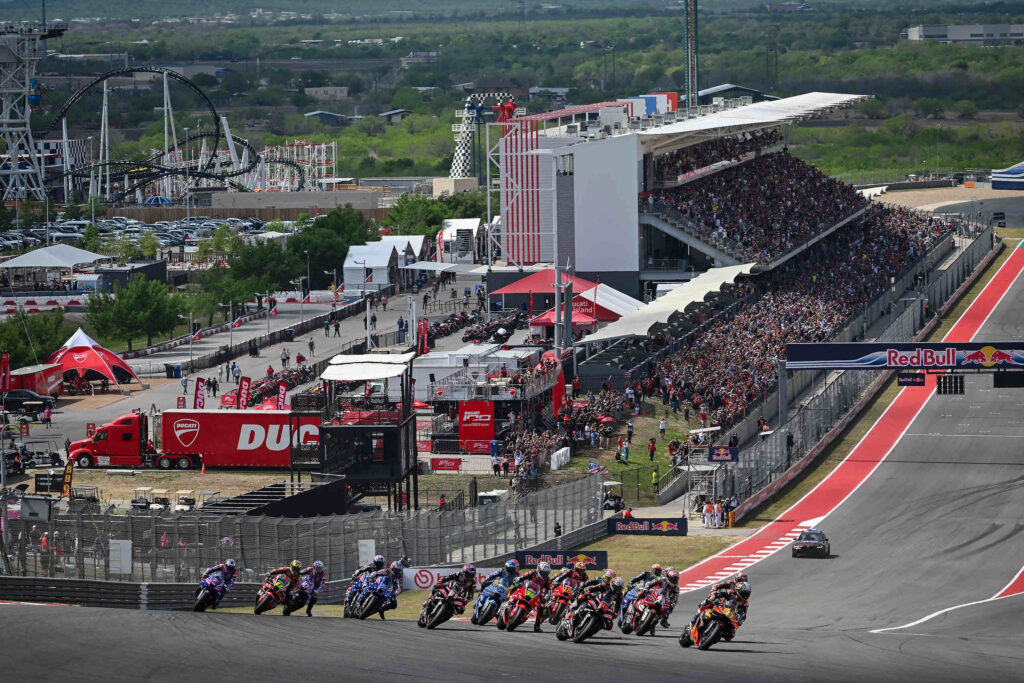
What made his victory so impressive was its lack of chaos. This was not a win built on others’ misfortune or an unpredictable race circumstance. It was controlled, mature, and methodical. He looked like a rider who understood both his own limit and the exact potential of the machine beneath him. Performances of that kind are often the real building blocks of a championship campaign.
In Austin, Bezzecchi showed more than just speed. He showed emotional stability. Many riders, after a disappointing sprint, would have forced the issue on Sunday and paid the price for impatience. Bezzecchi chose the opposite approach. He stayed calm, trusted the pace, and turned the Grand Prix into a personal declaration of strength.
Aprilia’s One-Two Was the Defining Outcome
Bezzecchi’s victory and Martin’s second place made the United States Grand Prix almost perfect for Aprilia. Add Martin’s sprint success, and the conclusion becomes impossible to avoid: Aprilia was the strongest force of the weekend. And the significance lies not only in the points scored or the trophies collected, but in the way those results were achieved.
Aprilia looked competitive in every major area that defines modern MotoGP. It had the pace to qualify at the front, the aggression to win a sprint, and the balance to dominate across full race distance. For the rest of the field, that is perhaps the most troubling message of all. This no longer looks like a bike with isolated strengths. It looks like the most complete package in the championship.
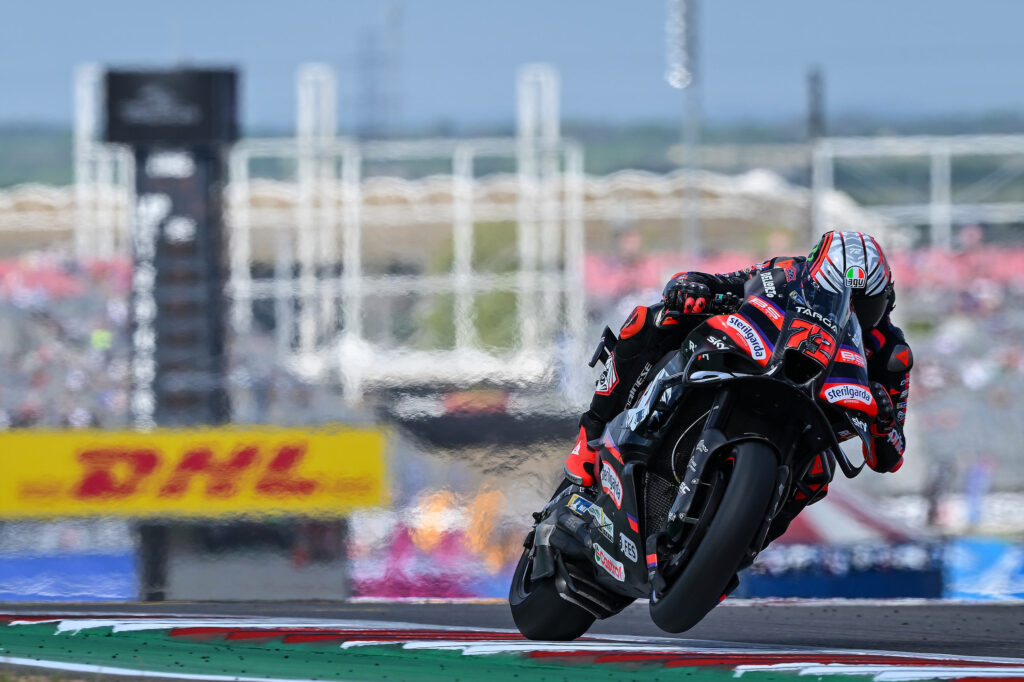
Even more importantly, the team’s two riders offered different but equally valuable qualities. Martin appeared explosive, aggressive, and perfectly suited to the intensity of short-format racing. Bezzecchi, by contrast, looked like a master of race distance — composed, disciplined, and always in control of the bigger picture. For a team with title ambitions, having those two dimensions at once is a major advantage.
Over a long season, that could become decisive. While rivals attempt to deal with one threat, Aprilia may be able to apply pressure from two directions at the same time.
Ducati Fell Short of Its Own Standards
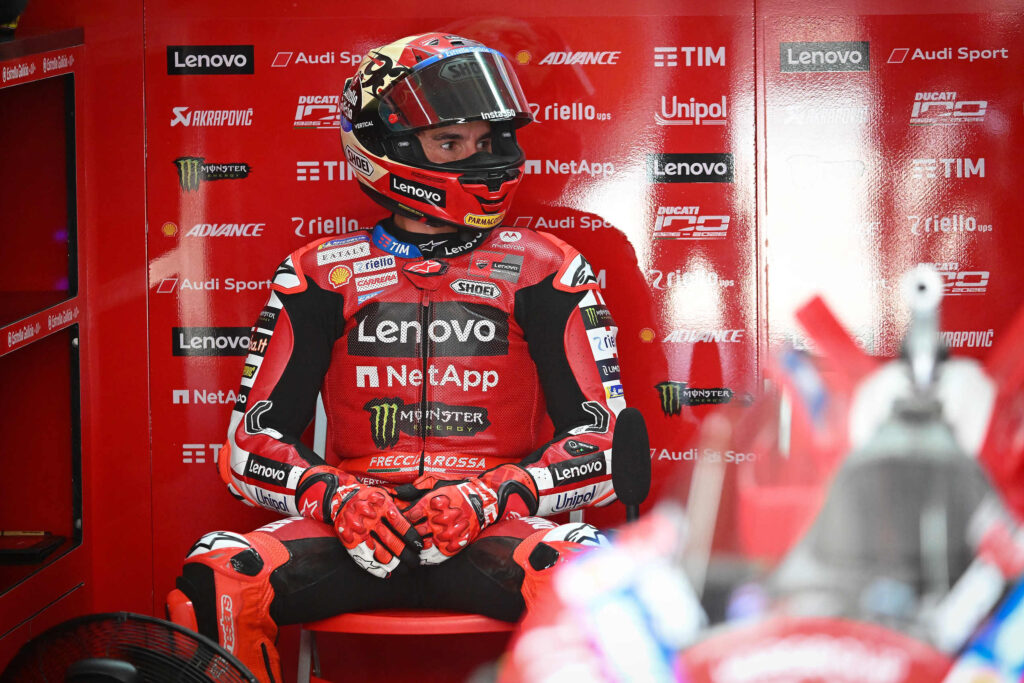
For Ducati, the weekend in Austin was deeply mixed. On one hand, the team again showed that it has speed, depth, and multiple riders capable of influencing the front of the race. On the other hand, those strengths never came together in a truly complete result.
The core problem for Ducati in Texas was not a lack of performance, but a lack of cohesion. The team repeatedly looked close to the ideal scenario, yet never fully managed to turn that potential into a decisive outcome. At times, incidents intervened. At others, execution fell short. And against a rival performing with near-complete control, those small cracks became impossible to hide.
That contrast was especially clear when set against Aprilia. Ducati remains quick, dangerous, and certain to remain central to the title fight. But Austin showed that speed alone is no longer enough. When the opposition is strong in every phase of the weekend, even a brief lapse in discipline becomes costly.
Acosta Confirmed His Role as the Disruptor
Pedro Acosta also deserves close attention. His performance in the United States confirmed once again that he remains one of the most unpredictable and dangerous riders for the established front-runners. He placed himself close to the leading battle and reminded the paddock that he is capable of breaking into the expected order even when the spotlight is fixed elsewhere.
For KTM, this may not have been a breakthrough weekend, but it was still significant. Acosta continues to collect strong performances and increasingly looks like a rider who is only a small step away from regularly dictating terms at the front.
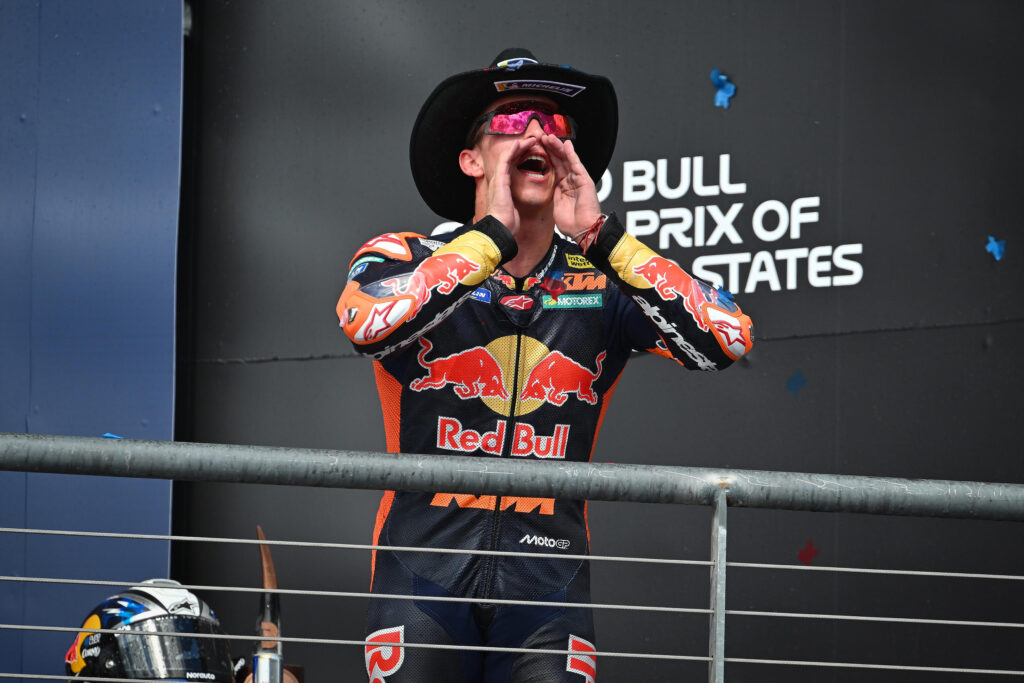
His greatest strength, however, is already obvious. He has the ability to disrupt other people’s plans. Even when a weekend appears to be tilting toward a single team, Acosta remains the rider who can force a different narrative. For the championship, that matters enormously, because figures like him prevent the season from becoming a closed contest between one manufacturer’s leading names.
Bezzecchi Is Turning Momentum Into a Pattern
The greatest championship significance of the United States Grand Prix lies in how it changes the conversation around Bezzecchi. Before Austin, it was reasonable to speak of a rider enjoying an excellent start to the season. After Austin, the tone becomes different. There is now a growing sense that MotoGP 2026 may be witnessing the emergence of a genuine championship leader.
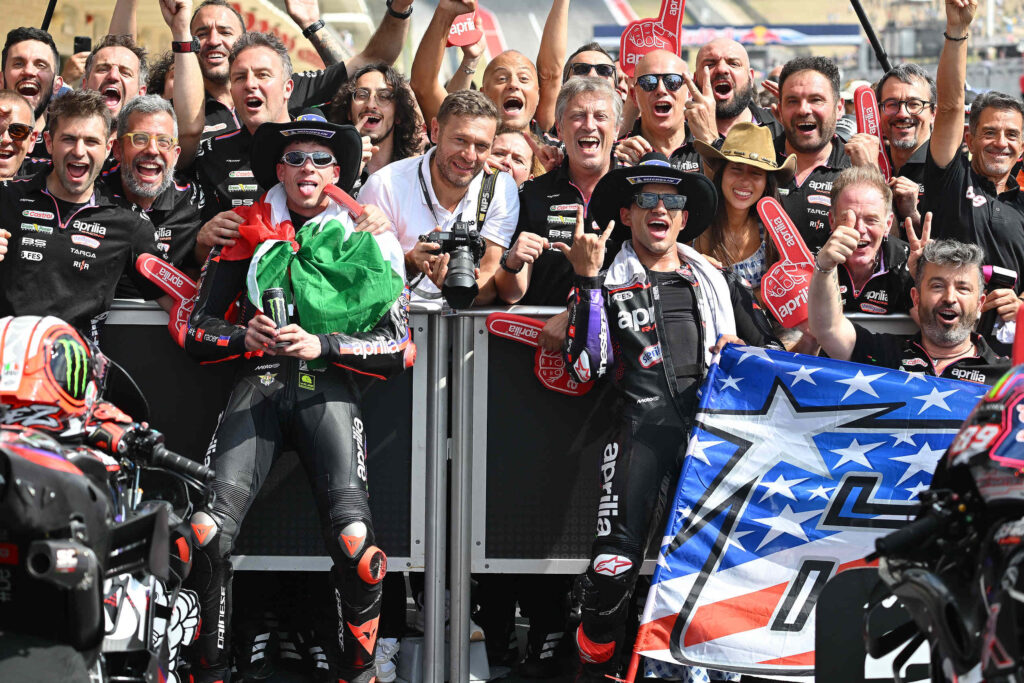
What gives his results their particular weight is not just the number of victories, but the range of ways in which he is winning. He can dominate on pace, absorb pressure, recover from setbacks, and return stronger after disappointment. In MotoGP, where a long season inevitably tests consistency as much as speed, that adaptability is invaluable.
In Texas, Bezzecchi displayed the kind of maturity usually associated with established champions. He responded correctly to adversity, retained his rhythm, and used Sunday as an opportunity to remind the entire field who is currently defining the tempo of the season. That sort of leadership has a powerful effect not only on opponents, but on the confidence of the team around him as well.
Why Austin Could Be a Turning Point
Sometimes a single Grand Prix becomes more important than its place on the calendar would suggest. It becomes the weekend after which the whole championship feels different. The 2026 United States Grand Prix may well be remembered that way.
Several signs of a turning point came together in Texas. Aprilia did not win through a one-off moment of brilliance — it won systematically. Bezzecchi responded to pressure with a performance of genuine authority. Martin proved that Aprilia has another rider fully capable of fighting at the highest level. Ducati received an uncomfortable reminder that pace without stability is no longer enough. And Acosta again showed that he can interfere with the plans of any favorite.
All of that makes Austin more than just an entertaining chapter of the season. It may become one of its defining moments. If the current trend continues over the next rounds, this is the weekend people will look back on as the point when the title fight first came into sharp focus.
The Final Verdict on the 2026 United States Grand Prix
The American round was dramatic, revealing, and rich in meaning. It gave the audience excitement, conflict, and momentum shifts, but it also gave the championship clarity. Aprilia emerged as the biggest winner of the weekend, taking victory in both the sprint and the Grand Prix itself. Marco Bezzecchi emerged as its central figure — a rider who turned Saturday’s frustration into Sunday’s demonstration of class and control.
Austin showed that MotoGP 2026 is entering a phase where random highlights matter less than structured excellence. At the moment, Aprilia looks like the benchmark, and Bezzecchi looks like the most convincing face of the early season.
The United States Grand Prix did not answer every question of the championship. But it asked the most important one of all: who is going to stop Bezzecchi and Aprilia if this level continues? After Texas, that no longer sounds like a dramatic headline. It sounds like the central question of the season.