

The return of MotoGP to Brazil in 2026 was an event long awaited not only by motorsport fans in South America, but also by the entire championship paddock. For more than two decades, the country had been absent from the calendar, making the race at the Ayrton Senna Circuit in Goiânia a symbol of the series’ expanding geography and growing ambitions.
However, instead of a smooth race weekend, spectators witnessed drama, technical challenges, unpredictable weather, and clear evidence that a new leader has emerged in the championship — Marco Bezzecchi.
MotoGP Returns to Brazil: Expectations vs Reality
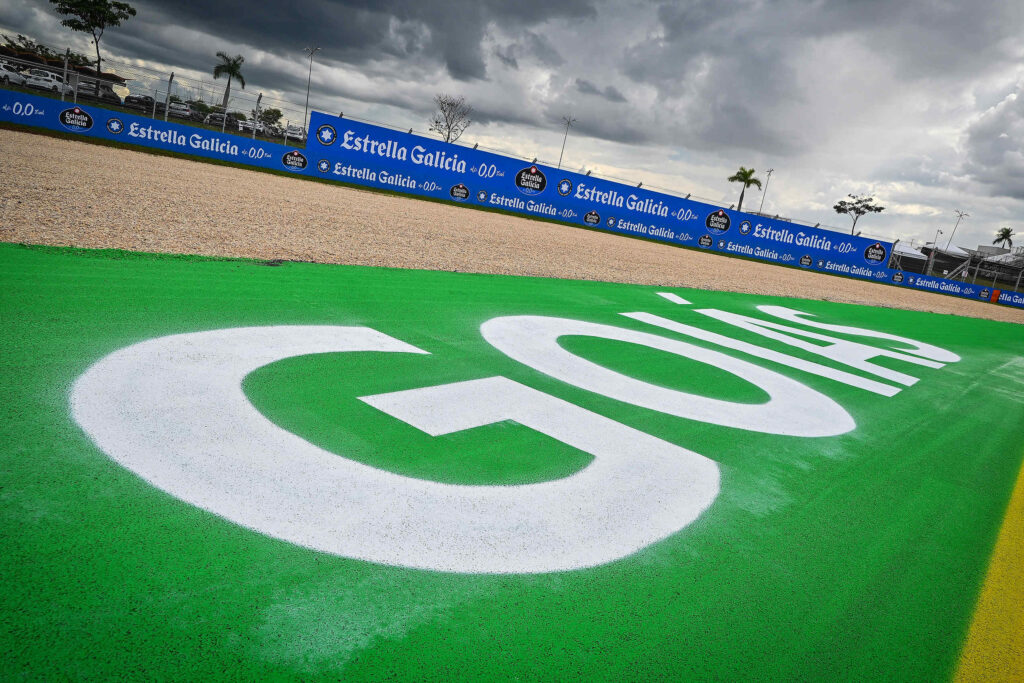
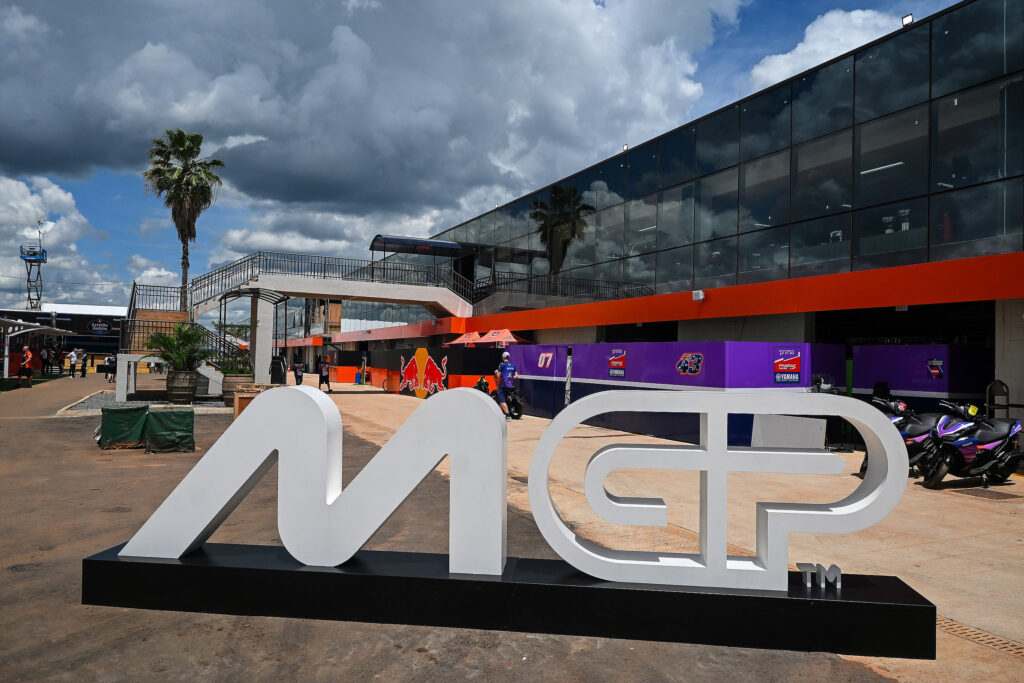
Organizers did everything possible to highlight the historic nature of the event. Packed grandstands, a vibrant national atmosphere, and intense media attention all suggested that MotoGP’s return was not just a sporting event, but a cultural moment.
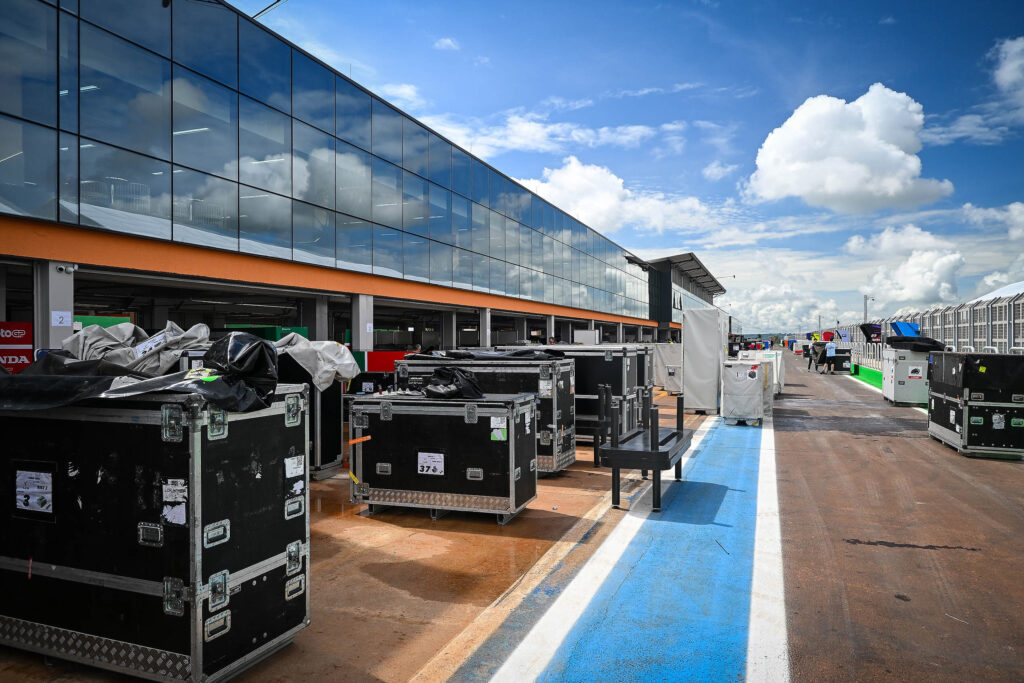
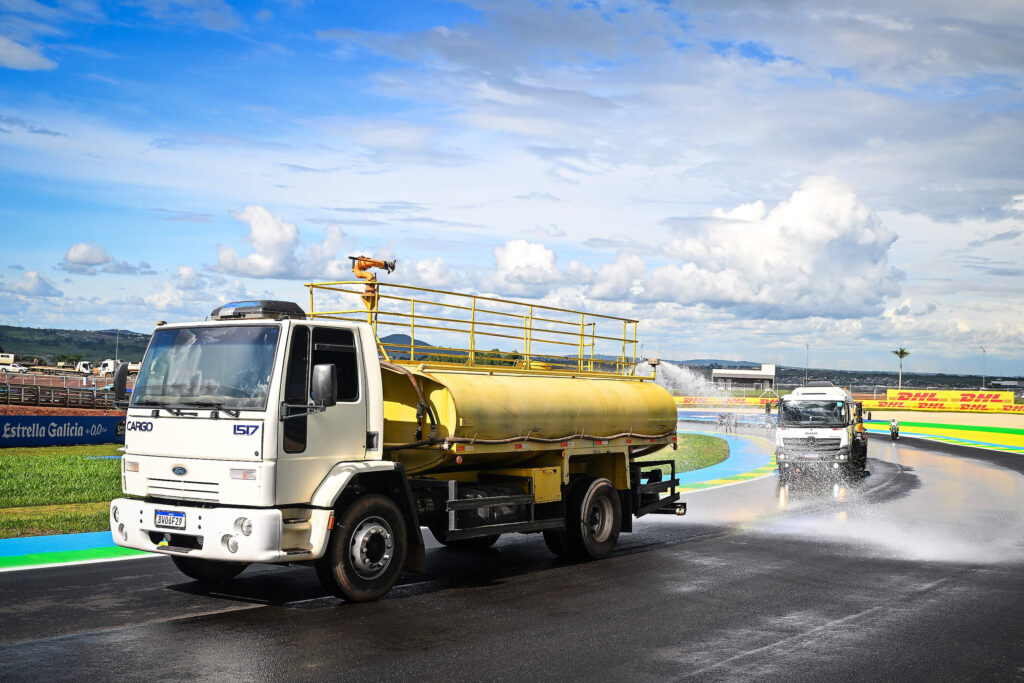
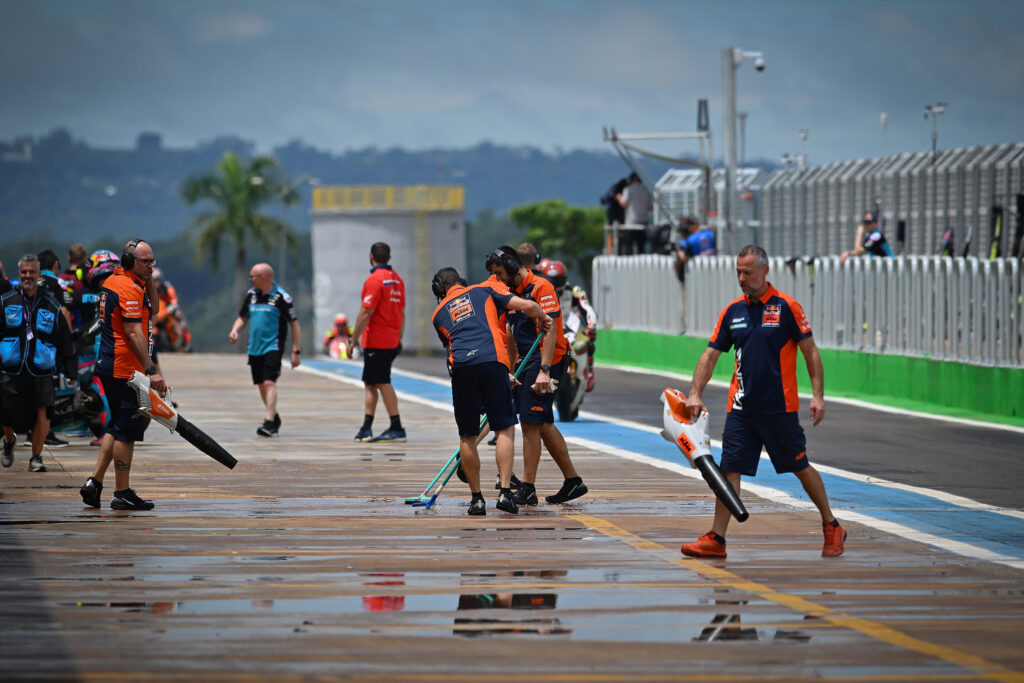
Yet by Friday, it was already clear that the weekend would not follow a perfect script. Heavy rain disrupted the practice schedule, while the condition of the track raised serious concerns among riders. Water accumulated in several sections, reducing grip, and in some areas, the asphalt began to deteriorate.
“This is one of the most difficult tracks we’ve ridden in recent years. The grip changes every lap,” said Marc Márquez after qualifying.
By Saturday, conditions had not improved. Qualifying turned into a fight not just for grid positions, but for survival. Crashes became almost inevitable, and teams were forced to rethink their strategies on the fly.
A Track Under Pressure: Surface Issues and Safety Concerns
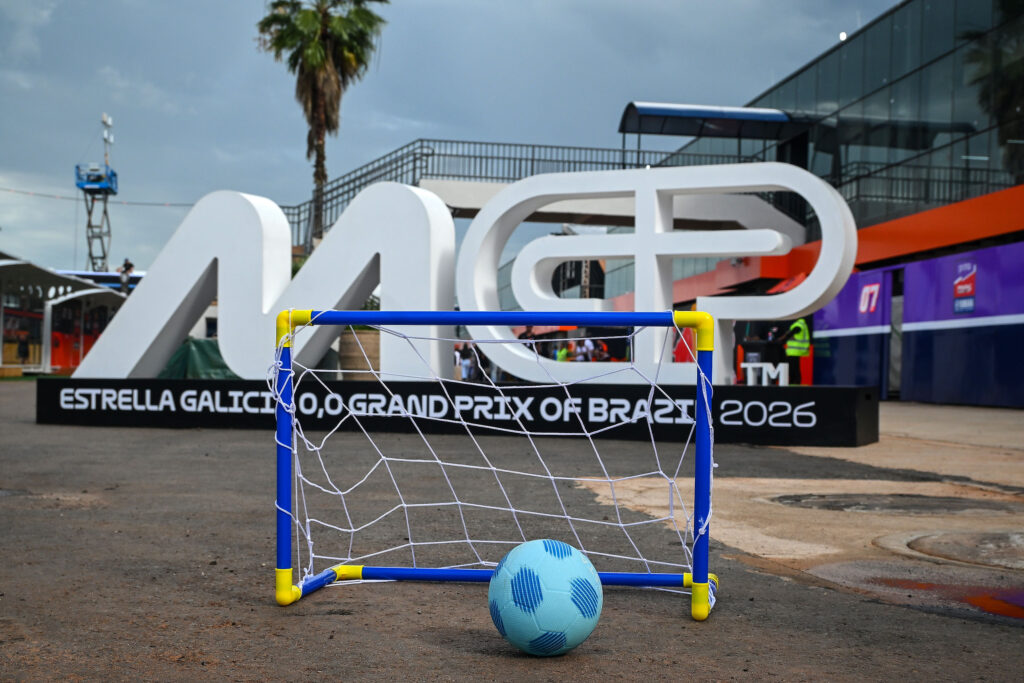
One of the defining themes of the weekend was the condition of the track surface. On race day, organizers encountered an unexpected issue — sections of damaged asphalt appeared on the стартовой straight, leading to emergency repairs and a delayed start.
Situations like this are rare at the MotoGP level, where safety standards are extremely high. However, the combination of weather conditions and heavy usage took its toll.
Riders openly expressed concern about the lack of consistent grip. As a result, race direction decided to shorten the race distance to minimize risks.
Originally scheduled for 31 laps, the race was reduced to 23, significantly impacting team strategies.
“When we saw the track surface, it was clear this wouldn’t be a normal race,” said an Aprilia engineer.
Some teams opted for aggressive setups in pursuit of an early advantage, while others prioritized balance and stability.
Divers GP Brazil 2026 (circuit Goiania) 20-22/03 2026 photo: PSP/Lukasz Swiderek @photopsp_lukasz_swiderek www.photopsp.com
The Main Protagonist: Marco Bezzecchi’s Perfect Race
Amid the chaos and constantly changing conditions, Marco Bezzecchi demonstrated what separates a champion from a merely fast rider — complete control.
Starting from second position, he took the lead within the opening laps. His riding style in Brazil was a blend of aggression and calculated precision.
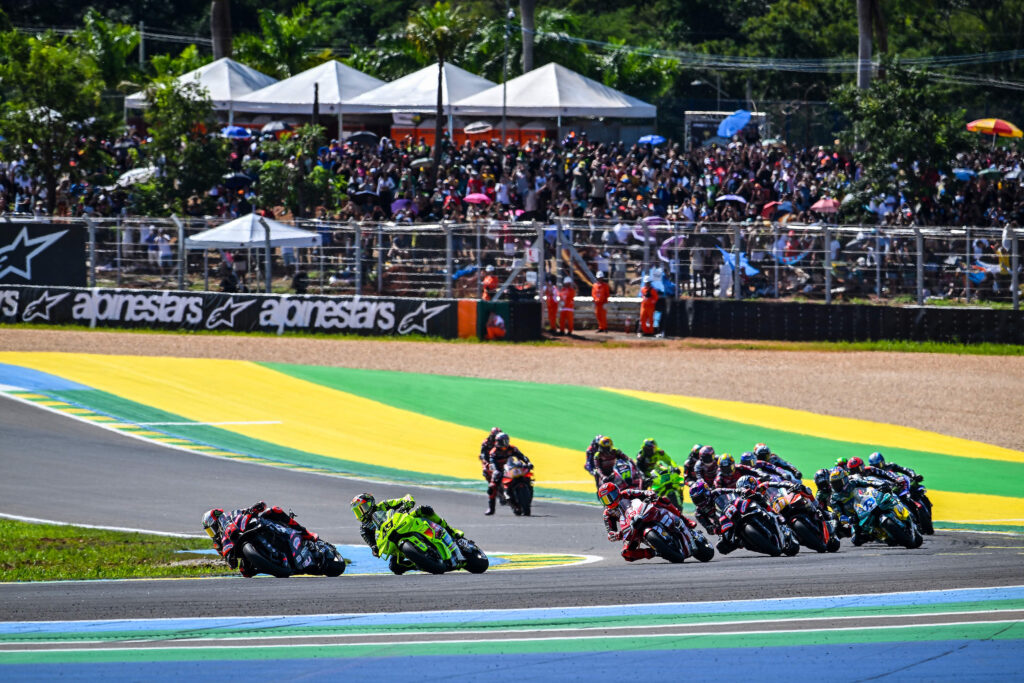
Bezzecchi didn’t just pull away — he dictated the race. Controlling the pace, avoiding unnecessary risks, and leaving no opportunity for rivals to close the gap.
This victory marked his fourth consecutive win — a powerful statement in the early stages of the season.
“I felt the bike was perfect. Even when the track changed, I knew exactly where I could push,” said Bezzecchi after the finish.
Aprilia’s One-Two Finish: A Major Step Forward
Equally significant was Aprilia’s performance. Jorge Martín secured second place, giving the team a one-two finish — a result that would have seemed unlikely just a few seasons ago.
Martín delivered a mature and composed race, avoiding unnecessary risks and maintaining consistency. While he couldn’t challenge Bezzecchi, he comfortably secured his position.
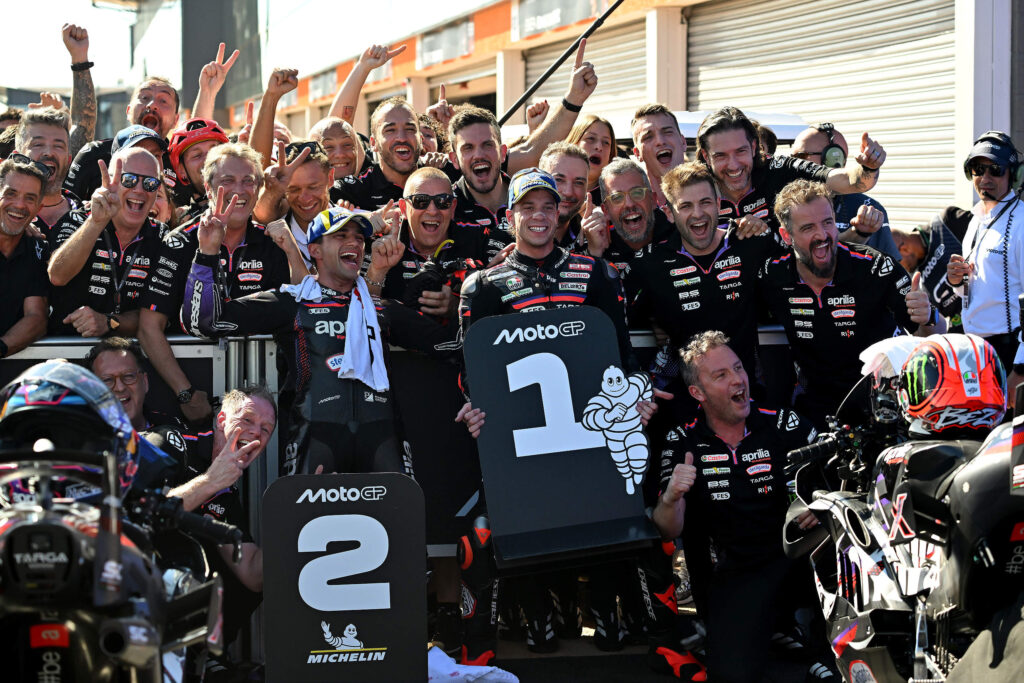
“Today we made a big step forward. The team did an incredible job,” Martín commented.
This result sent a clear message: Aprilia is ready to fight for the title throughout the season.
Ducati: Speed Without Stability
Despite placing two riders in the top four, Ducati failed to fully capitalize on its potential.
Fabio Di Giannantonio finished third, delivering a clean and calculated performance. He capitalized on others’ mistakes and held his position under pressure.
Marc Márquez, on the other hand, faced a more difficult race. After winning the sprint, expectations were high, but he was unable to replicate that success and finished fourth.
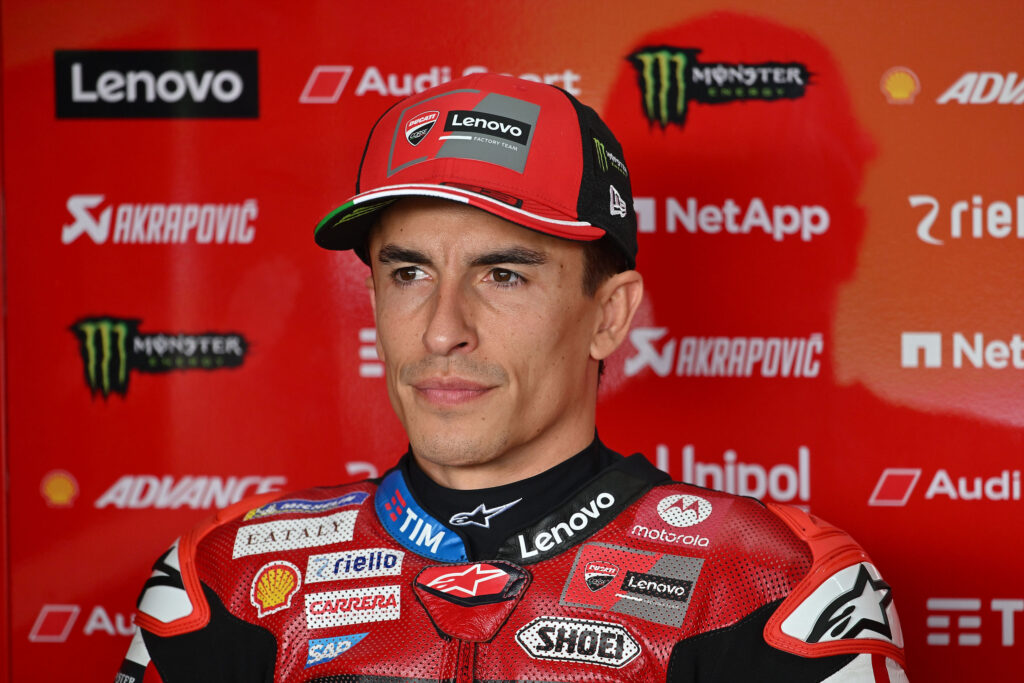
“We were fast, but we couldn’t find consistency,” Márquez admitted.
Paddock and Fan Reaction
MotoGP’s return to Brazil generated tremendous excitement. Despite organizational challenges, the atmosphere in the grandstands was electric.
The paddock noted:
- the need for further track improvements,
- the strong potential of the Brazilian market,
- the importance of keeping the event on the calendar.
Conclusion: A Race That Set the Tone for the Season
The 2026 Brazilian Grand Prix was more than just another round of the championship. It was a test — for organizers, teams, and riders alike.
Some struggled to cope with the challenges. Others used them as an opportunity to make a statement.
Marco Bezzecchi did exactly that.
His performance symbolized a new phase in MotoGP — one where success depends not only on speed, but also on intelligence, strategy, and adaptability.
The season is still in its early stages, but one thing is already clear: the title fight will be intense. And if Brazil was any indication of form, Bezzecchi’s rivals have serious reason for concern.
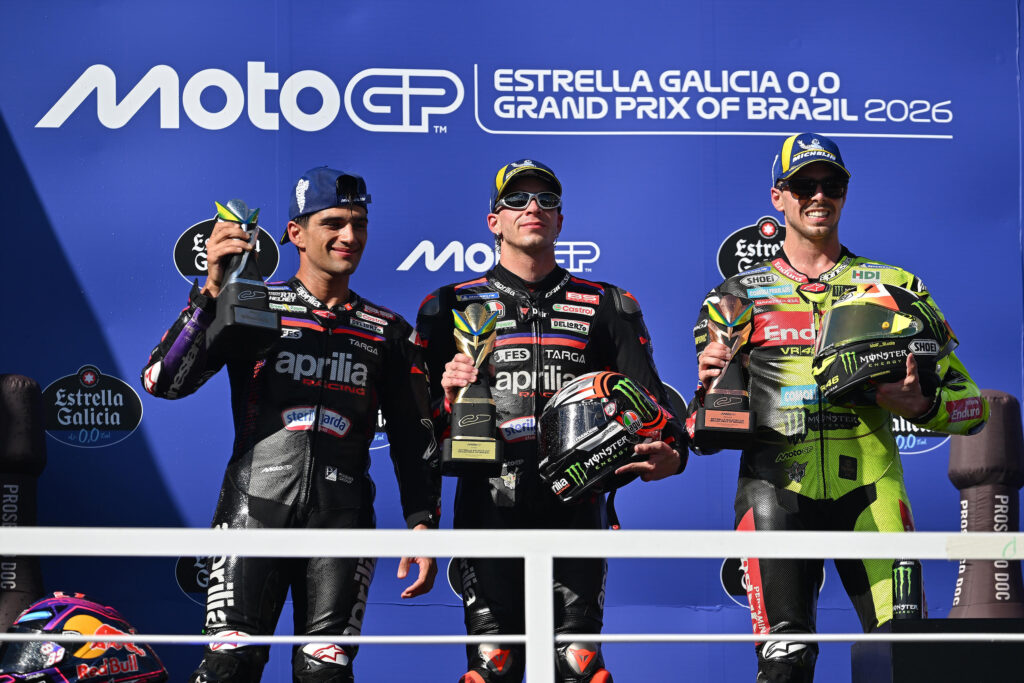
www.photopsp.com