

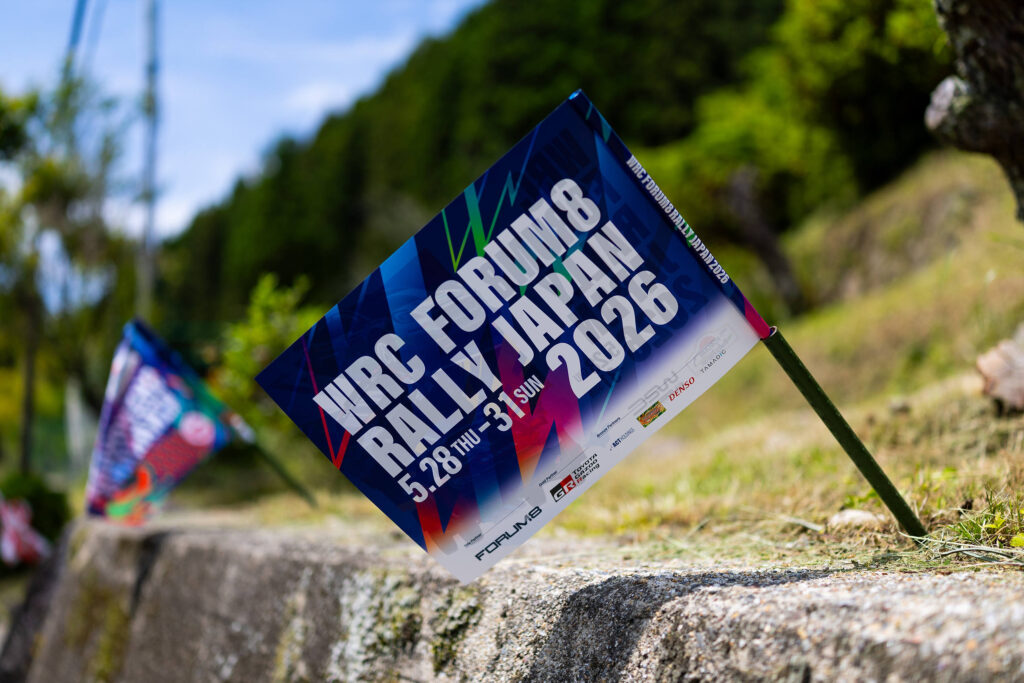
Rally Japan 2026 was not simply another round of the FIA World Rally Championship. It was one of those events that clearly showed who could read the road, manage the tyres and keep the pace under pressure. For the first time in several years, the Japanese round was no longer a late-season finale in November, but a mid-season asphalt test at the end of May. The move brought temperatures above 30 degrees, greener mountain scenery and patches of moisture under the trees, but the essential character of the rally remained unchanged: narrow, technical and unforgiving asphalt roads through the mountains of Aichi and Gifu.
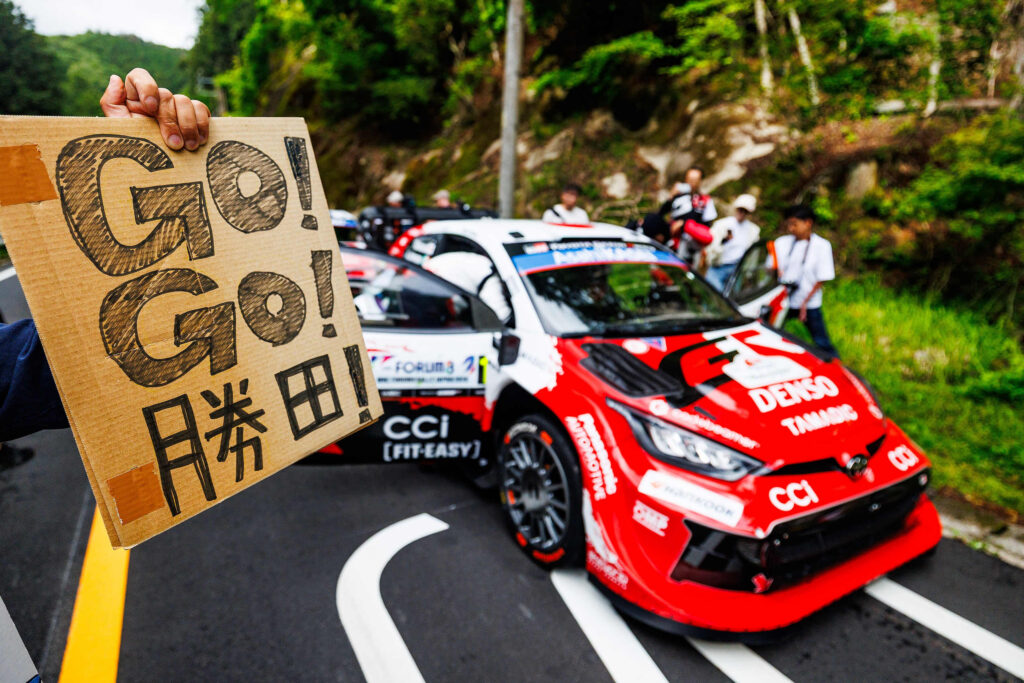
For Toyota, this was a home rally in every sense. The base in Toyota City, the roads of Aichi and Gifu, the support from the Japanese fans and the spotlight on Takamoto Katsuta made the event one of the emotional centrepieces of the season. It also carried extra sporting weight: Rally Japan was the final full asphalt round of the 2026 WRC season and a symbolic home asphalt triumph for Toyota ahead of the 2027 regulation changes. Yet despite all the emotion around the event, the rally quickly turned into a calm and clinical demonstration from Elfyn Evans. The Welshman did not win in Japan by accident. He built his victory on one decisive stage on Friday, absorbed the pressure from Oliver Solberg and Sébastien Ogier, survived the long and hot Saturday leg, and brought the car home on Sunday without unnecessary drama.
Before the start, several scenarios looked possible. Sébastien Ogier arrived in Japan as the previous year’s winner and, as always on difficult asphalt, was one of the natural favourites. Oliver Solberg had a chance to prove that his Rally1 speed was not just a matter of isolated flashes, but something strong enough to support a proper victory fight. Takamoto Katsuta, after wins in Kenya and Croatia, came to his home event with a special status. The Japanese fans were not simply expecting a solid result — they wanted to see him fight for the win. But all of those expectations immediately ran into the reality of Rally Japan, where one wrong reading of the grip, one puncture or one slightly wide line can ruin an entire weekend.
Thursday was mainly about settling into the event, but already the shakedown at Kuragaike Park showed that Toyota was comfortable on these roads. Ogier was quick, Evans was close, and both Sami Pajari and Katsuta were in the mix. The short test was a reminder of what Japanese asphalt is really about. It is not about raw top speed; it is about precision. A driver cannot simply attack by sight or relax on the shaded sections under the trees. Even when the road looks dry, moisture can remain in the forest, while dirt pulled onto the line from cuts can change the grip level from one corner to the next. The ceremonial start at Nagoya Castle gave the rally the right sense of occasion, but the real contest began on Friday morning — and almost immediately found its leader.
Friday’s route featured two loops east of Toyota City: Asuke, Isegami’s Tunnel and Inabu/Shitara in the morning, followed by the same stages in the afternoon. Solberg struck first. On the new Asuke stage he set the fastest time and took the early lead, proving that his asphalt pace was not a coincidence. But Rally Japan rarely allows emotion alone to carry a lead for long. Already on SS2, Isegami’s Tunnel, Evans produced the drive that became the foundation of his victory. On the long, complex and treacherous stage, he found a level of confidence that allowed him to take significant time out of his rivals and move into the lead. It was the key moment of the whole rally: from that point on, the gap was no longer symbolic — it was something Evans could work with.
Isegami’s Tunnel was more than just one of the longest stages of the event. It was the real filter of the rally. Damp patches under the trees, constantly changing grip, narrow roads and a rhythm that forced the crews to trust the pacenotes completely — all of it suited Evans. He not only won SS2, but then also took Inabu/Shitara 1, ending the morning loop with a 17.7-second advantage over Solberg. Ogier was close to the Swede, but already it was clear that the Frenchman had lost more time than he would have wanted. From that point, he would not simply have to attack; he would have to recover against a leader who had already found the right rhythm.
In the second loop, Solberg again showed his speed on Asuke, but Evans responded with another strong run through Isegami’s Tunnel. By Friday evening, the Welshman led by 15.7 seconds. On paper, that was not an unbeatable margin. But in the context of Rally Japan, it was a serious advantage. Chasing on these roads is extremely difficult, because attacking without risk is almost impossible. Solberg remained second, with Ogier third, 17.1 seconds behind the leader. Pajari ended the day in fourth, while Katsuta, after damaging a wheel and losing the soft tyre set he needed, was only sixth. For the home hero, it was a painful opening day. The expectations from the Japanese crowd were huge, but Friday quickly took away his chance to build a calm victory challenge.
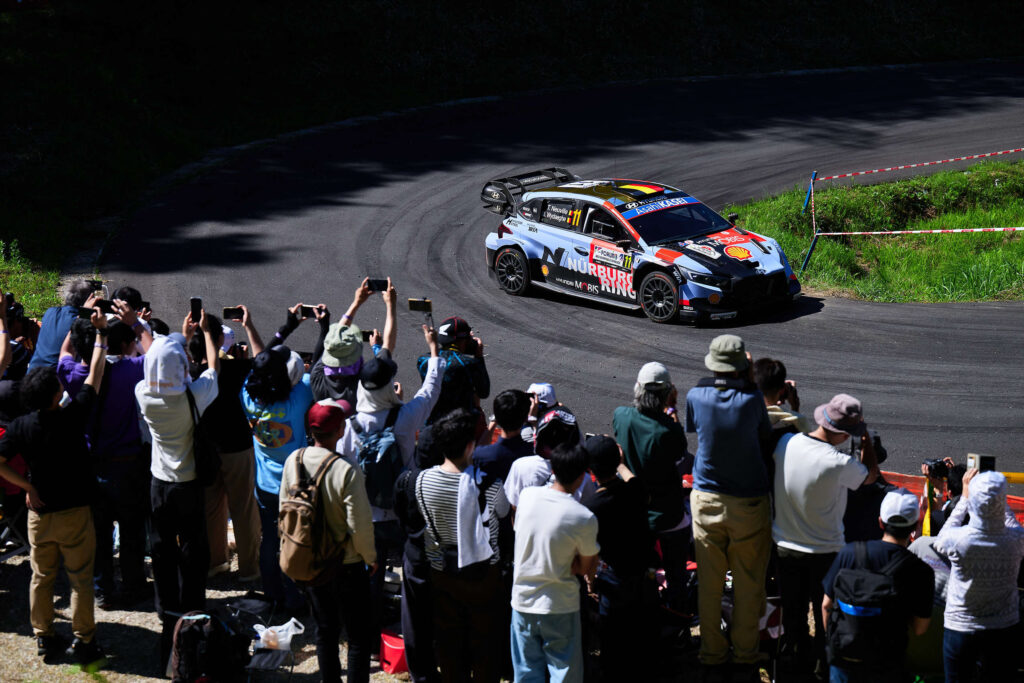
Friday was also the day when Hyundai fully understood the scale of its problem. Thierry Neuville was fifth and Adrien Fourmaux seventh, but their pace was not strong enough to put Toyota under real pressure. On the narrow Japanese asphalt, the Hyundai i20 N Rally1 looked less settled, and the rally increasingly became an internal Toyota fight. Meanwhile, in WRC2, a separate storyline was already developing. Alejandro Cachón led the category in his Toyota GR Yaris Rally2, but Nikolay Gryazin, driving the Lancia Ypsilon Rally2 HF Integrale, stayed close enough to ensure that the battle remained wide open.
Saturday was the longest and probably the most dramatic day of Rally Japan 2026. Eight stages, 120.22 competitive kilometres, a north-eastern loop from Toyota City, temperatures above 30 degrees, repeated passes, new sections and two short Fujioka super specials at the end of the day. This was the leg that would either bring Solberg and Ogier back into the fight or allow Evans to consolidate control. In the morning, the first option still looked possible. Solberg attacked, won two of the three stages in the opening loop and reduced Evans’s lead to 10.6 seconds. He was fast, committed and, at times, looked like the only driver capable of forcing the leader into a mistake.
But Saturday in Japan punishes even the smallest excess of risk. On the first stage after midday service, Mt. Kasagi 2, Solberg was again pushing hard and had already been taking time out of Ogier and Evans. Then, in a left-hand corner, he ran too wide, hit a dirty and slippery section of road, struck the car at the right rear and damaged the suspension. His fight for victory was over. The crew was unharmed, but the Toyota stopped on the stage, and the incident became the decisive turning point of Saturday. Solberg did not merely lose a podium; he gave Evans the chance to move from defence into control.
After Solberg’s retirement, Ogier moved up to second, but his own rally had already been compromised by the time lost on Friday. The Frenchman was quick, and at times he was close to Evans’s pace, but he never found the absolute comfort with the car and tyres that usually allows him to turn rallies around. His rally was similar to Evans’s in almost every area, except for one crucial stage — the stage where the decisive gap had been created. On Japanese asphalt, that was enough. Without a mistake from the leader, the lost time was almost impossible to recover.
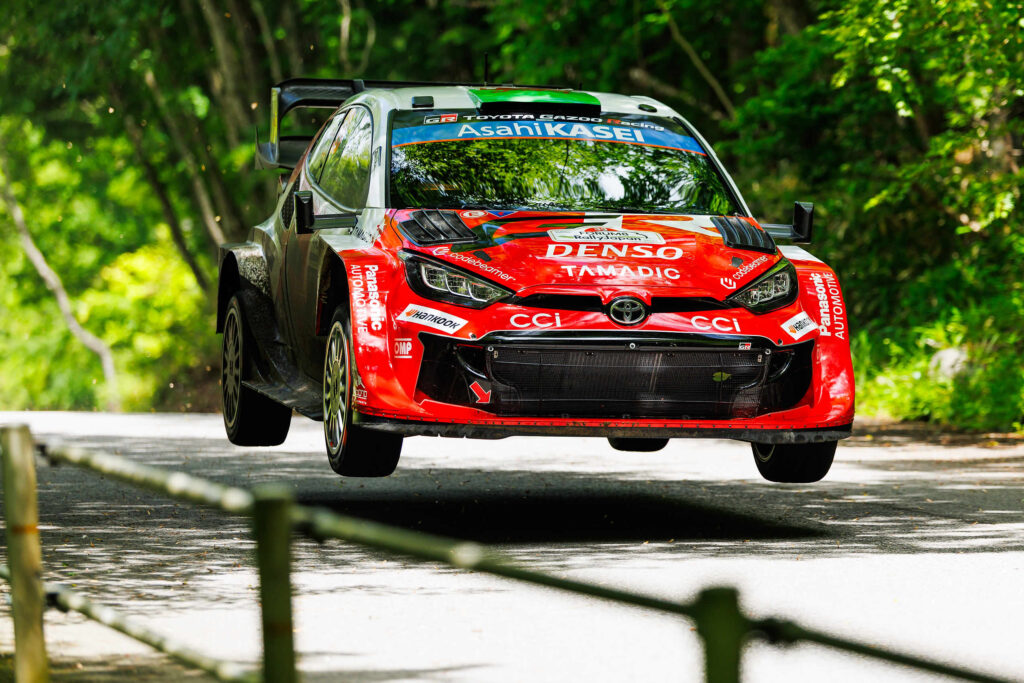
Evans drove Saturday without unnecessary showmanship. He admitted that he was not yet in full control and that there were still too many kilometres ahead, but on the road he did exactly what a leader must do. He avoided big time losses, answered when he needed to and kept the margin alive. After Solberg’s incident, he lost a little time while passing the damaged car, but quickly got back into rhythm, winning Ena 2 and Obara 2 to stretch his advantage again. By the end of the day, his lead over Ogier stood at 17.8 seconds. It was not a completely comfortable margin, but it was a very strong platform for the final leg.
One of the standout drivers of Saturday was Sami Pajari. The young Finn produced a strong second half of the day, won several stages, including both runs through Fujioka, and moved into third place. His season was already beginning to look impressive: consistent podiums, maturity, speed and the ability not to throw rallies away with unnecessary mistakes. Rally Japan again showed that Pajari was no longer simply a promising driver. He was becoming a regular player in the fight at the front of the overall classification.
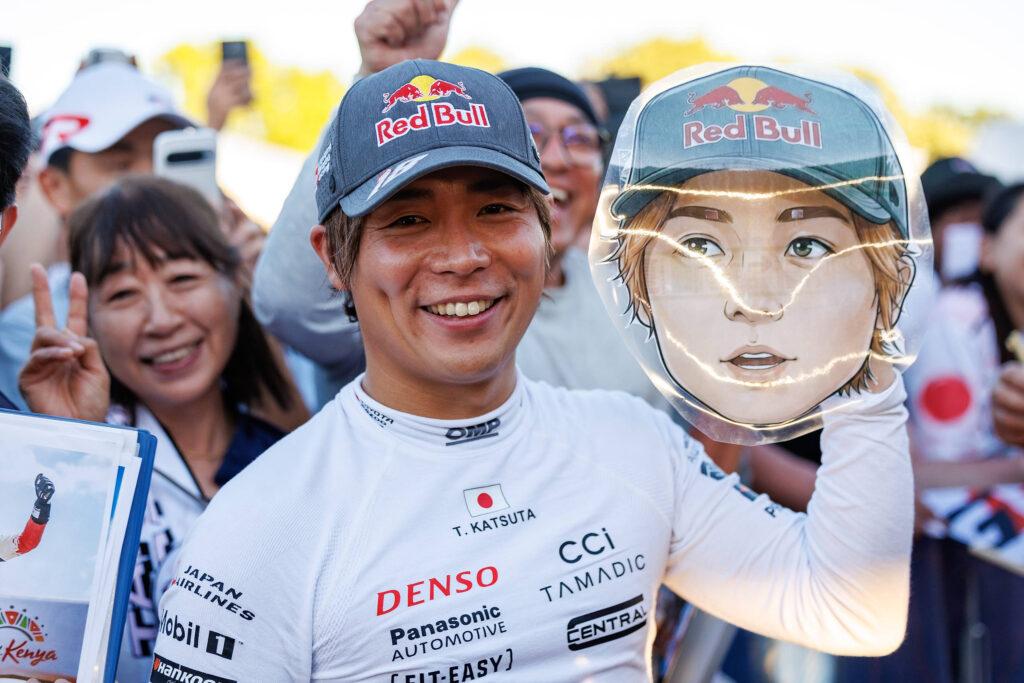
Katsuta also looked stronger on Saturday. After a difficult Friday, he reset his rally, climbed to fourth place and began to recover his confidence. But too much time had already been lost to fight for victory or even for the podium. In the Japanese context, that made his rally especially emotional. The fans wanted to see Taka fighting at the front, but instead he was forced to salvage points and pride after a difficult start. At the same time, his pace in the second half of the rally confirmed that the issue was not a lack of speed. It was the damage done by the way the rally had begun.
Behind Toyota, the situation was calmer and less encouraging. Fourmaux was the best of the Hyundai drivers in fifth, with Neuville sixth, but both were effectively in a different rally. On the narrow Japanese asphalt, Hyundai lacked the consistent grip and confidence needed to challenge Toyota on the long technical stages. For the team, it was a disappointing but not entirely surprising end to the asphalt part of the season. Gravel would offer better opportunities later in the year.
In WRC2, Saturday changed the shape of the battle between Cachón and Gryazin. The Spaniard started the day in the lead, but Gryazin gradually took back the initiative, despite wheel damage and vibration. The Lancia Ypsilon Rally2 HF Integrale looked increasingly convincing, while Cachón had to respond not only with speed, but also with repairs after his own problems. By Saturday evening, Gryazin was in front, but by just 5.7 seconds. It was the perfect setup for Sunday: a small gap, two different cars, the previous year’s WRC2 winner in Japan against a driver trying to underline Lancia’s new presence in the championship.
The final day featured six stages: Nukata, Kuragaike Park and Lake Mikawako, then the same roads again after service, with the second pass of Lake Mikawako serving as the Power Stage. On paper, 74.06 kilometres still gave Ogier a chance. In practice, Evans was calm enough and fast enough to make sure that chance never became a real threat. Ogier kept applying pressure, but the gap did not fall quickly enough to unsettle the leader. Before the Power Stage, the margin was reduced to around 13 seconds, but Evans still had enough in hand not to turn the final run into a gamble.
The main contrast of Sunday was Solberg. After his Saturday mistake, he could no longer fight for a strong overall result. In the final classification, he finished only 21st, almost 50 minutes behind the winner. But he used Sunday in the right way. Returning under Rally2 regulations, he won three of the six stages, took the Super Sunday points and also won the Power Stage, turning a lost victory challenge into an important haul of bonus points. In terms of the overall rally result, it could not rescue his weekend. But for the championship and for his own recovery, it mattered. Solberg showed that he has victory-winning speed. Rally Japan also showed the next step he must take: keeping that speed within the limits needed to reach the finish.
Katsuta was also strong on Sunday. He won a stage, finished second in Super Sunday and second on the Power Stage, collecting valuable points and giving the home crowd something to cheer. But his final fourth place still carried a sense of what might have been. After victories in Kenya and Croatia, the Japanese round could have been a defining moment of his season, but Friday’s wheel damage and loss of rhythm effectively closed the road to the podium. His apologies to the fans did not sound like routine words. They were part of a bigger story: Katsuta still dreams of winning his home event, and after 2026 that dream will only be stronger.
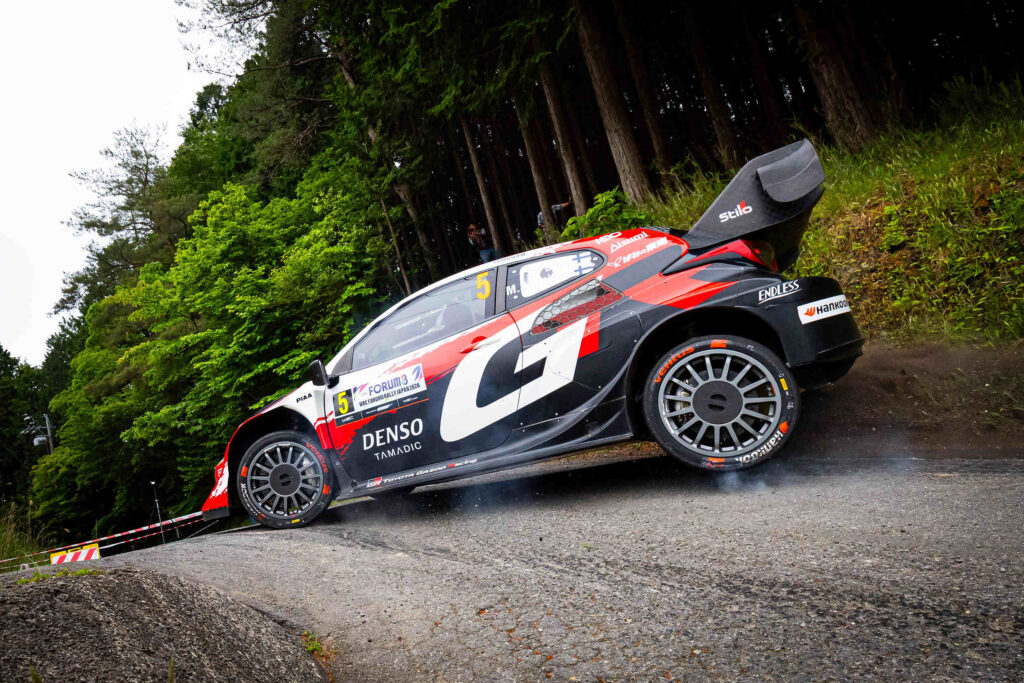
Pajari brought the car home in third place and secured another podium. For the young Finn, this was not the loudest result, but it was an important one. On roads like these, a podium is close in value to a victory, because it requires not only speed but also discipline. In a season where Toyota had several strong internal storylines, Pajari continued to build a reputation as a driver who can regularly take major points and stay in the fight.
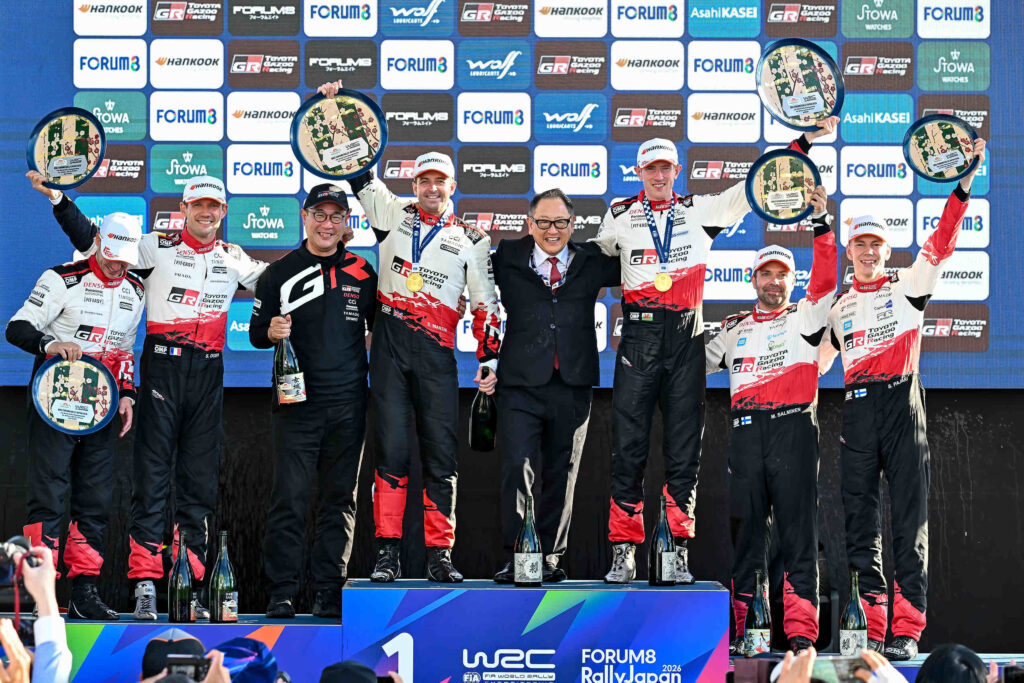
The finish at Lake Mikawako confirmed Toyota’s complete dominance. Evans and Scott Martin won Rally Japan with a total time of 3:17:08.0. Ogier and Vincent Landais finished 12.8 seconds behind, while Pajari and Marko Salminen completed the podium, 51.4 seconds down. Katsuta and Aaron Johnston made it a Toyota top four, finishing 1:03.5 behind the winners. For the GR Yaris Rally1, it was Toyota’s fourth consecutive victory on its home Japanese round from five Toyota City editions, and a symbolic home asphalt triumph for the manufacturer ahead of the 2027 regulation changes.
For Evans, it was his third Rally Japan victory in four years, his second win of the 2026 season and the 13th WRC victory of his career. It was also his 50th podium in the World Rally Championship and extended his championship lead to 20 points. After seven rounds, Evans had 151 points, Katsuta 131, Solberg 102, Pajari 96 and Ogier 90. Toyota also moved further clear in the manufacturers’ championship with 370 points to Hyundai’s 243. At the midpoint of the season, this was no longer just an advantage. It was a serious statement of control.
In WRC2, the finish was almost cinematic. Gryazin began Sunday with a small lead, Cachón attacked, reduced the gap and was close enough before the final stage to try to steal the win. But risk again proved more expensive than speed in Japan. Cachón spun on the Power Stage, lost his chance of victory and finished second. Gryazin won the category in the Lancia, gave the brand an important success and moved into the lead of the WRC2 standings. Yuki Yamamoto finished third, giving the Toyota Challenge Program a significant home podium.
Rally Japan 2026 left several clear conclusions. First, Evans has become almost a benchmark driver on Japanese asphalt. He was not necessarily the most spectacular on every stage, but he was the most precise when the rally was decided and the most composed when the lead had to be protected. Second, Ogier remains fully capable of applying pressure, but even he cannot easily recover lost time when the leader refuses to make a mistake. Third, Solberg already has the speed to win, but he is still going through the painful school of consistency. Fourth, Pajari is steadily becoming one of the most reliable young drivers in the championship. And fifth, Toyota ended this asphalt phase of the season almost perfectly.
For the championship, Rally Japan became an important dividing line. The middle of the season has clearly swung in favour of Toyota and Evans, while the gravel run now begins with Acropolis, Estonia, Finland, Paraguay, Chile and the later part of the calendar. On gravel, the balance of power may change. Hyundai should have better opportunities, Solberg will be able to use his natural speed, Katsuta can return to attack after his home disappointment, and Ogier will choose his moments to strike. But Japan has already written one major fact into the story of the 2026 season: on the final full asphalt rally of the year, Elfyn Evans did not simply win. He won like a championship leader — calm, precise and completely at one with the road.

