

MotorLand Aragón has always been one of those circuits where Marc Marquez seems to operate on slightly different terms from almost anywhere else on the MotoGP calendar. Its long left-handers, sweeping corners, heavy braking zones, high-speed back straight and rapid direction changes have suited his riding style for years. But in 2026, history alone was never going to be enough.
Marquez arrived in Aragón after a difficult British Grand Prix with a substantial deficit to Jorge Martin in the championship. Aprilia had just swept the podium at Silverstone and increasingly looked like the manufacturer setting the direction of the season. Martin led the standings, Marco Bezzecchi was close behind, and the RS-GP was no longer a motorcycle that needed unusual circumstances to challenge Ducati.
MotorLand changed that picture.
Marquez won the Sprint and followed it with victory in the Grand Prix, taking every point available to him across the weekend. His deficit to Martin was more than halved, and Marc moved into second place in the championship. Bezzecchi also produced one of his strongest weekends of the season, setting a new outright MotorLand lap record, taking pole position and finishing on the podium in both races.
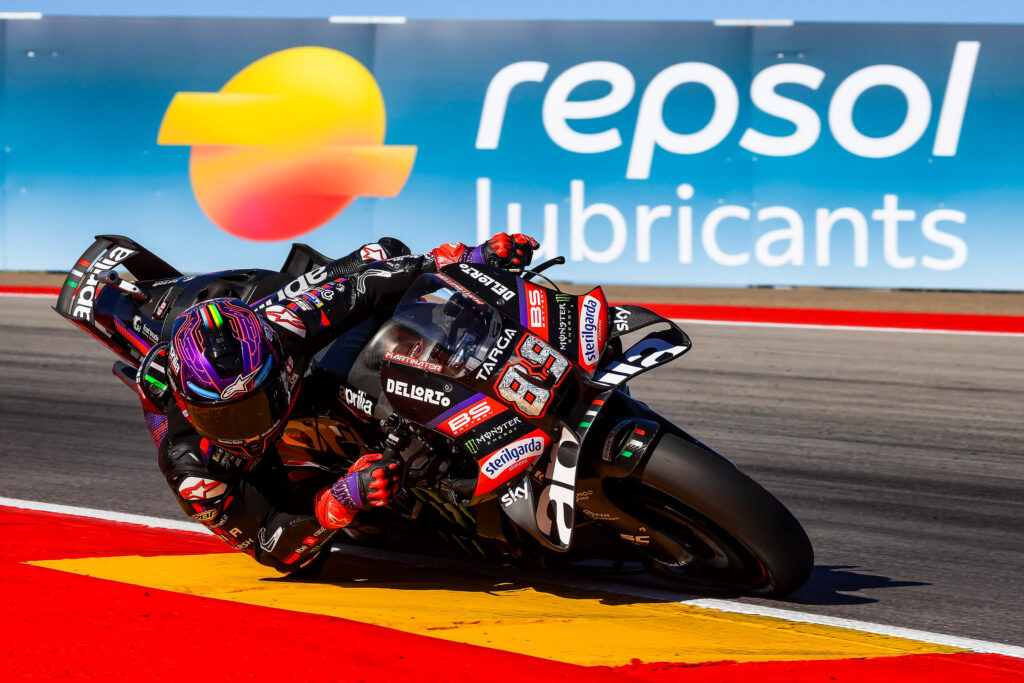
By Sunday evening, the title fight no longer looked like an internal Aprilia contest.
For Marquez, victory continued his extraordinary relationship with MotorLand. But Sunday was not simply a repeat of Saturday. In the Sprint, he seized the lead almost immediately and controlled the race. In the Grand Prix, he complicated his own opening laps by failing to disengage the rear ride-height device, lost positions, fought his way back, survived a fierce confrontation with Bezzecchi and only in the second half of the race finally managed to create breathing space over Pedro Acosta.
That was why Aragón mattered.
This was not simply another victory for a rider whose style naturally suits anti-clockwise circuits.
It was the weekend that brought Marc Marquez fully back into the championship fight.
Friday: Marquez starts on top, Aprilia responds
The weekend began much as MotorLand weekends involving Marc Marquez often do. He was immediately fast, but by the end of Friday’s Practice it was already clear that his usual Aragón advantage would not be straightforward this time.
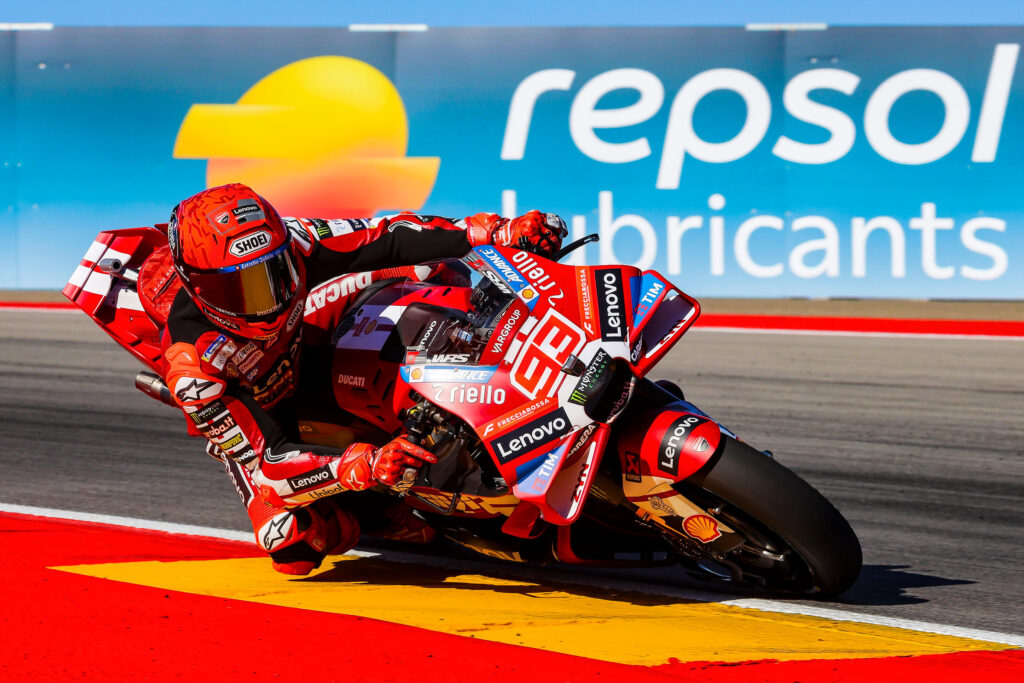
Bezzecchi produced a superb late lap to establish a new outright benchmark around MotorLand. Alex Marquez was almost alongside him on the timesheets, with Marc close behind. The margins were tiny, and Aprilia had shown for the first time that weekend that it could challenge Ducati not only over a race distance, but over a single qualifying-style lap as well.
Martin’s Friday developed in the opposite direction. The championship leader struggled for position early in the day, then steadily found speed and secured direct passage into Q2. It was a weekend that would become typical of his current championship campaign: rarely dominant, but consistently able to recover from an imperfect start and remain among the leading group.
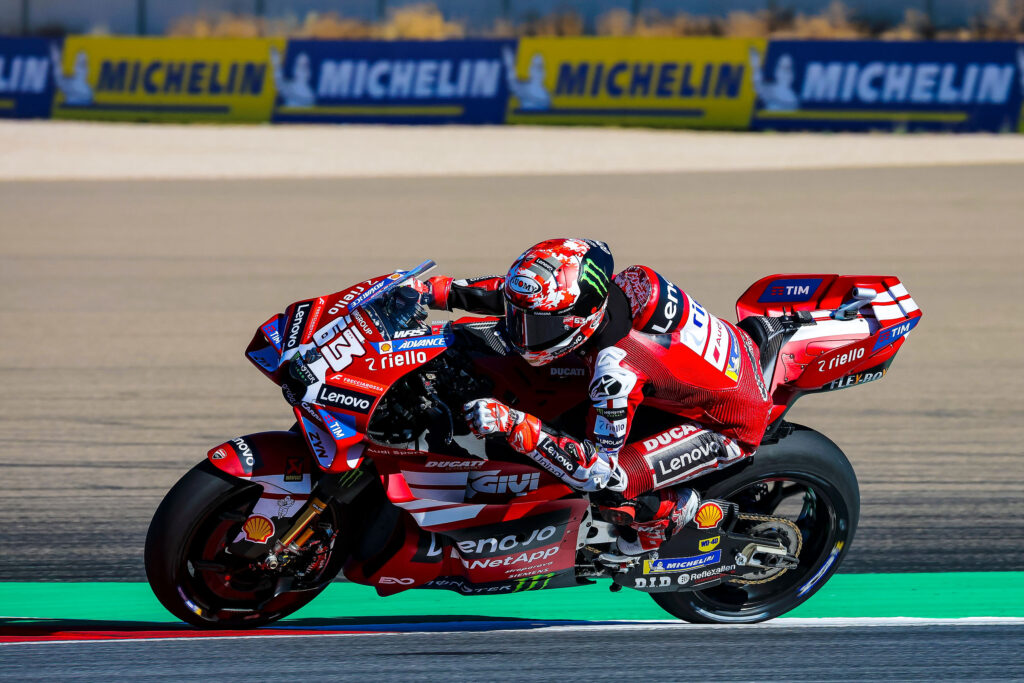
Francesco Bagnaia faced a very different problem. The Italian again struggled to find confidence in the Ducati and failed to secure direct Q2 qualification. By Friday evening, Aragón was already beginning to look less like an opportunity to join the leading battle and more like a weekend spent trying to rescue a respectable result.
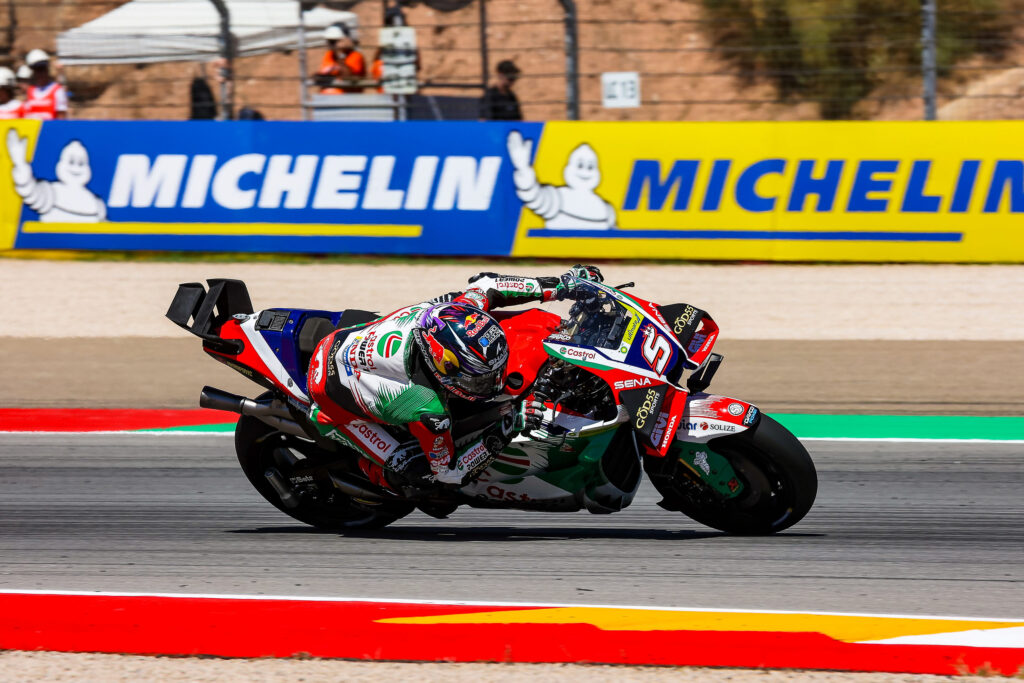
Johann Zarco’s return provided another major storyline.
The Frenchman was back on a MotoGP bike after the heavy Barcelona crash that had left him with ligament damage to his knee and a small fracture. His recovery had initially been expected to take longer, but Zarco returned ahead of schedule. He underwent another medical assessment at MotorLand, was cleared to continue and immediately showed enough pace to qualify directly for Q2.
Trackhouse, meanwhile, was without Ai Ogura. The Japanese rider had injured his left hand in training, with a fracture near the thumb requiring surgery. Aprilia test rider Lorenzo Savadori took his place.
Ogura’s absence was particularly costly given his championship position and the strength of the Aprilia package in Aragón.
Friday ended with a clear message.
MotorLand was still Marquez territory.
But Aprilia had not come there to defend.
On Saturday, Bezzecchi proved it.
Saturday: Bezzecchi breaks the record, Marquez answers in the Sprint
Bezzecchi produced the fastest MotoGP lap ever recorded at MotorLand to claim pole position, beating Marquez at a circuit where the Spaniard has traditionally looked almost untouchable. Alex Marquez completed the front row, while Raul Fernandez and Martin gave Aprilia two more strong starting positions.
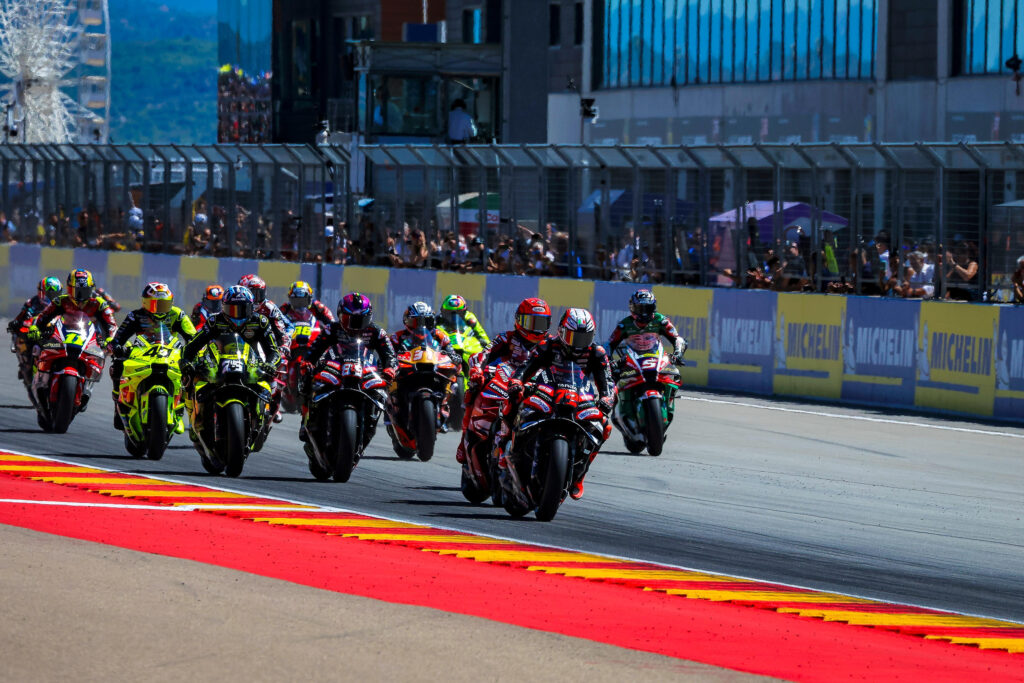
For Bezzecchi, this was far more than a spectacular qualifying lap.
His Friday speed might have been dismissed as one perfectly executed effort. Pole position removed that argument. Aprilia genuinely worked around MotorLand, and Marquez himself acknowledged that Bezzecchi had simply been faster over one lap.
The Sprint told a different story.
Marquez attacked immediately into the opening corner and took the lead from Bezzecchi. Alex Marquez used their fight to move ahead of the Aprilia as well. A compact group formed at the front, but the riders behind Marc never found a genuine opportunity to attack him.
He did not disappear several seconds up the road.
He did not turn the Sprint into a solitary demonstration.
Instead, every time Alex or Bezzecchi began to close, Marc found an answer.
Behind them, the fight involving Martin, Acosta and Raul Fernandez was far more volatile. Positions changed, small mistakes cost places and KTM gradually became more prominent.
It was there that the first signs appeared that Acosta might become one of Sunday’s central figures rather than simply another rider fighting for the places behind Ducati and Aprilia.
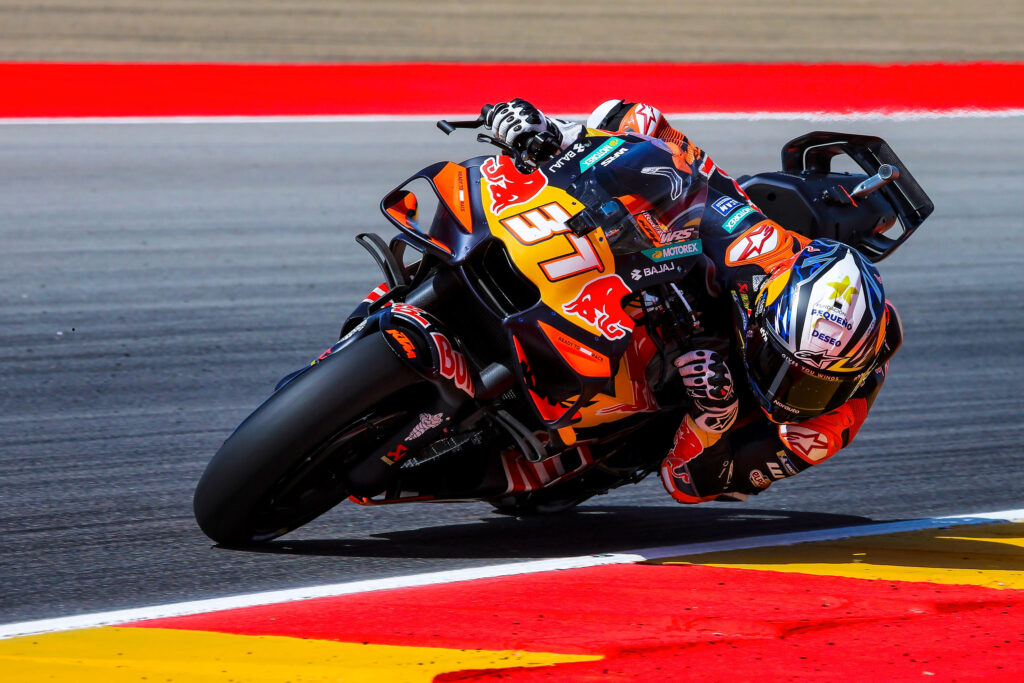
Marquez won the Sprint, Alex finished second and Bezzecchi kept the final podium place ahead of Acosta. Martin followed behind that group.
The championship gap had already begun to shrink before Sunday.
For Bagnaia, Saturday changed very little. He made it through Q1, but neither qualifying nor the Sprint suggested that he had the pace to become involved at the front.
Zarco’s day offered the opposite story. In his first Sprint since returning from injury, he immediately scored a point. After such a long absence, simply being competitive enough to finish inside the points made his comeback one of the weekend’s more encouraging stories.
The main question, however, remained unanswered.
Bezzecchi had beaten Marquez over one lap.
Marquez had beaten Bezzecchi in the Sprint.
Sunday would reveal whose pace could survive a full Grand Prix distance.
Sunday: Marquez makes a mistake, Bezzecchi fights back and Acosta becomes a genuine threat
Bezzecchi was fastest again on Sunday morning, removing any lingering suggestion that his qualifying performance had been a one-off. Aprilia had been quick throughout the weekend.
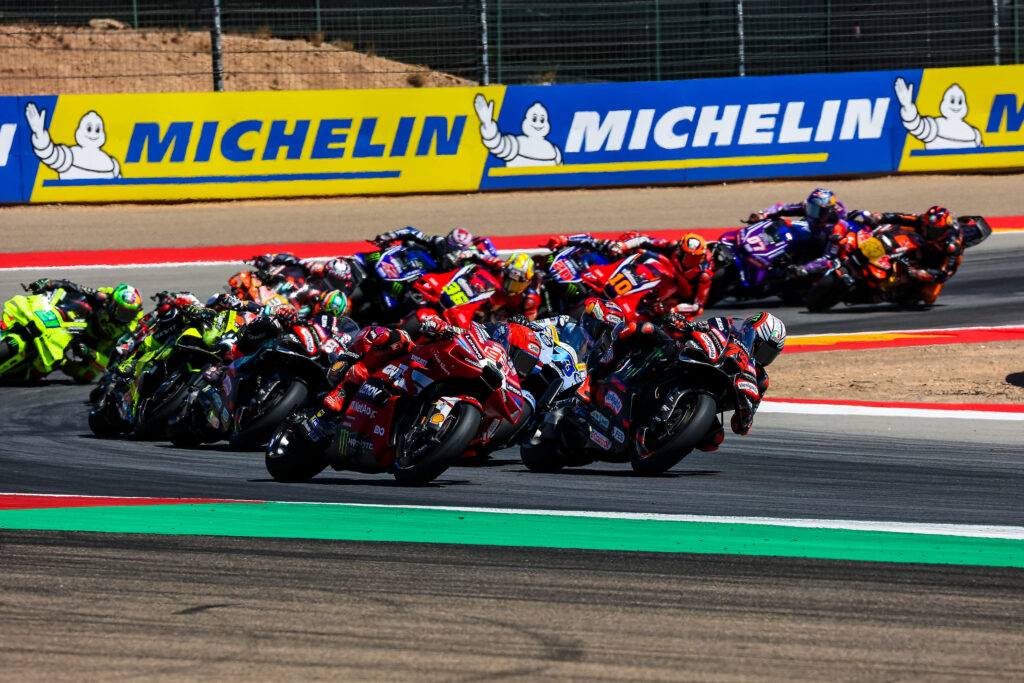
At the start, Marquez repeated his Sprint attack and went inside Bezzecchi once again.
Then came the mistake.
Marc had forgotten to disengage the rear ride-height device.
The Ducati remained too low after the launch and did not behave normally through the opening corners. For a brief period, Marquez found himself trying to correct his own problem rather than attacking the race leader. Bezzecchi regained first place, and Martin also moved ahead.
Marquez later admitted that those first corners had been deeply uncomfortable.
It did not last long.
He quickly passed Martin and began closing on Bezzecchi again. Acosta followed him through, while the championship leader gradually dropped away from the immediate fight for victory.
Bezzecchi controlled the early laps and tried to exploit the moment while Marquez recovered his positions, but he could not build enough of a margin to escape.
When the Ducati caught the Aprilia, the best battle of the Grand Prix began.
Marquez and Bezzecchi emerged onto the back straight almost side by side. Both riders later described a strange aerodynamic effect at very high speed: the motorcycles seemed to be pulled towards one another, making it unexpectedly difficult to separate.
Bezzecchi resisted for as long as he could.
Marquez eventually forced his way ahead.
And almost immediately, Acosta arrived.
While the two leaders had been occupied with each other, the KTM closed rapidly. Pedro produced an excellent move on Bezzecchi and took second place.
From that point, Marquez’s main rival was no longer the Aprilia.
Acosta was riding at genuine winning pace.
KTM had not inherited the position through somebody else’s mistake, nor was Pedro simply attempting to hang onto faster machinery. For several laps he stayed directly behind the Ducati and forced Marquez to ride without any real margin.
Acosta later admitted that he believed he could continue trying to follow Marc, but doing so would have destroyed his tyres and could have cost him even the podium.
It was one of those occasions when second place said more about a motorcycle’s potential than a fortunate victory ever could.
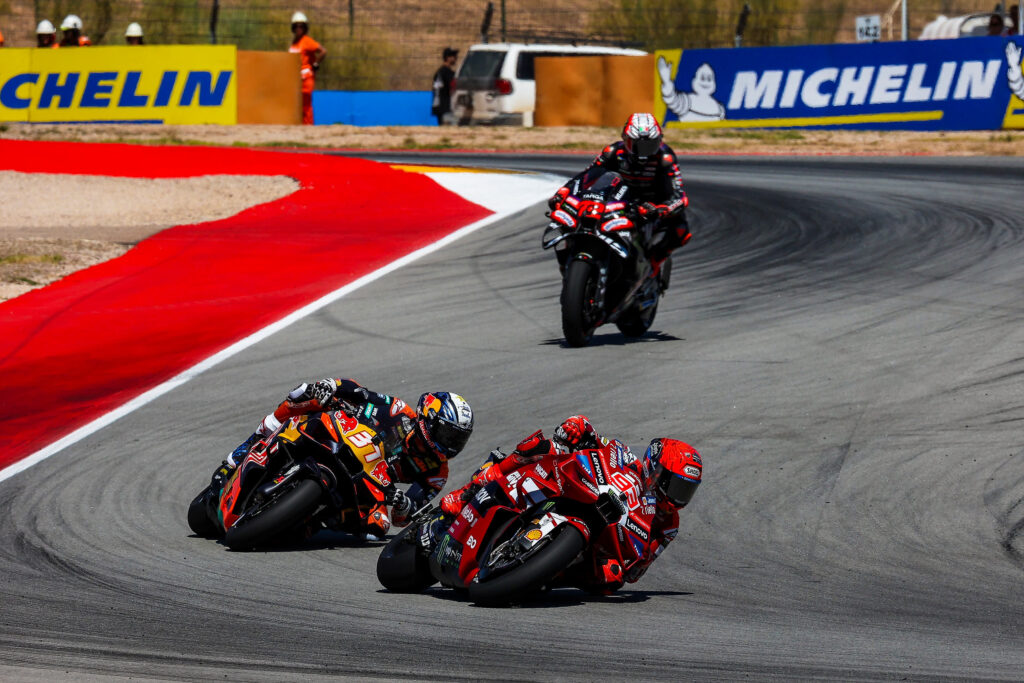
KTM had become part of the fight at the very front.
Only in the second half of the Grand Prix did Marquez gradually establish control. He became particularly effective through the right-hand corners, where he had deliberately managed the tyres earlier in the race, and a sequence of stronger laps finally gave him the margin he needed.
Acosta could no longer get close enough to attack, but he never allowed the Ducati to disappear.
Bezzecchi finished third, completing an excellent Aprilia weekend with another podium.
Alex Marquez produced a quieter Sunday and came home fourth. Martin followed him.
For the championship leader, it was one of those rare weekends when a perfectly respectable result almost felt like a defeat. He made no major mistake, did not crash and continued to score solid points.
But Marquez won both races.
The advantage Martin had built before Aragón suddenly became much smaller.
Fermin Aldeguer also delivered one of the weekend’s strongest comeback performances. He had suffered a fracture of the T7 thoracic vertebra in a crash at Assen, missed several rounds and was only cleared for a full MotoGP return after another medical assessment in Aragón.
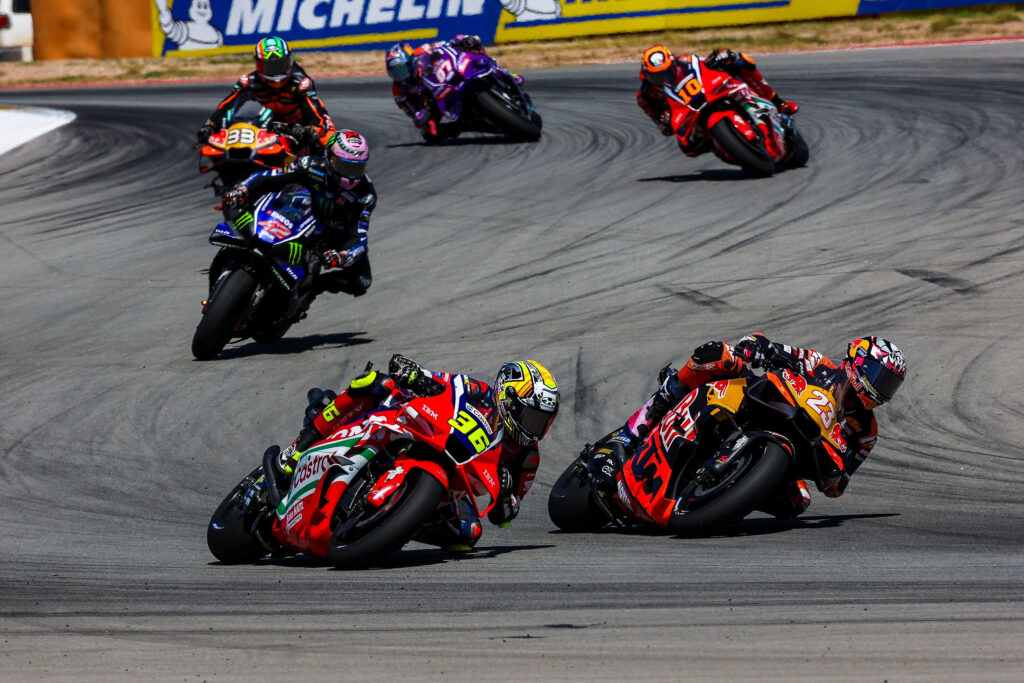
His first complete weekend back immediately demonstrated that the speed had not disappeared.
Bagnaia’s weekend ended in the opposite manner. He crashed during the opening part of the Grand Prix while trying to recover from another difficult start to an event. After a disappointing Sprint, he left MotorLand without scoring at all.
Against the backdrop of his team-mate winning both races, the contrast inside the factory Ducati garage was impossible to ignore.
Raul Fernandez also failed to finish. After a strong Friday and a competitive opening phase of the Grand Prix, his Aprilia was stopped by a technical problem.
For Yamaha, Sunday brought another difficult afternoon. Fabio Quartararo quickly slipped backwards after the start, made several mistakes, ran off line and eventually finished well outside the points.
Zarco completed a very different kind of race.
The Frenchman not only had to manage a full Grand Prix distance after his long absence, but also serve a double Long Lap Penalty carried over from the Barcelona incident. He completed both penalties and still recovered into the points.
Combined with his Sprint result, that meant Zarco scored in both races during his first MotoGP weekend back from serious injury.
After the flag: the championship is open again
Before MotorLand, the season had begun to take on a particular shape.
Aprilia had swept the podium at Silverstone. Martin had strengthened his championship lead. Bezzecchi remained his closest pursuer, while Marquez had slipped further back after a difficult British weekend.
Aragón changed the momentum.
Marquez took the maximum available result and more than halved his deficit to Martin. Bezzecchi remained directly in contention. The leading three are now close enough for a single strong or difficult weekend to transform the order once again.
And the most important part of the weekend for Marquez was not simply the points.
He did not win Sunday because he started at the front and exploited MotorLand’s natural suitability to his riding style.
He made a mistake.
He lost ground.
He came back to Bezzecchi.
He dealt with the Aprilia’s resistance.
He found Acosta directly behind him.
And only then did he build the race-winning advantage.
Aragón was also an important moment for Acosta. KTM spent much of the Grand Prix close to the strongest Ducati because of genuine speed, not because the race happened to fall its way.
Pedro is still waiting for his first MotoGP victory.
After MotorLand, however, the question increasingly feels like when the right day will arrive rather than whether he is capable of winning at all.
For Bezzecchi, Aragón became one of the most convincing weekends of his season. He was fast in virtually every session, set the outright MotorLand lap record, claimed pole and finished on the podium in both races.
More significantly, all of that happened at a circuit where Aprilia has historically struggled.
Martin remains the championship leader.
But the situation is very different from the one he faced after Silverstone.
There are now two immediate threats, and they can attack him in very different ways. Bezzecchi has essentially the same machinery and can take points directly away from Martin within Aprilia. Marquez demonstrated again in Aragón that when a circuit gives him an opportunity, he can turn it into a maximum-score weekend.
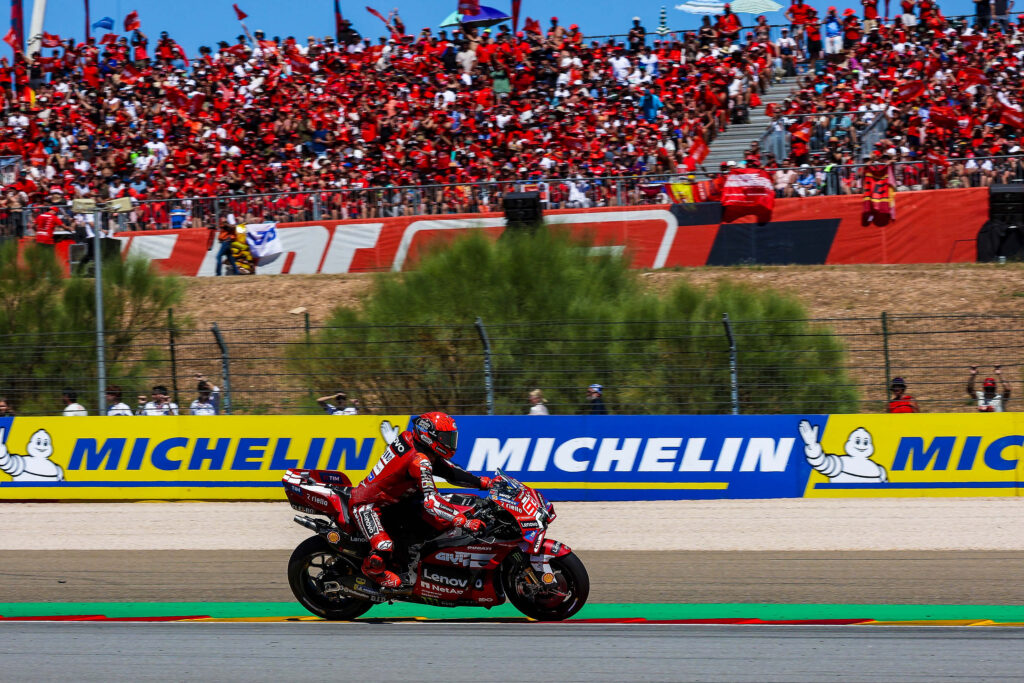
MotorLand settled nothing.
It did the opposite.
After Britain, it was possible to argue that the championship was beginning to lean towards Aprilia.
After Aragón, it is a three-rider fight again.
And Marc Marquez is right back at the centre of it.
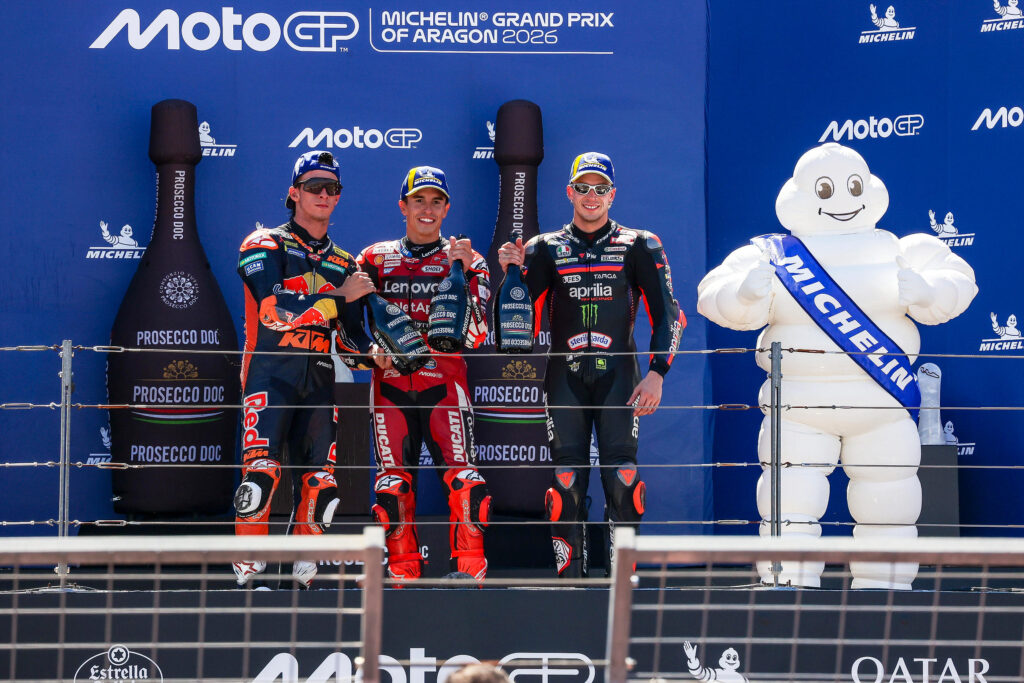
2026 Aragon MotoGP — Top 10
| Pos. | Rider | Motorcycle | Result |
|---|---|---|---|
| 1 | Marc Marquez | Ducati | 41:10.969 |
| 2 | Pedro Acosta | KTM | +1.754 |
| 3 | Marco Bezzecchi | Aprilia | +3.629 |
| 4 | Alex Marquez | Ducati | +8.687 |
| 5 | Jorge Martin | Aprilia | +12.572 |
| 6 | Fermin Aldeguer | Ducati | +17.687 |
| 7 | Fabio Di Giannantonio | Ducati | +23.136 |
| 8 | Enea Bastianini | KTM | +25.741 |
| 9 | Diogo Moreira | Honda | +25.899 |
| 10 | Brad Binder | KTM | +26.441 |

