

Rally Estonia rarely forgives hesitation. You cannot drive it halfway: wide high-speed roads, blind crests, long jumps and soft sandy gravel demand complete trust in the car, the co-driver and your own rhythm. This is not the Acropolis, where survival among the rocks comes first. Estonia asks a different question: are you ready to go fast where every mistake happens at enormous speed?
In 2026, Sami Pajari gave the clearest answer.
The Finn arrived in Tartu not as a surprise outsider, but as a driver who had already been close to a first win several times during the season. He had stood on podiums, scored consistently, stayed inside the championship group and increasingly looked like someone who simply needed one clean weekend.
In Estonia, he got it.
Pajari won 12 of the 18 stages, led from the first day to the finish and, together with Marko Salminen, claimed his first overall WRC victory. The World Rally Championship had its 83rd different event winner, while Estonia again became a place where new winners are born: Kalle Rovanpera in 2021, Oliver Solberg in 2025, and now Pajari.
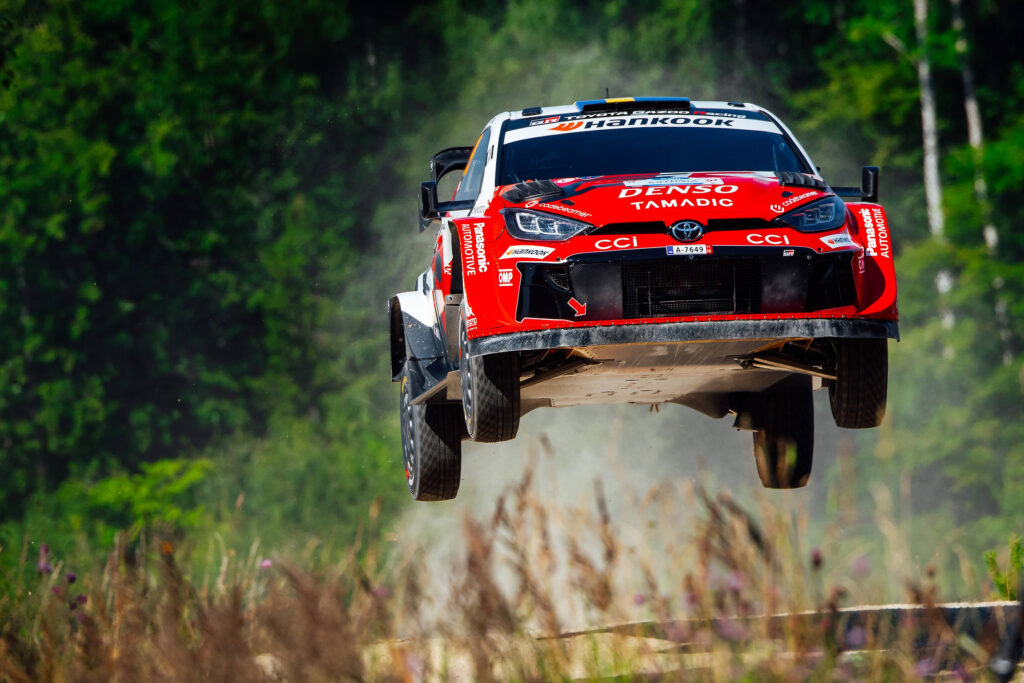
For Toyota, it was a special weekend. The team scored a one-two finish, all five of its active Rally1 drivers had now won in the 2026 season, and Pajari, although entered under the separate TGR-WRT2 banner, added fresh energy to the title fight.
But Estonia was not only the winner’s story. Oliver Solberg returned to the podium after a difficult run of events and took the maximum Sunday points. Adrien Fourmaux won Hyundai’s internal duel against Thierry Neuville and, together with Alexandre Coria, secured the crew’s second podium of the season for Hyundai. Elfyn Evans endured a difficult start but extended his championship lead. Takamoto Katsuta lost almost the entire weekend after tyre damage. Robert Virves gave the home fans a WRC2 victory, while Tymek Abramowski took his first WRC3 win.
It was a rally about speed, trust and the moment when a young driver stops being a prospect and becomes a winner.
A shorter new format: Tartu, 18 stages and just over 48 hours
Rally Estonia 2026 ran in a more compact format. The organisers fitted just over 300 competitive kilometres into a little more than 48 hours. The base was again Tartu, Estonia’s second-largest city and the traditional centre of the event.
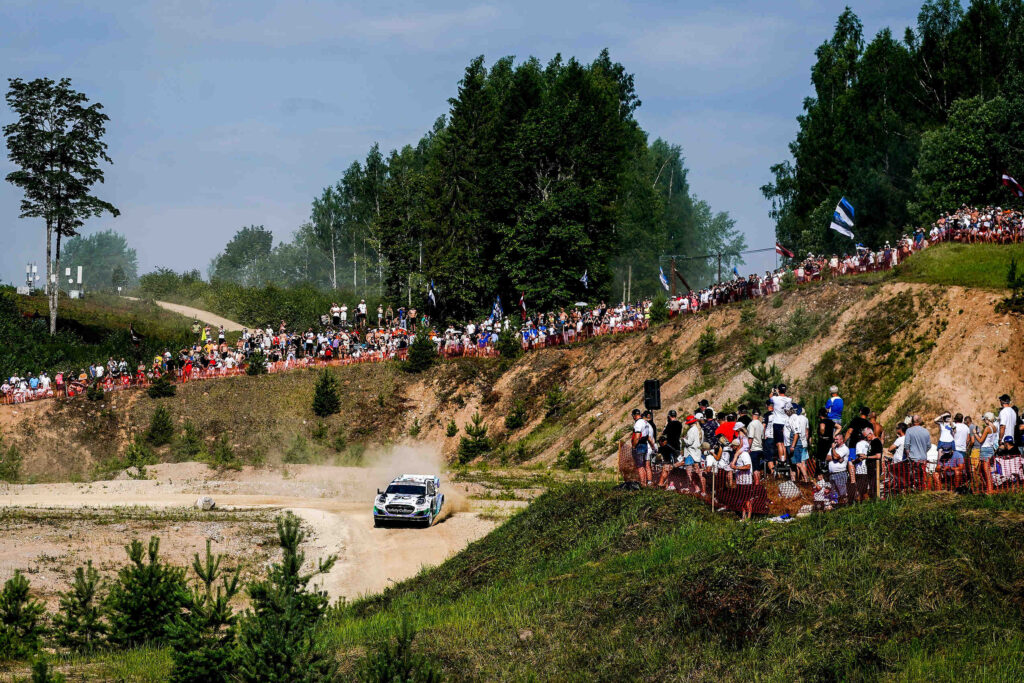
The route was built around fast gravel roads with crests, jumps and long high-speed sections. But behind the familiar phrase “fast gravel rally” was a more complex picture. On the first passes, dry loose gravel forced the early crews to sweep the road. On the repeats, ruts developed, the surface became firmer and the demands on tyres increased.
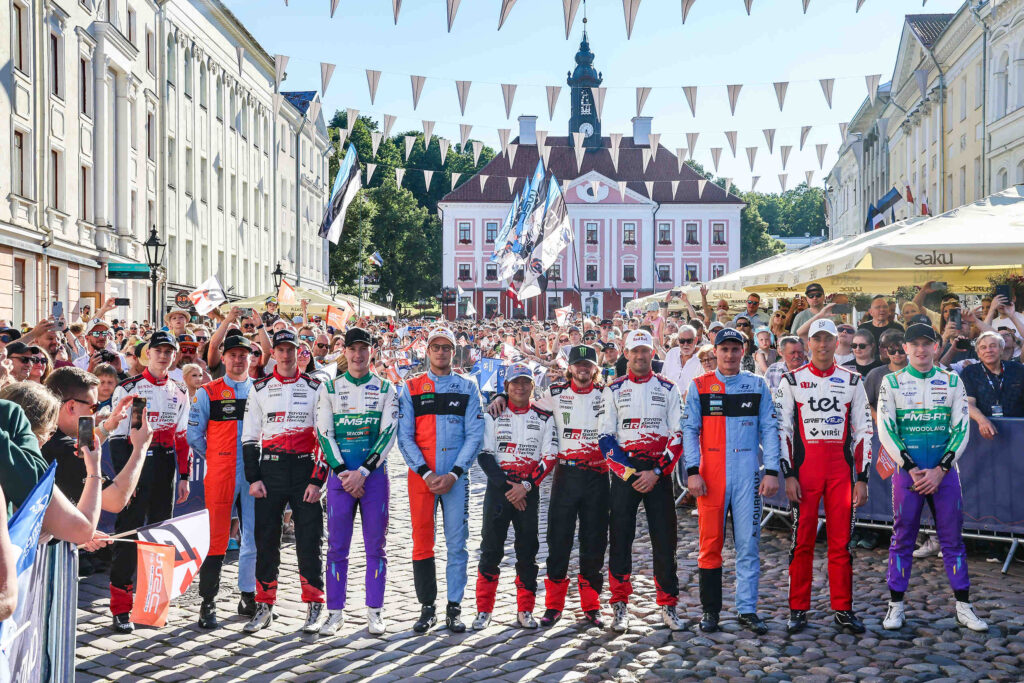
After Friday morning shakedown, the rally began later the same day: three gravel stages south of Tartu were run twice, followed by a short urban stage in Elva. Saturday was the longest part of the weekend, with nine stages and 149.6 kilometres. On Sunday, only two runs of Kääriku remained, the longest stage of the rally at 24.39 kilometres, with the second pass serving as the Power Stage.
That compact format made Friday especially important. There was no time to build into the rally.
Pajari understood that before everyone else.
Friday: Pajari’s perfect day
Toyota already looked strong in shakedown, with Pajari and Evans sharing the fastest time and the works team filling the upper positions. But shakedown is only a hint. The real answer had to come on the first competitive kilometres.
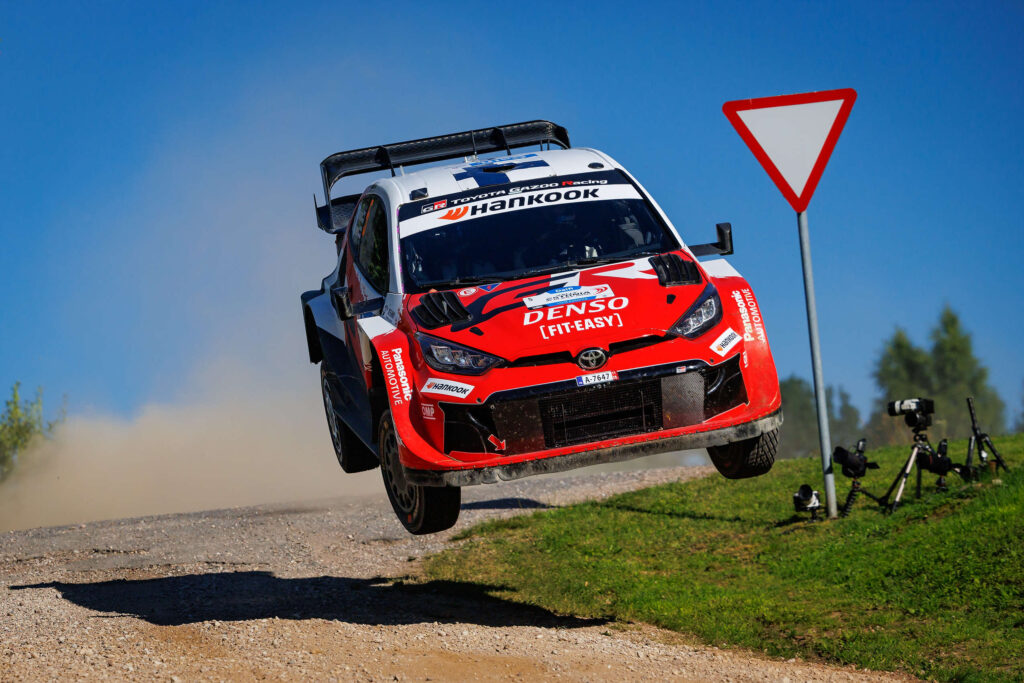
When the rally truly began, Pajari immediately found the kind of state rally drivers sometimes describe simply as flow. The car responded, the rhythm came naturally and the risk was controlled. He won the first three stages and, by the middle of the day, held a 4.1-second advantage over Oliver Solberg.
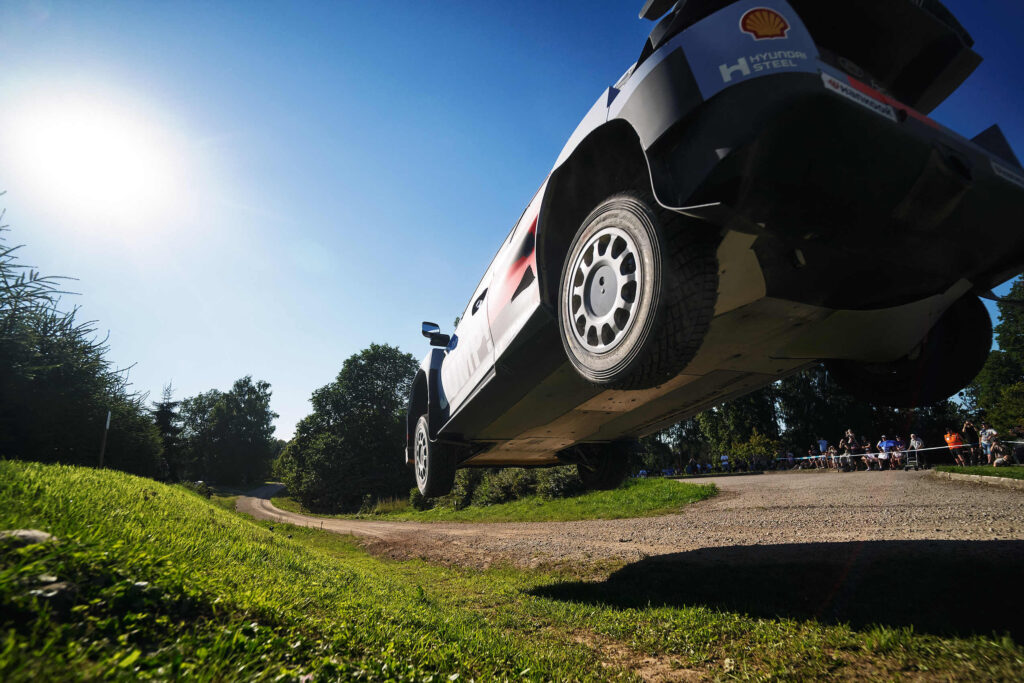
After the tyre-fitting zone in Tehvandi, the picture did not change. If anything, Pajari became even stronger. He won the second passes of the three forest stages and then added another fastest time on the evening city stage in Elva. Seven stages in a day, seven stage wins.
By the evening, his lead over Solberg was 14.7 seconds. Adrien Fourmaux was third, just 1.8 seconds behind Solberg. Thierry Neuville was fourth, with Sebastien Ogier fifth on his first Rally Estonia start since 2021.
For Pajari, it was not merely a strong day. It was the day he changed the status of the entire weekend. Before Friday, he could be considered one of the contenders. After Friday, everyone else was chasing him.
Toyota leads, but not everything is calm
Behind Toyota’s overall strength, several different stories were unfolding.
Solberg, who had won in Estonia the previous year, was fast and tidy. He could not match Pajari’s pace, but he stayed close and remained well placed for the podium. That mattered after a difficult stretch of the season: Estonia needed to restore confidence, not just provide points.
Ogier had a calm Friday without unnecessary risk. After five years away from these roads, he did not look completely in his comfort zone, but he remained inside the top five and kept himself in position for good points.
Evans had the hardest role. As championship leader, he opened the road on dry loose gravel, effectively cleaning the surface for those behind. By the end of Friday, he was only ninth, almost 50 seconds behind Pajari.
The most painful day belonged to Takamoto Katsuta. The Japanese driver had been running sixth, but suffered tyre damage on the final forest stage and had to stop without a usable spare. His rally as a contender for the overall result was effectively over on Friday.
After Greece, Katsuta had been Evans’s main championship pursuer. In Estonia, he took a blow that could not be recovered by speed alone.
Saturday: Solberg responds, but Pajari does not flinch
Saturday would reveal whether Pajari’s Friday surge was genuine control or simply the perfect combination of car, road position and mood.
The answer was convincing.
In the morning, Pajari continued his stage-winning run by taking the first passes of Peipsiääre and Mustvee. His advantage over Solberg grew to 17.6 seconds. Oliver then finally broke the streak, winning the second passes of both stages and cutting the gap to 14.1 seconds by service in Tartu.
At that stage, Solberg still had hope. He was beginning to feel the car better, closing in on pace and reminding everyone why he had won this rally a year earlier.
But after midday, Pajari did what a future winner has to do: he answered just as his rival began to get closer.
He won three stages in a row and extended his lead to 25 seconds by the end of the day.
After that, Solberg effectively accepted that victory was slipping away. Second place became the more realistic target, especially with Sunday points from Super Sunday and the Power Stage still available.
For Pajari, Saturday mattered as more than another fast day. For the first time in his career, he was the driver protecting a likely victory rather than chasing one. He did it without visible nerves.
Hyundai: Fourmaux versus Neuville
While Toyota controlled the first two positions, Hyundai had its own race.
Fourmaux was running third, but Saturday was not straightforward. On SS10, he hit an anti-cut device with the front-right of his Hyundai i20 N Rally1 and lost bodywork, then suffered a slow loss of pressure on SS11 and another nervous moment on SS13.
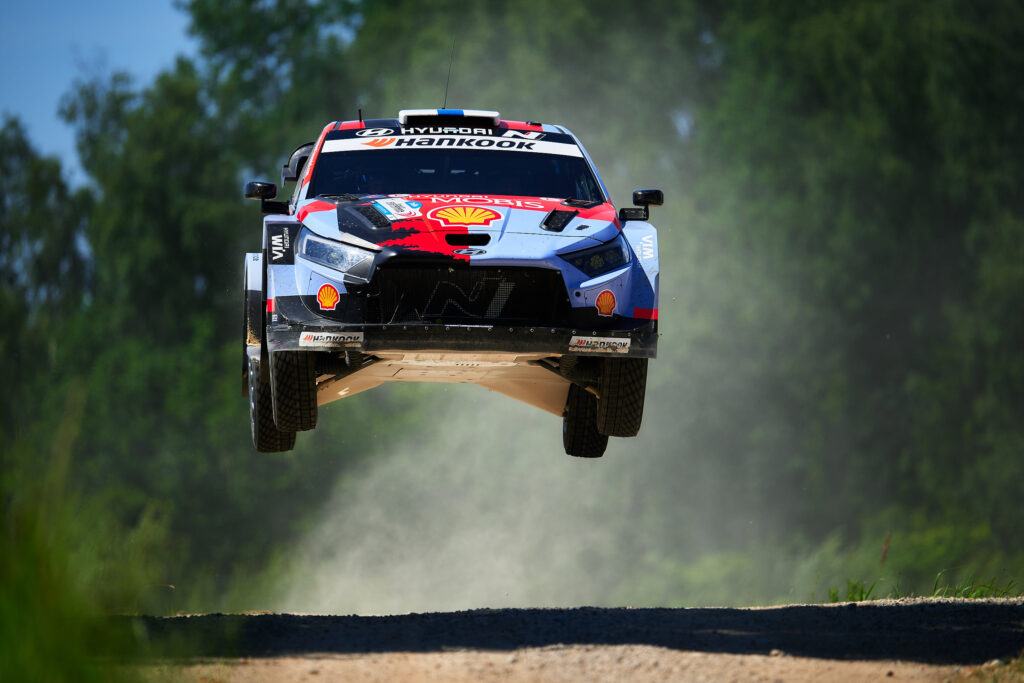
Neuville, by contrast, gradually came back to life. After a difficult start to the rally and balance issues with the car, the team changed the set-up and the Belgian began to close in. By Saturday evening, only 1.9 seconds separated the two Hyundai crews.
Ahead of them were two runs of Kääriku. The fight for victory was effectively almost over, but the fight for the podium was not.
That internal duel became Sunday’s main storyline behind Pajari.
M-Sport: promise, but not without problems
M-Sport again had a weekend of mixed emotions.
Martins Sesks received a 20-second penalty on Friday morning after going off in shakedown and being delayed leaving service while mechanics completed repairs to his Ford Puma Rally1. He then recovered his rhythm and was sixth by the end of Friday. On Saturday he lost time with front-right wheel damage, but still remained inside the top ten.
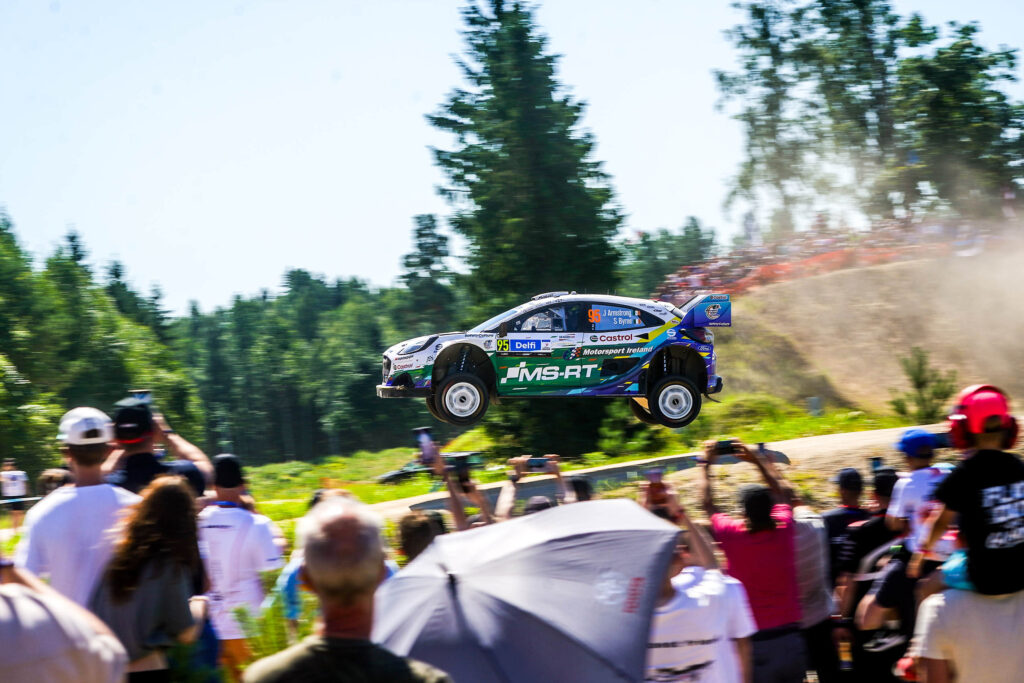
Jon Armstrong finished ninth, banking an important points finish for M-Sport. Josh McErlean, after a strong Friday, endured a tough Saturday: a stop on SS8 cost him around ten minutes, and he then retired before SS10 with an exhaust manifold issue.
Compared with Toyota and Hyundai, this was not a breakthrough weekend, but Estonia still gave M-Sport points, experience and several quick moments.
Sunday: rain threatens, but does not break Pajari’s win
Sunday in Estonia was short, but dangerous.
Only two passes of Kääriku remained — 24.39 kilometres and the longest stage of the rally. Rain had fallen overnight, and Sunday’s conditions were different from the dry, dusty stages of Friday and Saturday. For a leader, that is always uncomfortable: you have a margin, but one mistake on wet fast gravel can destroy two days of work.
Solberg won the first pass, but took only 0.4 seconds from Pajari. After that, the battle for victory was effectively finished. Pajari simply had to complete the Power Stage cleanly and without unnecessary drama.
He did exactly that.
Solberg was again fastest on the final stage, winning the Power Stage and topping Super Sunday. Pajari did not chase one more spectacular time, set the sixth-fastest Power Stage time and calmly brought the Toyota home.
The final winning margin was 19.5 seconds.
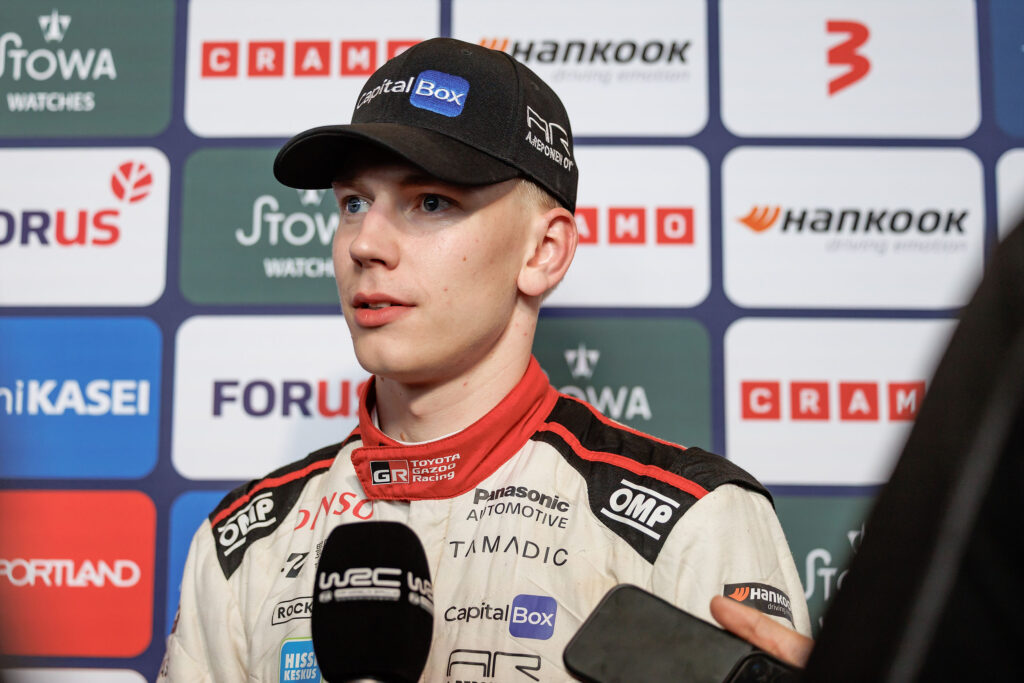
On Pajari’s face at the finish was exactly the kind of expression that makes rallying worth watching for years: not only joy, but relief. He had been close so many times. In Estonia, there was finally no “almost”.
Finish: Pajari’s first win and a new Finnish storyline
Sami Pajari and Marko Salminen won Rally Estonia in 2:31:16.5.
For Pajari, it was his first overall WRC victory, his sixth podium of the season and the logical continuation of a very strong first half of the championship. Two years earlier, he had made his GR Yaris Rally1 debut on his way to the WRC2 title; now he had won a World Rally Championship round in the top category.
There was also a neat historical line to the result. Finland claimed its 199th WRC victory, and the next round would be Rally Finland — on similarly fast gravel roads, where Pajari would now inevitably be seen not merely as a talent, but as a real contender.
But the main point was even simpler.
Pajari did not win by accident, after a rival’s crash or through chaos. He was fastest from the start. He won every Friday stage. He answered Solberg on Saturday. He survived Sunday calmly. This was a mature victory by a young driver.
Solberg: second place that restores confidence
Oliver Solberg could not repeat his 2025 victory, but second place was almost as important for his season as someone else’s win.
After a difficult run of events, Solberg needed a clean, fast and confident weekend. In Estonia, he got it: second overall, victory in Super Sunday and on the Power Stage, and 27 points for the round.
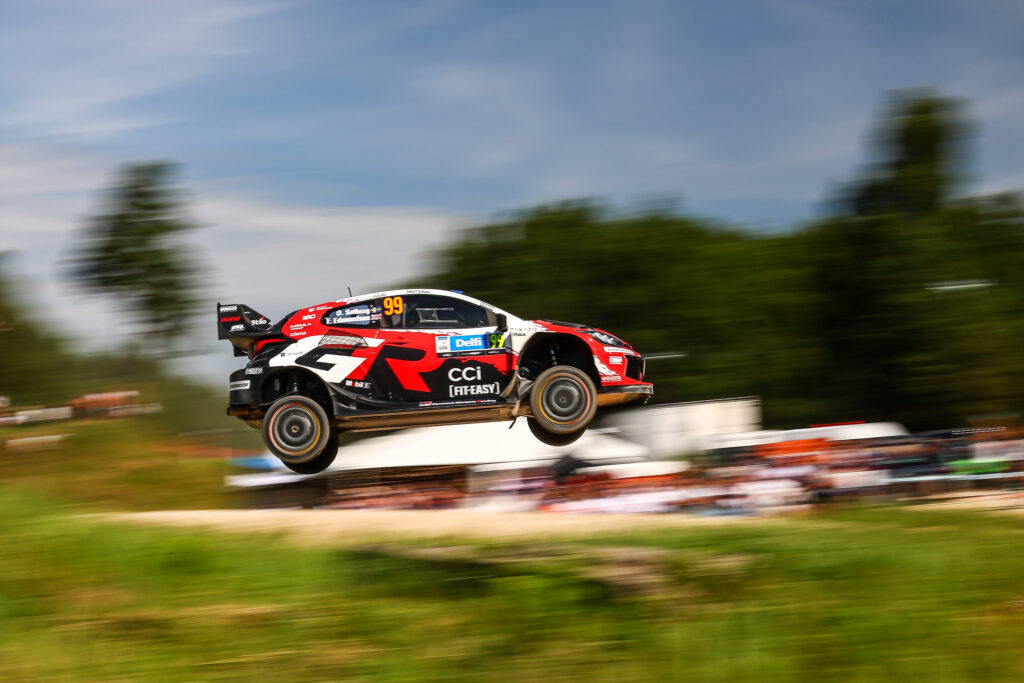
Solberg did not try to force his way after Pajari once the risk became too great. He accepted second place, but on Sunday did everything possible to take the maximum additional points.
That is an important feature of the current WRC points system: Sunday can significantly change the value of an entire rally. For Solberg, Estonia was exactly that kind of event — not a winning one, but a very useful one.
Fourmaux holds the podium, Neuville stays close
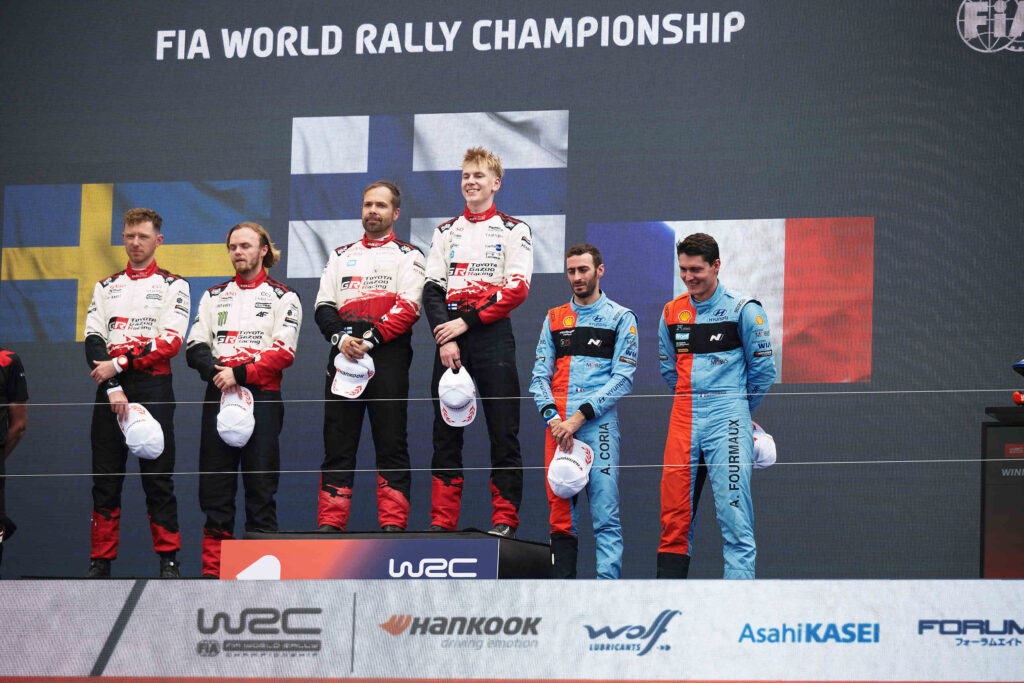
Adrien Fourmaux and Alexandre Coria finished third and secured their second podium of the season for Hyundai.
Fourmaux’s main job on Sunday was not to catch Toyota, but to hold off Neuville. Before the final two stages, the French crew’s advantage was only 1.9 seconds. On the first run through Kääriku, Fourmaux drove bravely, stretched the gap to more than nine seconds and then calmly finished the job.
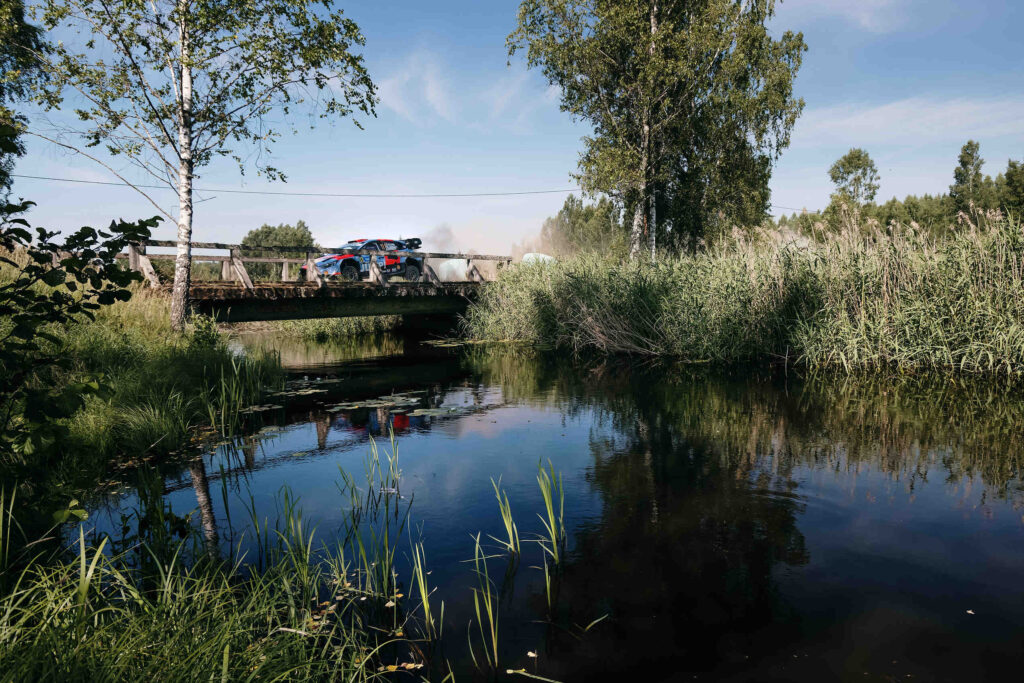
Neuville finished fourth, but he too could leave Estonia with the feeling that Hyundai was moving in the right direction. Early in the rally he had not felt comfortable in the car, but after set-up changes the pace gradually returned. He was second on the Power Stage and remained tied with Fourmaux in the championship standings.
After the Acropolis, Hyundai had already shown it could fight on rough gravel. Estonia confirmed that the car had also become more competitive on fast roads. There was no victory, but third and fourth places, along with 100 percent reliability for all three cars, gave the team a good platform before Finland.
Esapekka Lappi finished eighth. It was his third start of the season and his first Rally Estonia since 2023. He did not have the pace to fight at the front, but the weekend gave the Finn important kilometres before his home Rally Finland.
Ogier and Evans: not victory, but important points
Sebastien Ogier finished fifth. After winning in Greece, he arrived in Estonia with higher expectations, but admitted that after five years away from the rally he lacked a few tenths on the fastest roads.
Still, Ogier did what champions so often do: he scored points on a weekend when victory was out of reach. Fifth place and additional Sunday points kept him inside the title group.
Evans, sixth at the finish, also did not look like a championship leader controlling the season. But his task was different. After opening the road on Friday, he had dropped too far back to realistically fight for the podium. On Saturday he climbed from ninth to sixth, and on Sunday he made good use of the damp conditions, finishing second in Super Sunday and third on the Power Stage.
In the end, Evans not only kept the championship lead but extended his advantage over Katsuta to 25 points. For a weekend that had started so heavily, it was a very decent outcome.
Katsuta: a lost weekend after Greece
For Takamoto Katsuta, Estonia was a blow.
After his podium in Greece, he arrived just 11 points behind Evans and looked like one of the main players in the title fight. But Friday’s tyre damage knocked him out of the overall battle. On Saturday and Sunday he ran under restart rules, opened the road and mainly worked on set-up for Finland.
His only consolation was one point on the Power Stage. In the championship, he kept second place, but his gap to Evans grew to 25 points.
Against the backdrop of Pajari’s victory, that was especially noticeable: inside Toyota, the championship picture became even more complicated. Evans was ahead, Katsuta still second, but Pajari and Ogier were now close behind.
Final 2026 Rally Estonia results
Final classification after 18 stages:
| Pos. | Crew | Car | Gap |
| 1 | Sami Pajari / Marko Salminen | Toyota GR Yaris Rally1 | 2:31:16.5 |
| 2 | Oliver Solberg / Elliott Edmondson | Toyota GR Yaris Rally1 | +19.5 |
| 3 | Adrien Fourmaux / Alexandre Coria | Hyundai i20 N Rally1 | +53.8 |
| 4 | Thierry Neuville / Martijn Wydaeghe | Hyundai i20 N Rally1 | +59.7 |
| 5 | Sebastien Ogier / Vincent Landais | Toyota GR Yaris Rally1 | +1:32.9 |
| 6 | Elfyn Evans / Scott Martin | Toyota GR Yaris Rally1 | +2:01.0 |
| 7 | Martins Sesks / Renars Francis | Ford Puma Rally1 | +2:35.3 |
| 8 | Esapekka Lappi / Enni Malkonen | Hyundai i20 N Rally1 | +3:02.3 |
| 9 | Jon Armstrong / Shane Byrne | Ford Puma Rally1 | +3:28.0 |
| 10 | Robert Virves / Jakko Viilo | Skoda Fabia RS Rally2 | +8:33.1 |
Pajari won the rally by 19.5 seconds over Solberg, while Fourmaux beat Neuville to third place by 5.9 seconds.
WRC2: Virves wins at home
If Pajari was the main story overall, WRC2 gave Estonian fans their own celebration.
Robert Virves and Jakko Viilo won the category on home soil in a Skoda Fabia RS Rally2. The battle was extremely close: before the final day, Virves led Teemu Suninen by 10.1 seconds, with Roope Korhonen only another 0.8 seconds behind.
Sunday was no easy run. Suninen and Korhonen attacked until the end, and second place was decided on the Power Stage: Suninen beat Korhonen by just 1.2 seconds. Virves held on to win by 7.6 seconds and received not only the WRC2 trophy, but also a special 25,000 euro prize as the best local talent.
| Pos. | Crew | Car | Gap in WRC2 |
| 1 | Robert Virves / Jakko Viilo | Skoda Fabia RS Rally2 | 2:39:49.6 |
| 2 | Teemu Suninen / Janni Hussi | Toyota GR Yaris Rally2 | +7.6 |
| 3 | Roope Korhonen / Anssi Viinikka | Toyota GR Yaris Rally2 | +8.8 |
| 4 | Emil Lindholm / Gabriel Morales | Skoda Fabia RS Rally2 | +51.3 |
| 5 | Mille Johansson / Johan Gronvall | Skoda Fabia RS Rally2 | +1:48.4 |
For Virves, it was more than a class victory. It was one of those rare moments when a home driver stands at the centre of a major international weekend — and withstands the pressure.
WRC3: Abramowski’s first victory
Tymek Abramowski won WRC3. For the 20-year-old Polish driver, it was his first success at WRC3 level, and it immediately changed the championship picture.
After Estonia, Abramowski moved up to second in the WRC3 standings, 24 points behind reigning champion Matteo Fontana but with one fewer start.
Fontana retained the championship lead, but Estonia showed that the WRC3 fight was not yet closed.
Championship: Evans leads, but Toyota tightens internally
After nine rounds, Elfyn Evans retained the championship lead with 177 points. Katsuta remained second on 152, but his deficit grew to 25 points. Pajari’s victory lifted him to third on 144, Ogier was fourth on 139, and Solberg fifth on 130. Neuville and Fourmaux were tied on 111.
| Pos. | Driver | Points |
| 1 | Elfyn Evans | 177 |
| 2 | Takamoto Katsuta | 152 |
| 3 | Sami Pajari | 144 |
| 4 | Sebastien Ogier | 139 |
| 5 | Oliver Solberg | 130 |
| 6 | Thierry Neuville | 111 |
| 7 | Adrien Fourmaux | 111 |
Formally, Evans left Estonia in a better position than when he arrived. But the championship picture itself became more complicated. Pajari’s victory created another genuine contender, while Solberg, with 27 points from the weekend, moved closer to the leading group again.
Toyota now has not one obvious challenger, but several strong internal storylines: Evans as the leader, Katsuta as the pursuer, Pajari as the new winner, Ogier as the champion who never disappears from the fight, and Solberg as the fast young driver capable of taking maximum points on a given weekend.
In the manufacturers’ standings, Toyota Gazoo Racing WRT extended its lead to 464 points against Hyundai’s 308. Toyota Gazoo Racing WRT2, represented by Pajari, was third on 157, with M-Sport fourth on 116.
After Estonia: Finland becomes even more interesting
The next round is Rally Finland. After Estonia, it looks even more intriguing.
For Pajari, it will be his home round immediately after his first WRC win. For Solberg, a chance to continue rebuilding confidence on fast gravel roads. For Ogier, an opportunity to raise the level after a measured Estonia. For Evans, a need to defend the championship lead on territory where all of his team-mates can be extremely strong. For Katsuta, an immediate chance to respond after a lost weekend.
Hyundai will also head to Finland with reason for hope. Fourmaux returned to the podium, Neuville improved after set-up changes, and Lappi gained important mileage before his home event. Hyundai sporting director Andrew Wheatley spoke after Estonia about a strong team weekend, 100 percent reliability for all three cars and the intention to carry that momentum into Finland.
After the Acropolis, the main question of the season seemed to be whether Ogier could properly rejoin the title fight. After Estonia, there was a new one: how far can Pajari go if his first victory frees him rather than adds pressure?
Conclusion
Rally Estonia 2026 was one of those rare events where the winner’s story was clear almost from the beginning, yet became no less important because of it.
Pajari did not win because of someone else’s misfortune. He did not wait for his rivals to make mistakes. He took the rally on Friday, defended it on Saturday and brought it home on Sunday.
Seven wins from seven stages on the first day. Twelve stage wins from eighteen. A first WRC victory. A sixth podium of the season. Third place in the championship after nine rounds.
Solberg regained confidence and took the maximum on Sunday. Fourmaux held the podium for Hyundai. Neuville was close again, but not close enough to change the result. Ogier and Evans did their work on a weekend when victory was out of reach. Katsuta took a heavy blow to his title hopes, but the season is not over.
And Estonia once again became the birthplace of a new winner.
First Rovanpera won here. Then Solberg. Now Pajari.
On roads like these, you cannot pretend to be fast. Either you trust the car, the pacenotes and yourself — or the road shows the truth immediately.
In 2026, Sami Pajari trusted everything.
That is why he left Estonia as a winner.

