

Zandvoort has never been a quiet place.
The narrow circuit threaded through the North Sea dunes, the banked corners, the short lap, the coastal wind and grandstands painted almost entirely orange have made the Dutch Grand Prix one of the most distinctive events of Formula 1’s modern era.
In 2026, all of that carried extra weight. Zandvoort was hosting its final Grand Prix before leaving the calendar. Formula 1 had returned to the Netherlands in 2021 after a 36-year absence, beginning a six-season second chapter almost inseparable from Max Verstappen and the rise of his Orange Army. The organisers chose to end that chapter while demand remained strong and the grandstands were still full.
But the final weekend produced nothing like the script the home crowd would have wanted.
Verstappen did not even complete the opening lap of his final home Grand Prix, losing the Red Bull on a still-damp section exiting Arie Luyendijkbocht and crashing into the barriers. Kimi Antonelli led for more than half the race and came close to a seventh victory of the season. George Russell won the Sprint. Ferrari started only from the third row but had enough Sunday pace for Lewis Hamilton and Charles Leclerc to pressure Russell for the final podium place until the closing laps. Oscar Piastri again showed strong one-lap speed, but his race came apart after a slow pit stop and a lack of long-run pace.
Yet the defining figure of Zandvoort was Lando Norris.
The reigning world champion lost the lead at the restart, spent much of the Grand Prix chasing Antonelli, then closed him down on fresher tyres and made the pass that ultimately decided the race. After winning in Hungary, Norris claimed a second consecutive Grand Prix victory, delivered McLaren’s third straight Dutch GP win and became the final winner of Zandvoort’s modern Formula 1 era.
It was not one of his easiest victories.
That was exactly why it was one of his best.
Friday: Antonelli sets the pace, Russell takes Sprint pole
The Sprint format left the teams with only a single one-hour practice session. At Zandvoort, that is a particularly awkward restriction. The lap is short, traffic regularly compromises preparation for flying laps, and changes in wind direction and track temperature can alter the balance of a car between one run and the next.
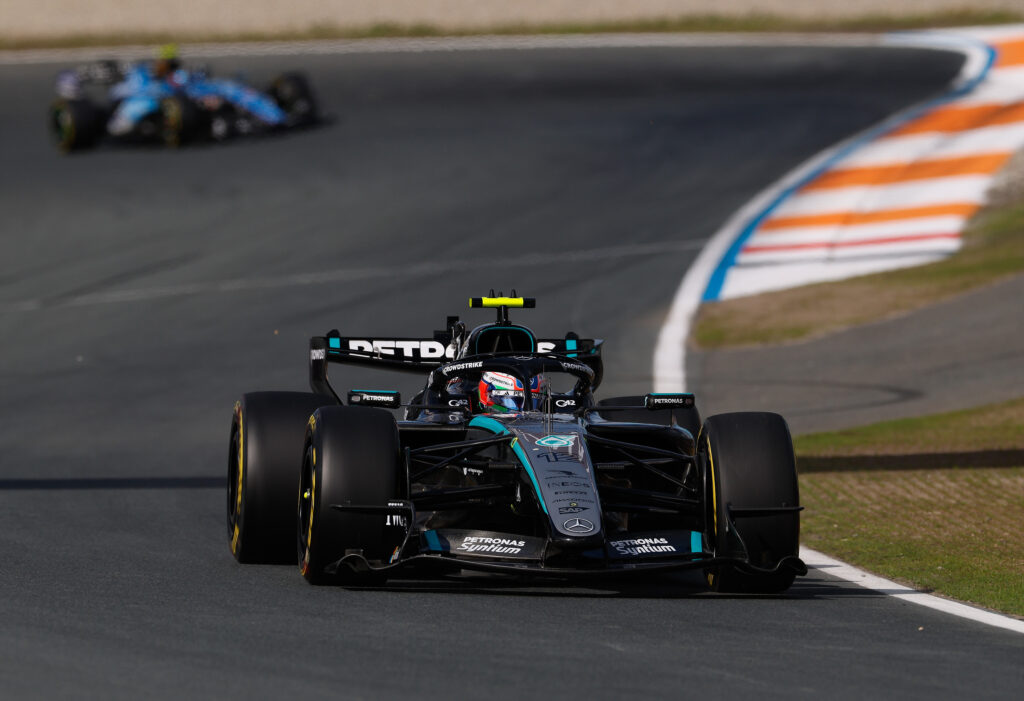
Friday morning was made more complicated by damp sections of track. The first cars ventured out on intermediates before the racing line gradually dried. Championship leader Kimi Antonelli ended the session fastest with a 1:12.949. Norris was 0.121 seconds behind, Russell 0.125, Hamilton 0.190 and Leclerc 0.289.
Mercedes immediately showed that the summer break had done nothing to blunt its pace.
Antonelli was not flawless. He spun during practice and later went through the gravel in Sprint Qualifying, damaging the floor. But the underlying speed of both car and driver was obvious.
Verstappen’s home weekend began very differently. He was only 11th in the sole practice session and briefly ran off track. Throughout the weekend, the Dutchman spoke less about his own condition — he had arrived in Zandvoort with a cold — than about a fundamental balance problem with the RB22. After qualifying, Verstappen admitted that setup changes had failed to cure an issue Red Bull had encountered at certain circuits throughout the season.
The team also arrived with an unexpected driver reshuffle. Isack Hadjar had injured his wrist before the event and was unable to compete. Liam Lawson stepped into the senior Red Bull seat, returning to the team after his brief spell there at the beginning of 2025. Lawson’s Racing Bulls seat was taken by Yuki Tsunoda, making his first Formula 1 start since losing his full-time drive at the end of the previous season.
The first real fight for track position came in Friday’s Sprint Qualifying, and this time it was the other Mercedes that emerged on top.
Russell put together an excellent final lap of 1:11.567, beating Norris by just 0.041 seconds. Leclerc was 0.055 away, Piastri 0.099. Antonelli salvaged fifth despite the floor damage, while Verstappen could manage only sixth, more than half a second slower than Russell.
Four cars from three teams were covered by less than a tenth.
By Friday evening, the picture was already becoming clear: Mercedes was quick, McLaren was close, Ferrari had the pace to interfere, and Red Bull simply did not have enough performance at Verstappen’s home circuit.
For the final Zandvoort weekend, it was an unfamiliar landscape. The years when the central question was simply “who can stop Max?” were already over before Sunday began.
Saturday: Russell wins the Sprint, Norris answers with pole
The Sprint confirmed Mercedes’ speed.
Russell converted pole perfectly and completed the 24 laps without making a serious mistake. Norris remained his closest challenger early on, but the rear mediums on the McLaren gradually began to lose grip.
Leclerc took advantage.
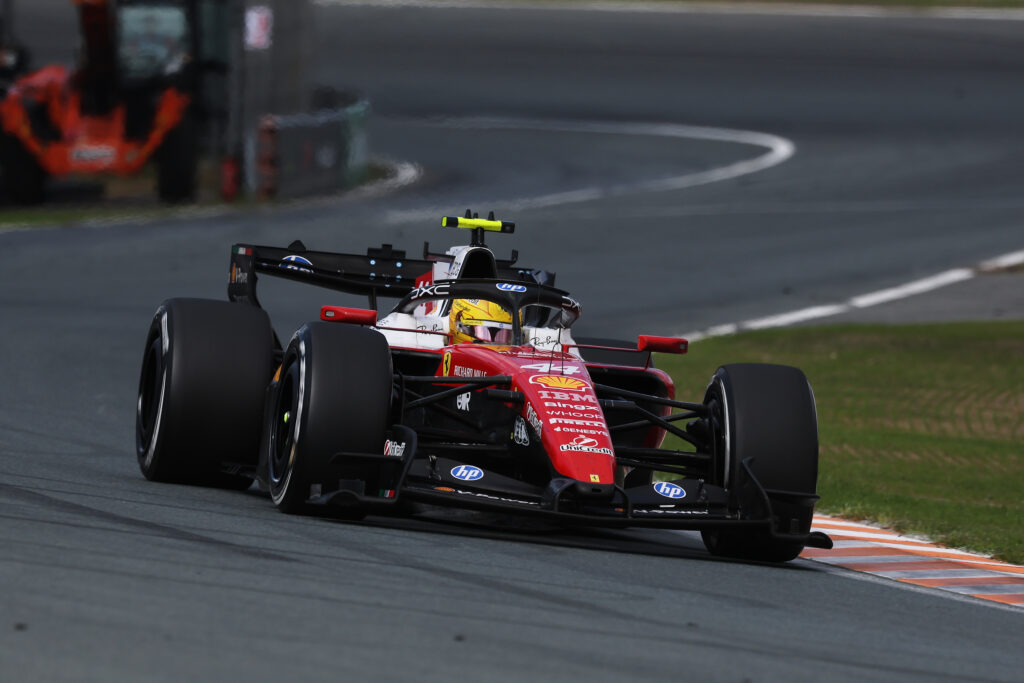
Ferrari had chosen a more aggressive strategy, sending the Monegasque out on soft tyres. At first it looked as though the gamble might leave him vulnerable late in the Sprint, but degradation was lower than expected. On Lap 18, Leclerc caught Norris and passed him into Turn 1, then held second place to the finish.
Russell won by 1.360 seconds. Leclerc finished second, Norris third, Antonelli fourth and Piastri fifth. Verstappen ended the Sprint sixth and collected three points, but even over the shorter distance the Red Bull never looked capable of challenging for victory. Hamilton was seventh, with Pierre Gasly taking the final point in eighth.
A heavy shower swept across the circuit almost immediately after the Sprint. The race itself had remained dry — the rain arrived only a few minutes too late to change anything.
Conditions shifted again ahead of Grand Prix qualifying. Temperatures fell, dark clouds gathered over the dunes and teams had to decide whether to complete an extra preparation lap or attack immediately before the rain arrived.
Piastri looked like one of the strongest pole contenders for much of qualifying. Mercedes remained quick. But when it mattered, Norris produced the lap.
He committed to one final attempt at the end of Q3 and stopped the clock at 1:11.163. Russell was 0.102 seconds behind, Antonelli 0.133 and Piastri 0.142. Less than a tenth and a half covered the top four.
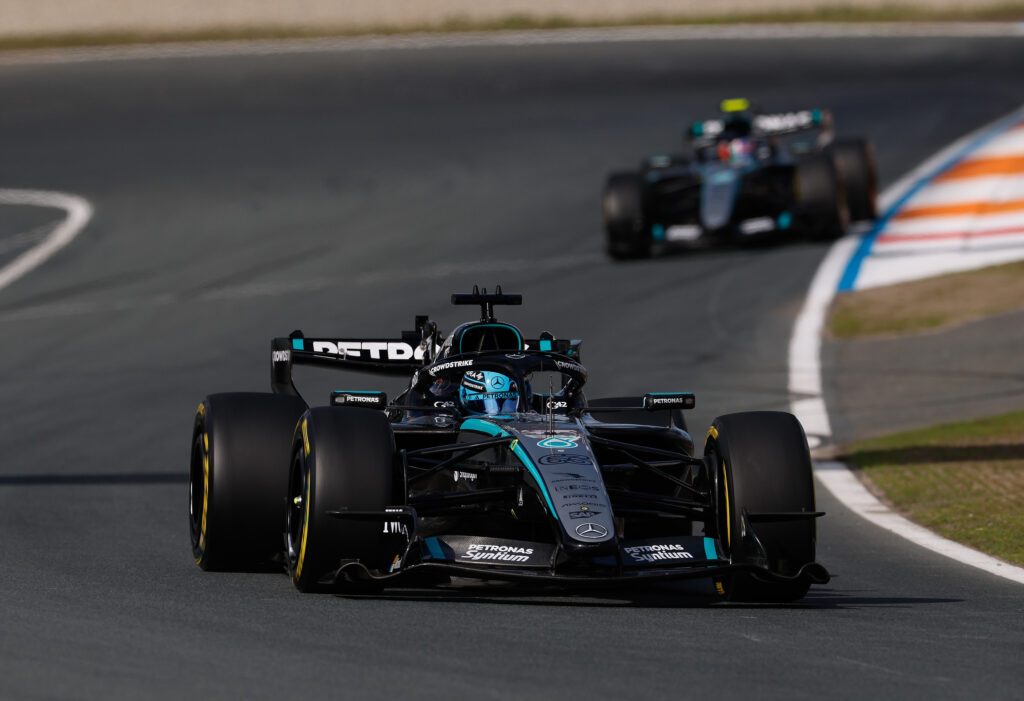
Ferrari locked out the third row with Hamilton fifth and Leclerc sixth. Verstappen was only seventh, 0.455 seconds away from Norris. Lawson lined up directly behind him, with Gabriel Bortoleto and Arvid Lindblad completing the top 10.
For Verstappen, it was one of the clearest sessions of the weekend.
There had been no mistake costing him a front-row place. No inconvenient red flag. No ruined final attempt.
Red Bull was simply not fast enough.
Verstappen said as much afterwards. His cold was uncomfortable, but it was not the explanation for seventh. The real problem remained the car, whose balance he described as a fundamental limitation.
Norris, by contrast, secured exactly the grid position that had always mattered most in the modern Zandvoort era. Every Dutch Grand Prix since the circuit returned to Formula 1 in 2021 had been won from pole position.
That sequence would survive one final time in 2026.
Although Sunday came very close to forcing Norris to break it himself.
Sunday: Verstappen is out immediately, Antonelli leads, Norris takes it back
Rain passed over Zandvoort around 45 minutes before the start. By the time the cars reached the grid, the main racing line had largely dried, but several areas remained damp and unpredictable.
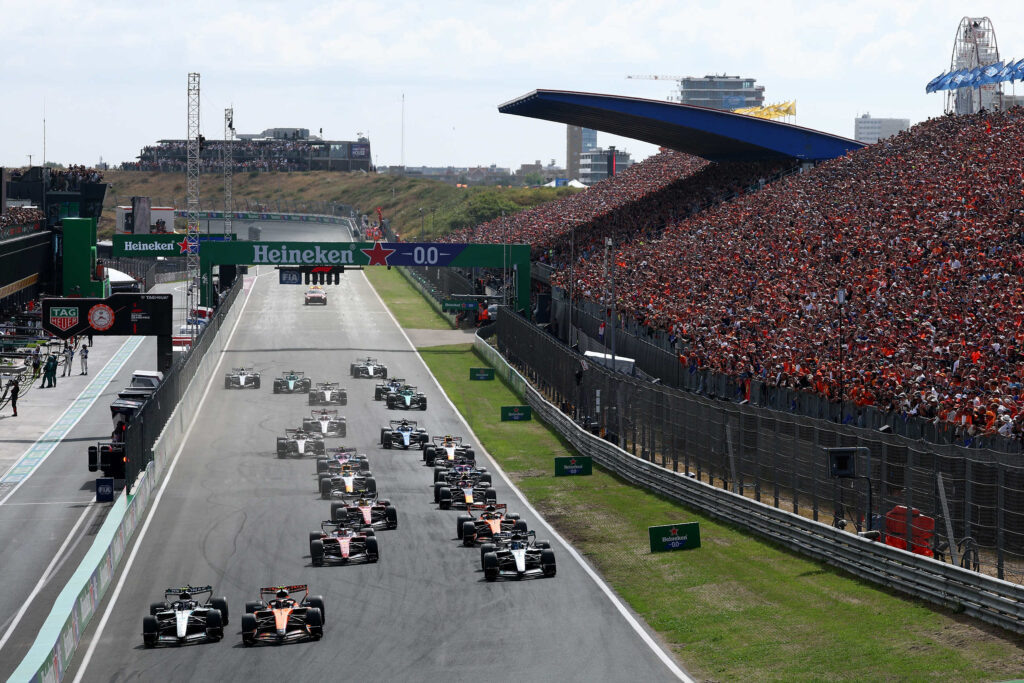
Those are often the most dangerous conditions of all. Drivers can see almost dry asphalt and commit to slick tyres, yet a strip of paint or a section that has not fully dried can change the level of grip instantly.
Most of the field selected softs. The top four — Norris, Russell, Antonelli and Piastri — started on mediums. Cadillac put both cars on hard tyres. The formation lap was completed behind the Safety Car before the field lined up for a normal start.
Norris held the lead. Antonelli launched better than Russell and immediately took second. Leclerc passed Piastri, while Verstappen and Lawson ran close together through the opening corners.
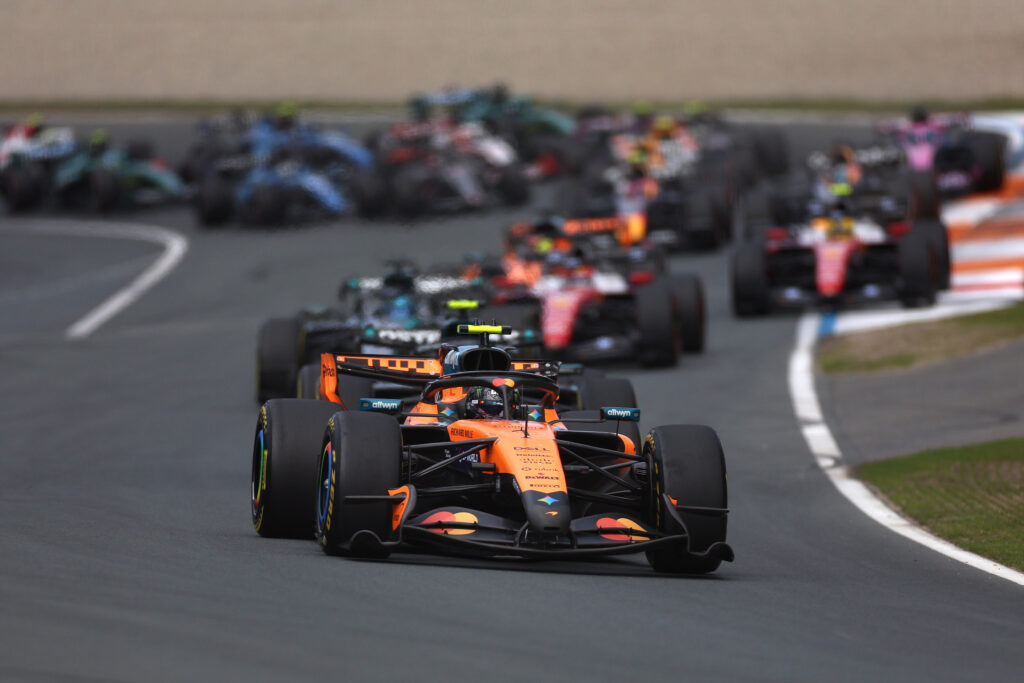
Verstappen’s final home Grand Prix was over before he completed the first lap.
Exiting the heavily banked Arie Luyendijkbocht, the Dutchman saw a drying line and tried to apply the throttle earlier. But the Red Bull touched a still-damp section and the white line. The rear snapped instantly, sending the car hard into the barrier.
Verstappen immediately reported that he was fine and climbed from the car unaided. But his final Dutch Grand Prix had ended without a completed racing lap.
There was an unavoidable sense of symbolism in the moment. Since the Dutch Grand Prix returned in 2021, Verstappen had never finished off the home podium. He won the first three races of the new era and finished second in the next two.
The final edition became the first without a finish.
The race was red-flagged.
For the restart, Norris switched to soft tyres. Mercedes kept Antonelli and Russell on mediums, while Piastri went to hard tyres. Oliver Bearman’s Haas then stopped on the way to the grid, forcing another formation lap.
At the second start, the race changed completely.
Antonelli launched perfectly and passed Norris. Piastri simultaneously took third from Russell. The new order was Antonelli, Norris, Piastri, Russell, Leclerc and Hamilton.
Antonelli quickly pushed the gap beyond one second, keeping Norris outside Overtake Mode range. Mercedes looked stable and the championship leader appeared completely composed. He was not trying to disappear up the road, but he maintained precisely the margin required to prevent the McLaren from mounting a serious attack.
The first round of pit stops revealed just how different Sunday had become from Saturday’s Sprint. Tyre degradation was higher than expected. Rain before the race had altered the track surface and changed the thermal behaviour of the tyres, turning what had looked like a likely one-stop race into a two- or even three-stop contest for much of the field.
Russell was the first of the leaders to switch to hards, around Lap 17. Piastri stopped soon afterwards, but a slow pit stop dropped him behind the Mercedes. It was a particularly costly delay. The Australian had driven an excellent restart and had briefly looked capable of fighting for the podium, but he never recovered the same momentum afterwards.
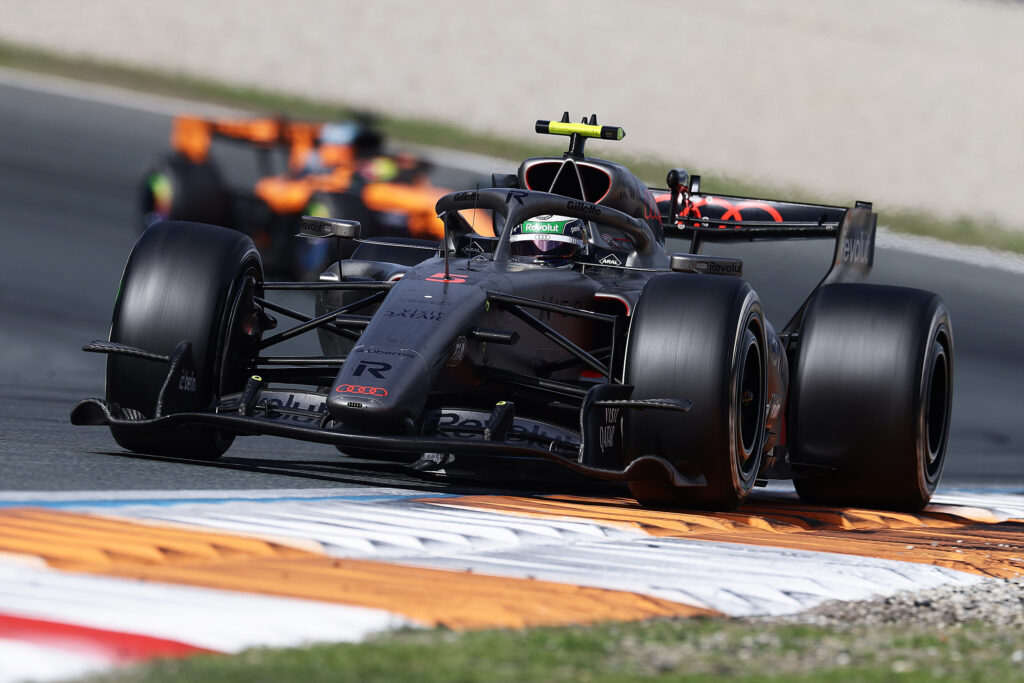
Piastri later admitted the problem was not just the stop itself. He simply did not have enough race pace.
Antonelli and Norris stopped at roughly the same time around Lap 22 and both moved onto hards. Hamilton delayed his first stop until Lap 26 and inherited the lead for several laps.
Once the first pit-stop cycle settled, the race became a genuine strategic fight.
Norris gradually closed back in on Antonelli and by around Lap 30 was again less than a second behind. Ferrari was also moving forward. Leclerc passed Piastri around the outside, and Hamilton later did the same. By mid-distance the order had become Antonelli, Norris, Russell, Leclerc, Hamilton and Piastri.
It was becoming clear that the victory was no longer secure for Mercedes.
Antonelli made his second stop first. Norris stayed out several laps longer and gained the key strategic advantage: fresher hard tyres for the final attack.
When the McLaren finally stopped, Norris rejoined a little more than five seconds behind Antonelli.
Within three laps, almost all of that gap had disappeared.
Mercedes was beginning to struggle with rear tyre performance. Antonelli tried to defend using Overtake Mode, but Norris had fresher rubber and, at that point of the race, clearly superior pace.
On Lap 54, he attacked into Tarzanbocht.
Norris took the lead.
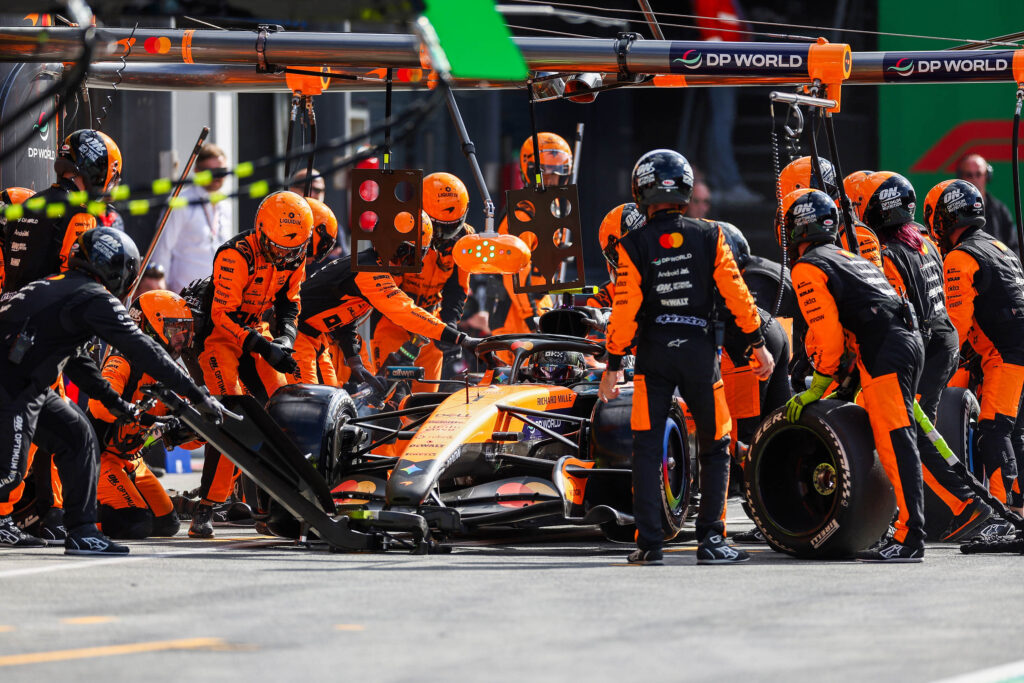
It was exactly the kind of pass Zandvoort is often said not to allow. The narrow circuit has never been considered an easy place to overtake, but Norris did not wait for another pit cycle or hope for a Safety Car. He caught the race leader and passed him on track.
Having cleared Antonelli, Norris still had to deal with Hamilton, who had not yet made his final stop and was technically leading. A few corners later, the McLaren passed the Ferrari too, and the effective lead finally belonged to Norris.
After the race, Norris said he probably had only one genuine opportunity to pass Antonelli — and took it. The seven-lap difference between their second pit stops, and therefore the fresher tyres on the McLaren, proved decisive.
But the Grand Prix was not finished yet.
Esteban Ocon’s stopped Haas triggered a Virtual Safety Car. Antonelli used the opportunity to switch to soft tyres. Norris and Russell stayed out on hards.
When racing resumed, Norris led by roughly seven seconds. Antonelli was third behind Russell, but his fresh soft tyres were much quicker than his team-mate’s worn hards. Mercedes had to make a decision.
On Lap 65, Russell was instructed to let Antonelli through.
The Briton made no attempt to hide his frustration and worried that swapping positions could cost Mercedes a double podium. But the team’s reasoning was straightforward. Antonelli would almost certainly have attacked Russell anyway, and a fight between the two Mercedes could have handed Ferrari an opportunity.
Russell let the championship leader by and immediately came under pressure from Hamilton.
Ferrari had also switched to soft tyres. Hamilton rapidly closed onto the Mercedes and entered the final laps within attacking range, with Leclerc close behind.
A second Virtual Safety Car, caused by debris after contact between the Williams cars, briefly froze the battle. When racing resumed, Hamilton simply did not have enough laps left.
Russell held on.
The gap between third and fourth at the flag was only 0.849 seconds. Leclerc finished another 0.503 seconds behind Hamilton.
Ferrari left without a podium even though its Sunday pace had been good enough to keep both cars in the fight with Russell until the closing stages. Hamilton had been unhappy earlier in the race about spending too long behind Leclerc, while Ferrari had also explored stretching his second stint far enough to make a one-stop race possible. In reality, the VSC stop and switch to soft tyres offered Hamilton a much better chance of attacking Russell, but there was simply not enough time remaining.
At the front, Norris no longer depended on anyone.
Even after the Virtual Safety Car, with Antonelli on fresh softs, the McLaren on older hards was faster than expected. Norris gradually rebuilt the gap and crossed the line after 2h04m44.859s.
Antonelli finished 11.536 seconds behind.
Russell was 15.906 back.
Hamilton, 16.755.
Leclerc, 17.258.
Piastri finished only sixth, more than 30 seconds behind his team-mate. Lawson took seventh on his surprise Red Bull return despite a 10-second penalty for a yellow-flag infringement. Nico Hülkenberg scored four points for Audi in eighth. Fernando Alonso finished ninth, increasing Aston Martin’s season total from one point to three. Pierre Gasly completed the top 10.
Leclerc set the fastest lap of the race — 1:14.230 on Lap 60.
After the flag: Norris restores momentum, but Antonelli remains far ahead
The paradox of Zandvoort was that two drivers could reasonably leave feeling like major winners in the championship.
Norris won the Grand Prix.
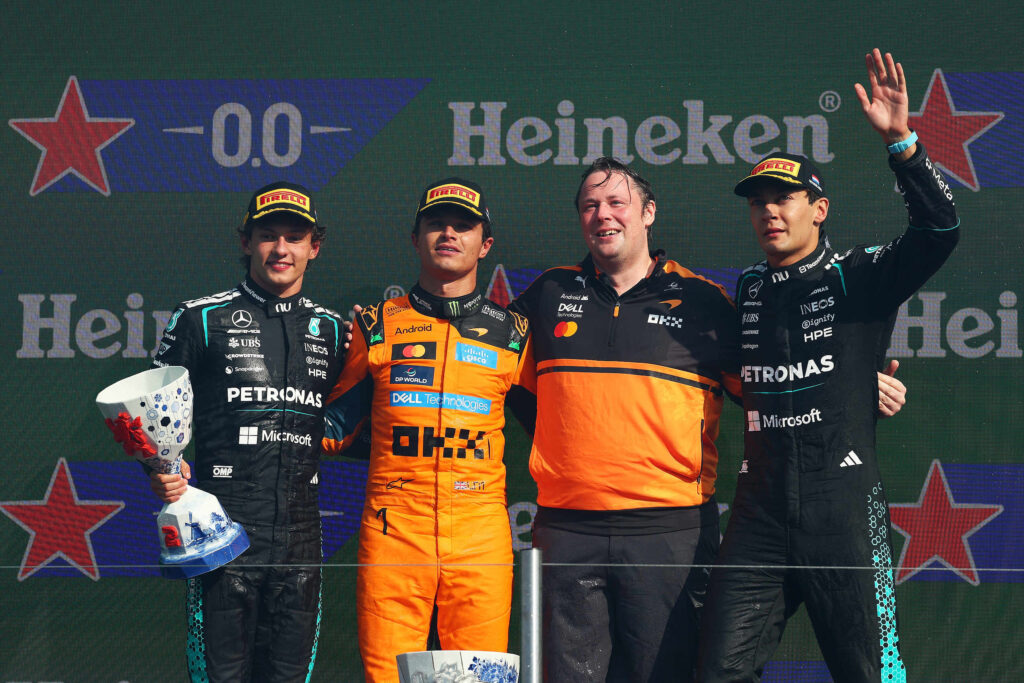
Antonelli strengthened his position at the top of the standings.
After 12 rounds, the Italian has 242 points. Russell and Hamilton sit behind him on 183 each. Norris has moved up to fourth with 159, four points clear of Leclerc. Verstappen remains sixth on 112 after scoring nothing at home, with Piastri seventh on 104.
Antonelli’s advantage over his nearest rivals has therefore grown to 59 points.
For Mercedes, it was close to an ideal weekend despite losing the Grand Prix victory. Russell won the Sprint, Antonelli scored five points for fourth on Saturday, and on Sunday the team secured a double podium. Across the weekend Mercedes collected 46 points and increased its advantage in the Constructors’ Championship.
After Zandvoort, Mercedes has 425 points, Ferrari 338, McLaren 263 and Red Bull 186.
Yet McLaren was the team that left the Netherlands with the feeling that the season might still contain another shift.
Norris ended the first half of the year with victory in Hungary and returned from the break by winning again. Two Grands Prix in succession have now been won through his own pace rather than through chaos ahead. In Hungary, McLaren lost Piastri to a technical retirement. At Zandvoort, Piastri simply failed to convert the car’s speed into a strong Sunday result.
Norris delivered both times.
He still trails Antonelli by 83 points. That is a major deficit. But with more than 10 rounds remaining, two consecutive wins finally create a reason to talk not only about defending the dignity of the reigning champion, but about whether Norris can gradually force his way back into the title fight.
For Verstappen, the final Zandvoort ended almost exactly the opposite way.
The Dutch Grand Prix’s return in 2021 coincided with his rise into Formula 1’s dominant force. He won the first three races of the new era from pole position. The grandstands became one enormous orange wall, and the race became an example of how a national sporting star could revive a Grand Prix and turn it into a global event.
His final start ended with one mistake on a track that was not quite dry.
But that does not make Zandvoort’s farewell a failure.
The circuit is leaving while fans still want it. Narrow, old-school, awkward for modern Formula 1 cars and all the more distinctive because of it. Verstappen himself described it as a genuine old-school track, while Norris has often spoken about preferring smaller events with real atmosphere to some of the newer venues on the calendar.
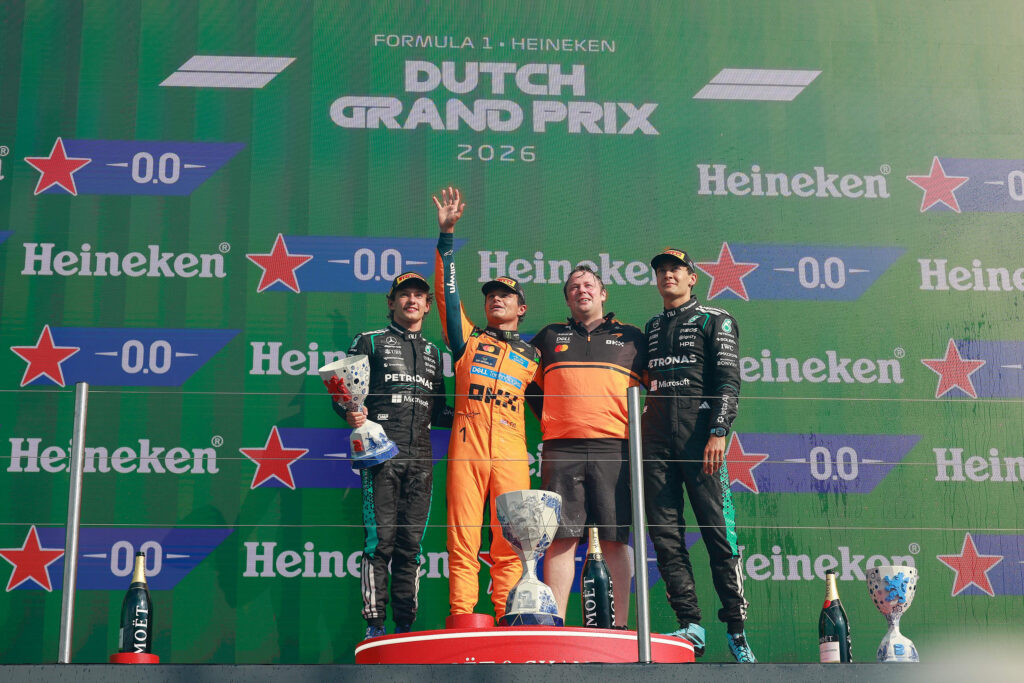
The final race was worthy of the place.
It began on a drying track, lost its home hero before the completion of the opening lap, produced a red flag, a second start, contrasting tyre strategies, a Mercedes team order and a genuine on-track pass for victory.
And it ended with the pole-sitter winning Zandvoort once again.
That happened at every Dutch Grand Prix after the circuit returned to the calendar in 2021.
Norris won here in 2024.
Piastri won in 2025.
Norris closed the chapter in 2026.
For McLaren, it is a third consecutive Dutch Grand Prix victory. For Norris, it is a second straight win this season and one of those races where a world champion’s status is confirmed less by the number of points scored than by the way they were earned.
He lost the lead.
He caught Antonelli.
He passed him on track.
And he won the final Formula 1 race at Zandvoort.
If this really was goodbye, the circuit went out in style.

