

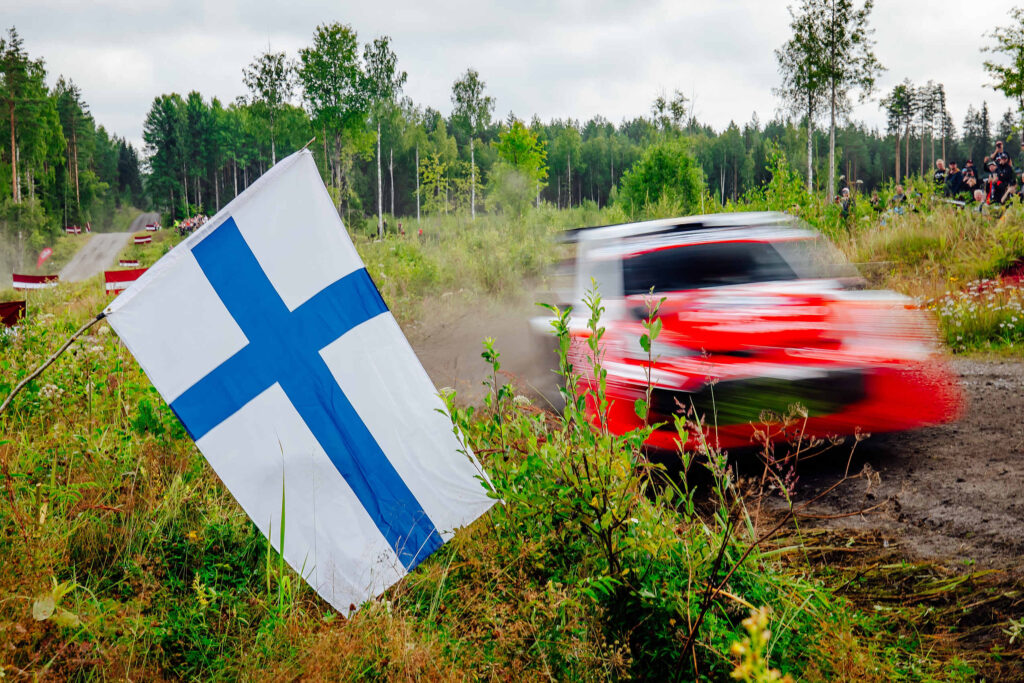
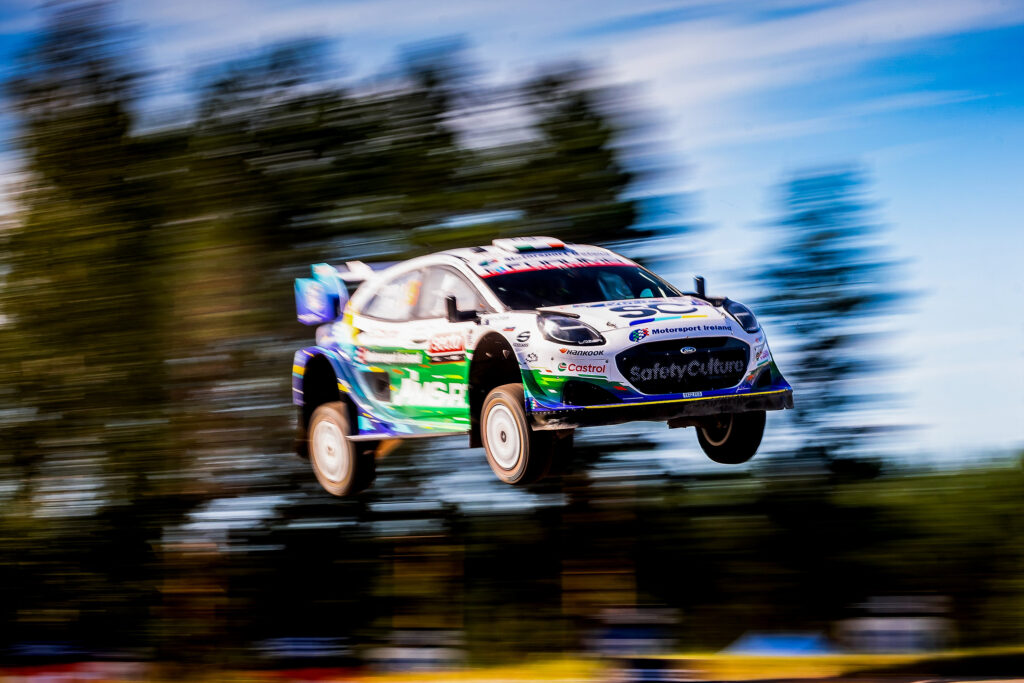
Rally Finland is never just another fast gravel round in the World Rally Championship. It is a place where speed becomes a national language. The cars do not simply run between the trees; they fly over the road, landing, compressing, breathing and accelerating again through a rhythm that only the best crews can truly read.
On these roads, there is no such thing as “roughly right”. The pace notes have to be trusted completely. The car has to be carried over crests, jumps and long high-speed arcs with a level of precision that leaves almost no margin. A mistake often begins before the corner has even arrived — and ends somewhere deep in the Finnish forest.
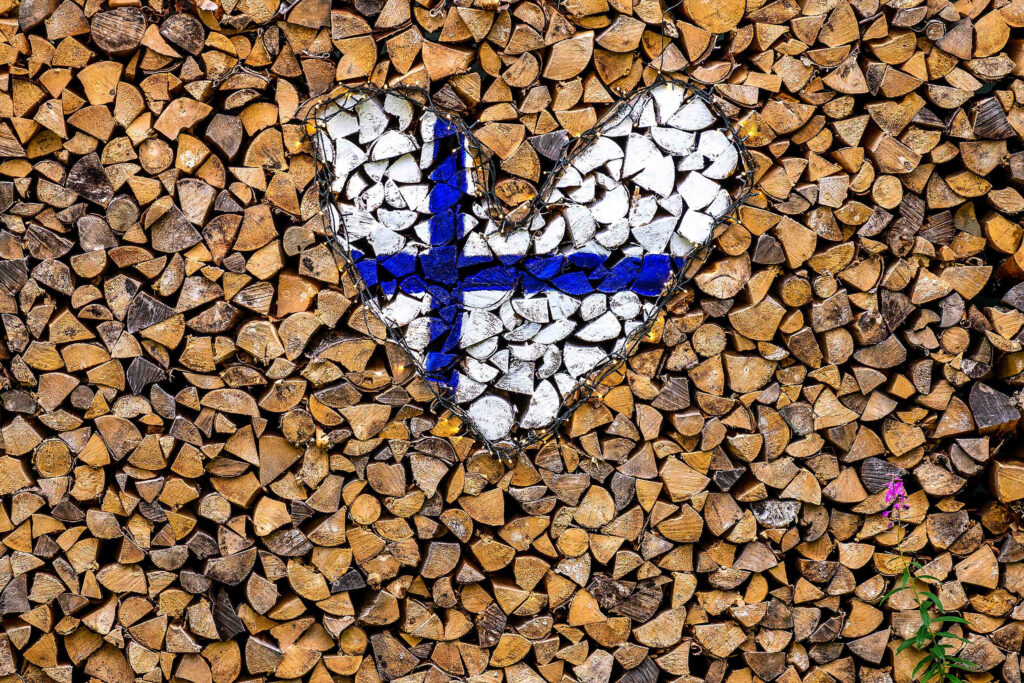
The 2026 Secto Rally Finland proved all of that again.
It was not simply the rally where a fast young Finn won at home in a Toyota. It was a weekend in which almost every major contender was forced through some kind of crisis. Sébastien Ogier crashed out of what had looked like a controlled victory. Elfyn Evans rolled, lost time, and still rescued a podium. Oliver Solberg drove Sunday with back pain. Takamoto Katsuta lost fifth place on the final stage. Hyundai started brightly but ended up behind Toyota again. And Sami Pajari had to deal with the hardest pressure of all for a Finnish driver: winning Rally Finland when the whole country is waiting for it.
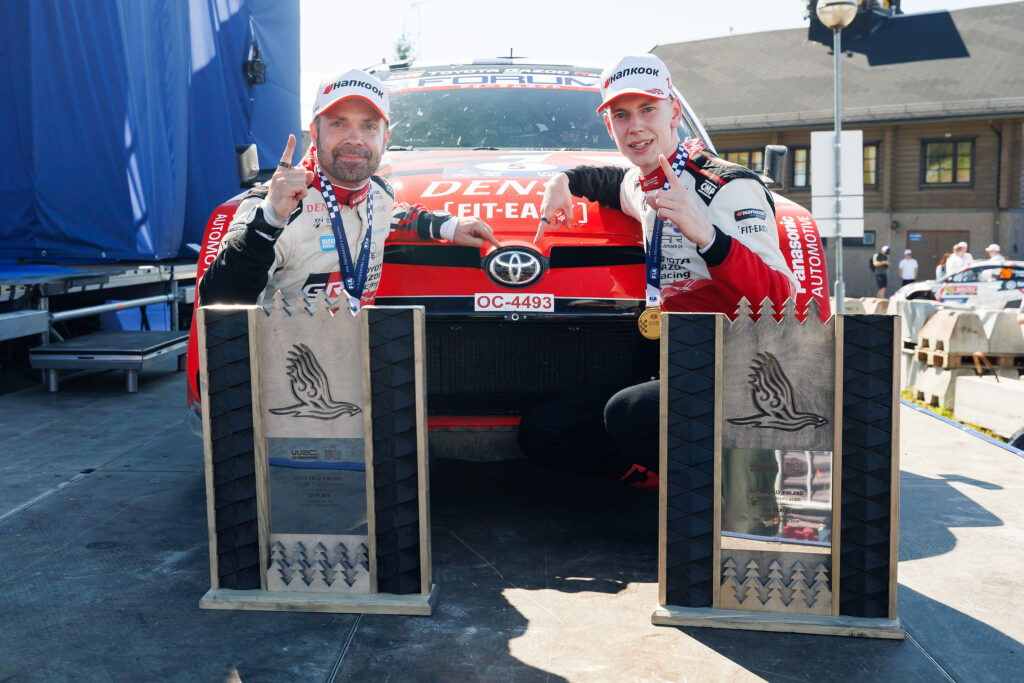
Pajari and co-driver Marko Salminen won the rally by 26.7 seconds from Oliver Solberg and Elliott Edmondson. Elfyn Evans and Scott Martin completed the podium, giving Toyota a one-two-three finish on the roads around Jyväskylä. For Pajari, it was his second WRC victory in a row after his breakthrough in Estonia two weeks earlier. It was also his first home win, the 200th WRC victory by a Finnish driver, and a dream result on the 75th anniversary edition of Rally Finland.
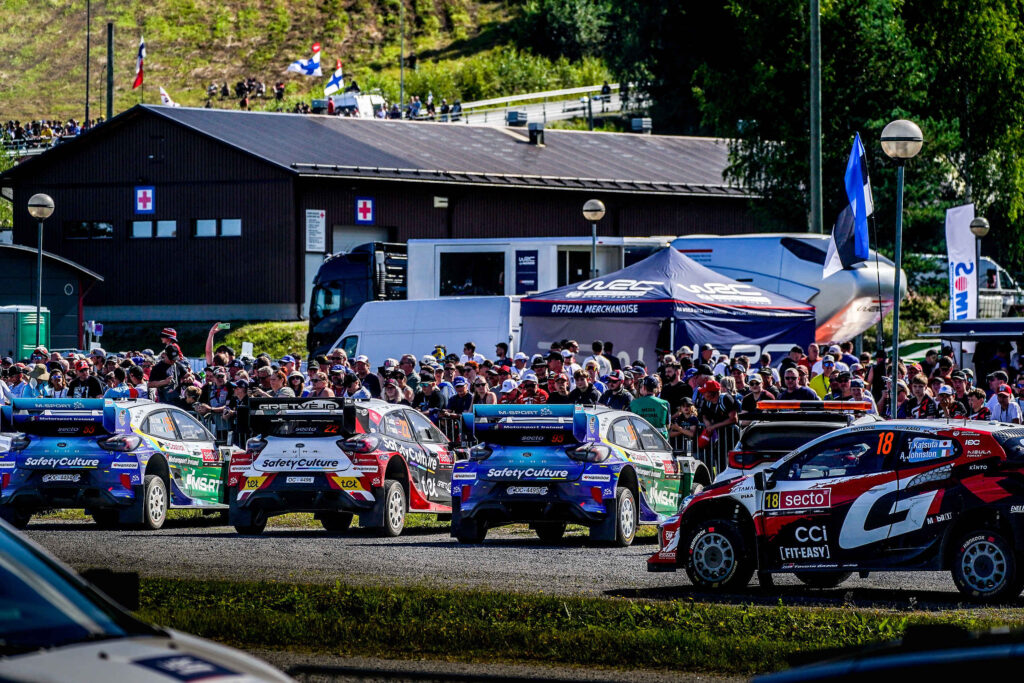
But reading the final classification alone would give the wrong impression. Pajari did not simply inherit this rally. Yes, Ogier led from Friday morning until his crash on SS17 on Saturday. Yes, that accident opened the door. But Rally Finland only gives such chances to drivers who are close enough to take them. Pajari was close enough. He won six stages, survived difficult Friday weather, stayed in touch with the lead fight and, once the rally came to him, did the hardest thing: he stopped trying to prove anything extra and brought home the victory.
There is also an important detail in the Toyota story. This was a full Toyota podium, but Pajari’s win came under the Toyota Gazoo Racing WRT2 banner, while Solberg and Evans were entered for the main Toyota Gazoo Racing WRT squad. So the correct reading is that Toyota swept the overall podium, while the main TGR-WRT team still extended its manufacturers’ championship lead even though Pajari’s winning points were scored by the separate TGR-WRT2 structure.
A rally where you cannot simply bring it home
The Finnish round ran from 30 July to 2 August as the 10th event of the 14-round 2026 WRC season. Even before the start, it felt like more than another fast gravel rally after Estonia. Pajari had just become a WRC winner, giving Finland its 199th victory in the championship. Now he arrived at home no longer as a promising young driver, but as someone expected to continue the story.
Rally Finland rarely makes those stories easy.
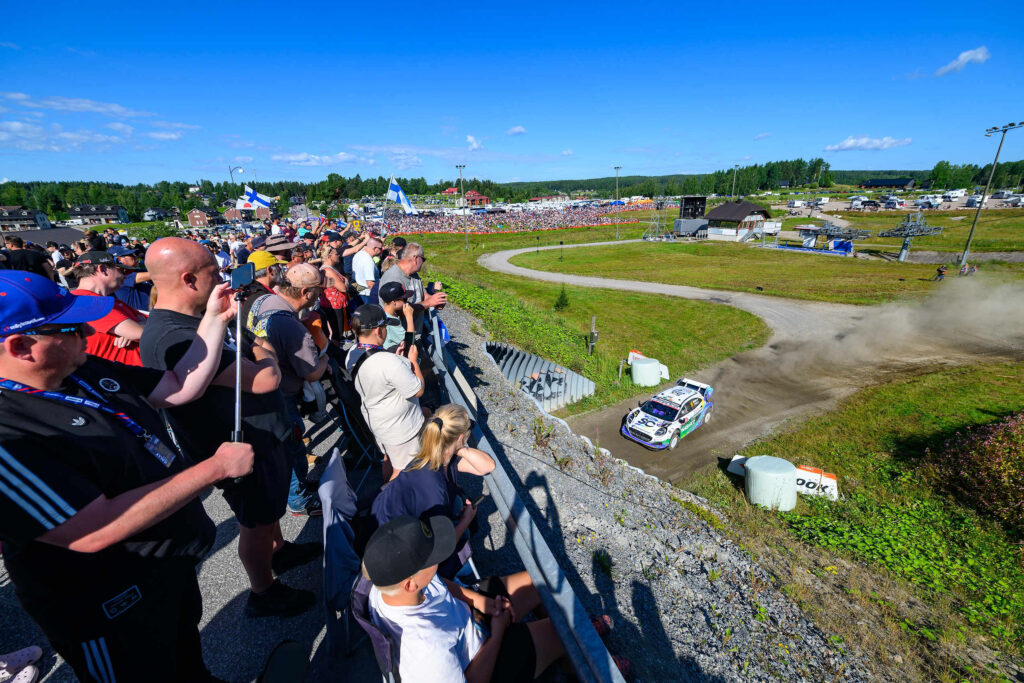
The 2026 route kept crews under constant pressure: fast forest roads, blind crests, jumps, changing weather and, on Sunday, two passes over Himos-Jämsä — the longest stage of the rally at 30.02 kilometres. That was where Pajari had to protect the lead, but also protect his own state of mind.
That balance matters. A fast driver always wants to keep pushing. A home driver wants to win beautifully. A young driver, fresh from a first victory, wants to prove it was not a one-off. A mature driver understands something else: on Sunday at Rally Finland, once the win is there to be taken, the job is not to win the rally again. The job is to avoid losing it.
Pajari did exactly that.
Hyundai starts fast, but Toyota takes control
The rally opened on Thursday evening with Harju in central Jyväskylä, and the first signal came not from Toyota, but from Hyundai. Adrien Fourmaux won the short city stage, Thierry Neuville was second, and Evans and Ogier shared third.
A super special cannot win Rally Finland, but it can show intent. Fourmaux showed intent. Hyundai looked sharp, and the Frenchman immediately suggested he had not come to Finland merely to sit behind the Toyotas.
But Rally Finland does not really begin in the city. It begins in the forests on Friday morning. And once the cars reached those roads, the rally quickly began to turn towards Toyota.
Ogier, reunited with Julien Ingrassia in competition for the first time in almost five years, started to build the event in the way only he can: quietly, calmly and with a clear sense of where to attack and where not to fight the road. Toyota later confirmed that Ogier and Ingrassia led from the first forest stage on Friday morning until SS17 on Saturday afternoon.
This was a very strong Ogier. Not just quick, but composed. The return of Ingrassia added a classic feel to the weekend: an old championship-winning partnership against Toyota’s new Finnish wave. On these roads, that matters. Finland gives a crew no time to doubt. If driver and co-driver are not living in the same rhythm, the road exposes it immediately. Ogier and Ingrassia had that rhythm.
Friday then split the rally apart. In the morning, Fourmaux was still Ogier’s closest challenger and reached service just 5.3 seconds off the lead. In the afternoon, rain changed the event. Pajari lost time in difficult visibility, Solberg dropped almost a minute in the worst of the conditions, Katsuta lost more than two minutes, and Hyundai’s early threat faded. By the end of Friday, Fourmaux was only sixth, 1m24.0s behind Ogier, while Neuville was ninth and almost three minutes adrift.
That was the foundation of Pajari’s win. He was not perfect. But he did not fall out of the rally. He remained in the zone where a victory can come if the driver ahead makes a mistake.
Saturday: the day Finland broke the script
Saturday was the decisive day of Rally Finland 2026. Not because the fight ended there, but because almost every expected script was broken.
First came Evans. He had been running second overall and was still in the fight for a major result when he rolled his Toyota late on Saturday morning. For the championship leader, it could have been a disastrous moment: a single mistake threatening not only the podium, but a big part of his advantage in the standings.
The car was badly damaged, but the crew got back, and Toyota’s mechanics then produced one of the defining performances of the weekend. Akio Toyoda later thanked them directly: after three rolls, Evans’s car was repaired in 30 minutes without penalty, with major bodywork replaced or restored. In WRC, we often speak about the heroics of drivers and co-drivers. Finland 2026 was a reminder that sometimes a podium is built in service, by people who can turn a damaged car back into a championship weapon in half an hour.
Then came the crash that changed the rally.
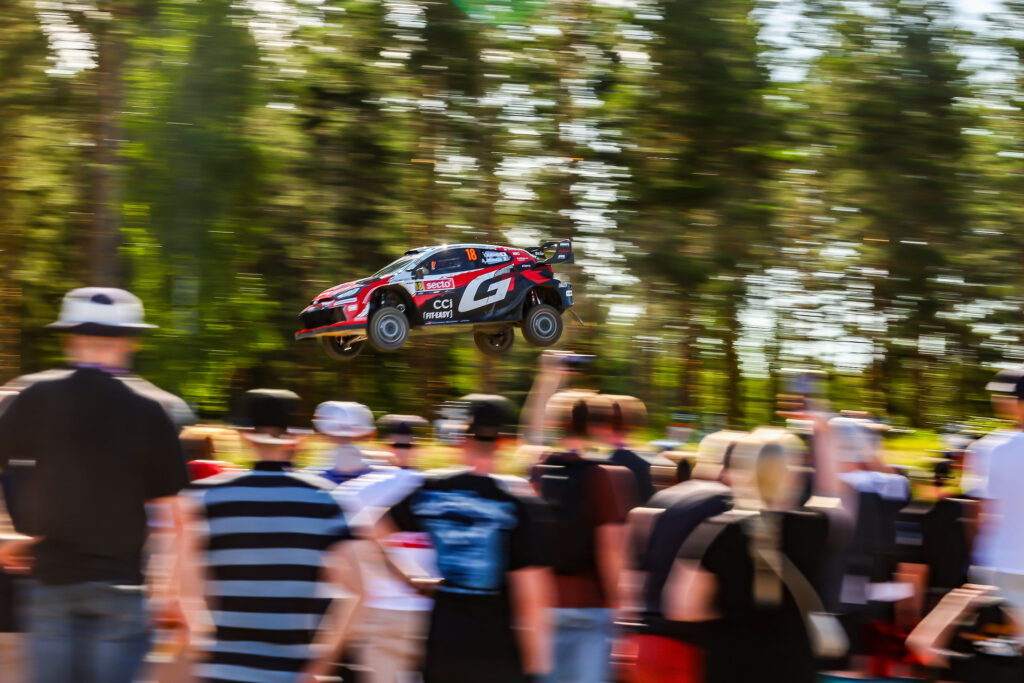
Ogier had led until SS17 and looked like the man most likely to win. His pace was strong enough to control the rally, and his experience made it easy to believe that if anyone could bring Rally Finland home from the front, it would be him. But SS17 ended that story. Ogier and Ingrassia went off heavily. They were able to get out of the car themselves, but were taken to hospital for checks and kept under observation overnight. Toyota later confirmed that both were discharged on Sunday morning and able to travel home.
That was the moment everything changed.
For Ogier, a near-certain victory became a zero and a major blow to his title hopes. For Pajari, a chasing rally suddenly became a rally of responsibility. Until then, he could attack and wait. After that, he was the driver expected to bring Finland the win.
From that point on, it was no longer only about speed. It was about maturity.
Pajari: the new version of the Flying Finn
Pajari arrived in Finland straight from Estonia, where he had already been cast as a new Flying Finn. There, his first WRC victory had come almost as a display of force: 12 stage wins, control from start to finish and total command of fast gravel roads. Estonia made him a WRC winner. Finland asked a different question: could he win when discovery had been replaced by expectation?
The answer was yes.
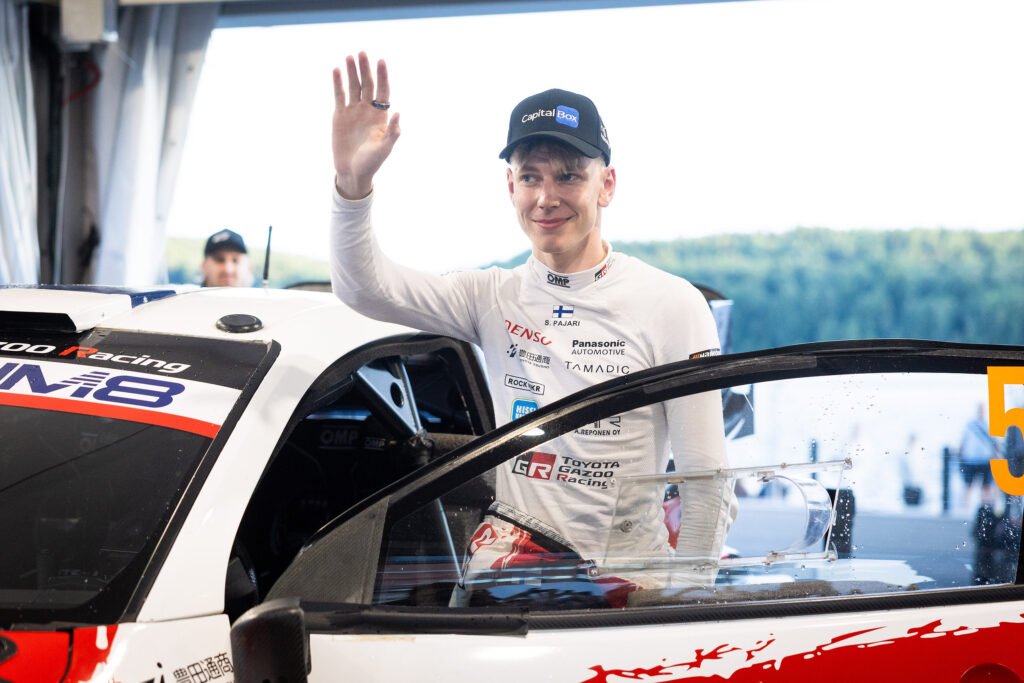
After Ogier’s crash, Pajari took a 46.4-second lead into Sunday. That is a large margin, but not large enough to relax on Rally Finland. Two passes of Himos-Jämsä, 30 kilometres at a time, with jumps, crests and long high-speed sections, were still waiting. Pajari did not chase bonus points. He did not try to win the Power Stage. He did not play the hero when what he needed to be was a winner.
At the finish, he called the victory another dream result and said that winning at home was something he and Salminen had grown up watching other legends do on the “1000 Lakes”. Now they were part of that line themselves.
Finnish broadcaster Yle added another important historical layer: Pajari became the youngest winner of Rally Finland in the WRC era, at 24 years, eight months and one day old, beating the mark previously held by Kalle Rovanperä. If the pre-WRC history of the event is included, Simo Lampinen remains the younger winner, but within the championship era Pajari now owns that record.
That explains why the win felt bigger than a normal result. Pajari did not just win his second rally in a row. He handled the burden that often weighs most heavily on Finnish drivers: the burden of winning at home. He did not simply arrive as a fast young Toyota driver. He left as the man who delivered Finland’s 200th WRC victory.
After Estonia, it was possible to call him a breakthrough winner.
After Finland, it has to be called something more serious.
Solberg: second place through rain, pain and 0.025 seconds
Oliver Solberg finished second for the second rally in a row. That sounds simple, but his weekend was anything but smooth. On Friday, he lost almost a minute in the worst of the weather. He did not let the rally fall apart. He stayed in the fight, managed the gaps and emerged on the podium again.
On Sunday, he added another layer to that result. After a hard landing on the first pass of Himos-Jämsä, Solberg was dealing with back pain. He still won Super Sunday and came within 0.025 seconds of beating Evans on the Power Stage.
That number — 0.025 — feels perfectly Finnish. On a 30-kilometre stage, after four days of rallying, after rain, crashes, repairs, back pain and all the emotion of the weekend, the Power Stage was decided by twenty-five thousandths of a second.
That is the WRC. Sometimes a championship turns not on minutes, but on almost invisible fragments of time.
Solberg did not win the rally, but he strengthened his status. He moved up to fourth in the championship, continued his run of strong fast-gravel performances and again showed that he is not just capable of raw speed. He can also bring a difficult weekend home.
Evans: the mistake, the repair and a podium that saved the championship
Elfyn Evans had the kind of rally that, in normal circumstances, should have been a major loss. He rolled on Saturday, dropped time, damaged the car and could easily have left Finland with almost nothing. Instead, he finished third, won the Power Stage, was second on Super Sunday and extended his championship lead to 30 points.
It was not a result that looked spectacular in terms of pure speed. But championships are often built on weekends like this.
Evans did not win Finland. He made a mistake. He was thrown back. But he and the team turned what could have been a disaster into a podium.
He later made clear that the result belonged heavily to the crew in service who repaired the car after his roll. That is an important part of his 2026 campaign. Championships are not only won by those who avoid mistakes. They are often won by those who lose less when mistakes happen.
In Finland, Evans lost a shot at victory. He did not lose control of the championship. In fact, because Ogier crashed and others ran into trouble, he left Jyväskylä in a stronger position than when the weekend began.
After 10 rounds, Evans had 201 points. Pajari had climbed to second with 171. Katsuta was third on 160, Solberg fourth on 156 and Ogier fifth on 139. The Toyota title fight became tighter, but Evans remained in front. His lead is not accidental. It is made of weekends like this: imperfect, nervous, damaged — but rescued.
Ogier: champion speed, championship damage
Sébastien Ogier may well have been the strongest driver of the rally before his crash. He led from Friday, controlled the pace and looked like a driver capable of winning Finland not through youth or risk, but through experience and precision.
His reunion with Ingrassia added to the feeling. It was the old championship pairing against Toyota’s new generation, and for most of the rally, the old pairing was in command.
But Finland gives no discounts, even to crews like that. SS17 changed not only the result, but the championship. Ogier did not just lose a victory. He scored nothing on a weekend where he could have cut the gap or even reshaped the title fight.
After Finland, he remained fifth in the standings, 62 points behind Evans.
That is not a mathematical end. But in sporting terms, it is a huge blow. With four rallies remaining, Ogier now needs more than solid results. He needs wins, mistakes from others and an almost perfect run to the finish.
Still, the crash should not erase how good he was before it. Ogier’s rally until SS17 was excellent. That is exactly why the accident carried such weight. When a driver in the middle of the field goes out, it can feel like one more moment in a difficult event. When a multiple world champion loses what looked like a controlled Rally Finland victory in one stage, it changes the emotional shape of the whole weekend.
Hyundai: fast at the start, still short at the finish
For Hyundai, Rally Finland began with real promise. Fourmaux won Harju, Neuville was second, and the team opened the event with a one-two. Neuville said the feeling in the car was good and that Finland seemed perhaps the fastest version of the event he had ever seen.
By Sunday, however, Hyundai was behind Toyota again.
Fourmaux finished fourth, Neuville fifth. On paper, that is not a disaster: two cars in the top five and the best non-Toyota crew just behind the podium. But given how the weekend began, and how quick Fourmaux looked at points, the result still felt like an opportunity missed.
Fourmaux had the pace, but Friday afternoon cost him too much. After being close to Ogier in the morning, he ended Friday sixth and 1m24.0s down. Neuville was even further back in ninth, at 2m56.2. Ogier’s retirement and other problems later reopened the door, but Evans — even after rolling — got back ahead.
That is the painful detail for Hyundai. Toyota is not only faster when everything is clean. It is also better at saving weekends when things go wrong.
Neuville inherited fifth after Katsuta’s final-stage mistake. Useful points, but not a result that changes the season’s direction. Hyundai left Finland with speed confirmed, but without a podium. Against a Toyota podium sweep, that felt like a structural defeat more than a numerical one.
Katsuta, McErlean and the second layer of Finnish drama
Takamoto Katsuta finished sixth, and that result should not be read only by position. He lost around two minutes in Friday’s rain because of poor visibility, then tried to recover and was on course for fifth before the final stage.
Then the Power Stage went wrong. Katsuta clipped trees, damaged the car and lost 1m31.8s, dropping behind Neuville to sixth overall. He remained third in the championship, but the gap to Evans grew to 41 points.
For a driver who had already won in 2026 and had been part of the lead Toyota group, this was a painful weekend. Katsuta has proved he can fight at the front. Finland reminded him that, in such a tight internal Toyota battle, every tree strike, every minute lost in rain and every missed bonus can become expensive.
Josh McErlean finished seventh and was the best of the M-Sport Ford drivers. He was not fighting for the podium, and he was not one of the headline acts, but he brought the Puma Rally1 home on a weekend when others found trouble. For a team fighting in the middle of the field, that kind of finish can matter more than a single flashy stage time.
Rally2, WRC2 and Latvala’s homecoming
One of the most popular Finnish stories of the weekend was Jari-Matti Latvala. The Toyota Gazoo Racing team principal started his home rally in a Toyota GR Yaris Rally2 alongside Juho Hänninen and finished eighth overall.
Latvala was the highest-placed Rally2 driver on the road, and for the Finnish fans that was a special sight. He remains part of the modern history of Rally Finland, a driver whose career has always been tied to speed, emotion, jumps and the forests around Jyväskylä. Seeing him back in competition at home, and inside the overall top 10, gave the event another emotional thread.
But the class distinction matters.
Latvala was the top Rally2/RC2 finisher overall, but he was not registered to score WRC2 points. In the WRC2 championship fight, the victory went to Robert Virves and Jakko Viilo in a Škoda Fabia RS Rally2. Teemu Suninen and Janni Hussi finished second in WRC2 and 10th overall in their Toyota GR Yaris Rally2.
Suninen had been ahead after SS17 and appeared on course for the class win, but a 30-second penalty for failing to stop at the scene of Patrik Enok’s accident on SS11 changed the result and handed Virves the WRC2 victory.
So Finland delivered several layers of local and regional satisfaction: Pajari won the main rally, Latvala won the Rally2 fight on the road and returned to the overall top 10, and WRC2 again showed how strong and competitive the second tier has become.
Final results and championship picture
Pajari and Salminen won with a total time of 2:27:58.0. Solberg and Edmondson were 26.7s behind, with Evans and Martin 1m19.5s down. Fourmaux and Alexandre Coria finished fourth, Neuville and Martijn Wydaeghe fifth, Katsuta and Aaron Johnston sixth, and McErlean and Eoin Treacy seventh.
Latvala and Hänninen finished eighth in Rally2 machinery, Virves and Viilo were ninth and won WRC2, while Suninen and Hussi completed the top 10. Ogier and Ingrassia retired after their SS17 crash.
After Finland, Evans led the drivers’ championship with 201 points. Pajari moved up to second on 171, Katsuta was third on 160, Solberg fourth on 156 and Ogier fifth on 139. In the manufacturers’ standings, Toyota Gazoo Racing WRT had 514 points, Hyundai 340, Toyota Gazoo Racing WRT2 184 and M-Sport Ford 130.
The next round is Rally del Paraguay on 27-30 August, the first part of a South American double-header before Rally Chile. Estonia and Finland have changed the shape of the season: Pajari’s status has been transformed, Evans has strengthened his lead, and the internal Toyota fight has become the central story of the championship.
Conclusion: Finland gets a new hero, and the WRC gets a new centre of gravity
Rally Finland 2026 was one of those events that matters for more than its final classification.
Pajari won at home, and he did it at the moment when people already expected him to win. That is a very different kind of responsibility from a first breakthrough victory. He was not the most dramatic figure of every day, but he was the most resilient. He stayed close while Ogier led. He survived when the weather interfered. He accepted the lead after his rival crashed. And he did not let the pressure of a home crowd turn victory into a mistake.
Solberg was on the podium again and won Super Sunday despite pain. Evans rolled, but thanks to his team’s work rescued a podium and strengthened his championship lead. Ogier lost a near-certain victory and perhaps his best chance to pull the title fight back towards him. Fourmaux again showed Hyundai’s speed but not the reward that speed had promised. Katsuta lost time and position at the worst possible moment. Latvala reminded everyone that old Finnish instincts do not simply disappear when a driver leaves full-time competition.
But the defining image of the rally was Pajari on the top step of the home podium.
Finland had waited for its 200th WRC victory. It did not come from a veteran, a one-off outsider or a lucky winner of a weather lottery. It came from a driver who, in two weeks, went from promising contender to one of the central figures of the season.
After Estonia, the WRC had a new winner.
After Finland, the wording changed.
The WRC has a new Finnish leader for a new generation.

