

With one lap remaining in the Azerbaijan Grand Prix, George Russell appeared to have done enough. The Mercedes driver had survived two Safety Car restarts, resisted sustained pressure from Max Verstappen and gradually stretched his advantage to almost a second. Then Valtteri Bottas’s late accident brought out yellow flags at Turn 15. Russell lifted off as required, but when he accelerated again, his power unit was slow to recover its turbo boost. Verstappen closed rapidly, drew almost alongside the Mercedes on Baku’s enormous main straight and came within sight of an extraordinary last-moment victory. Russell reached the chequered flag first — by just 0.196 seconds.
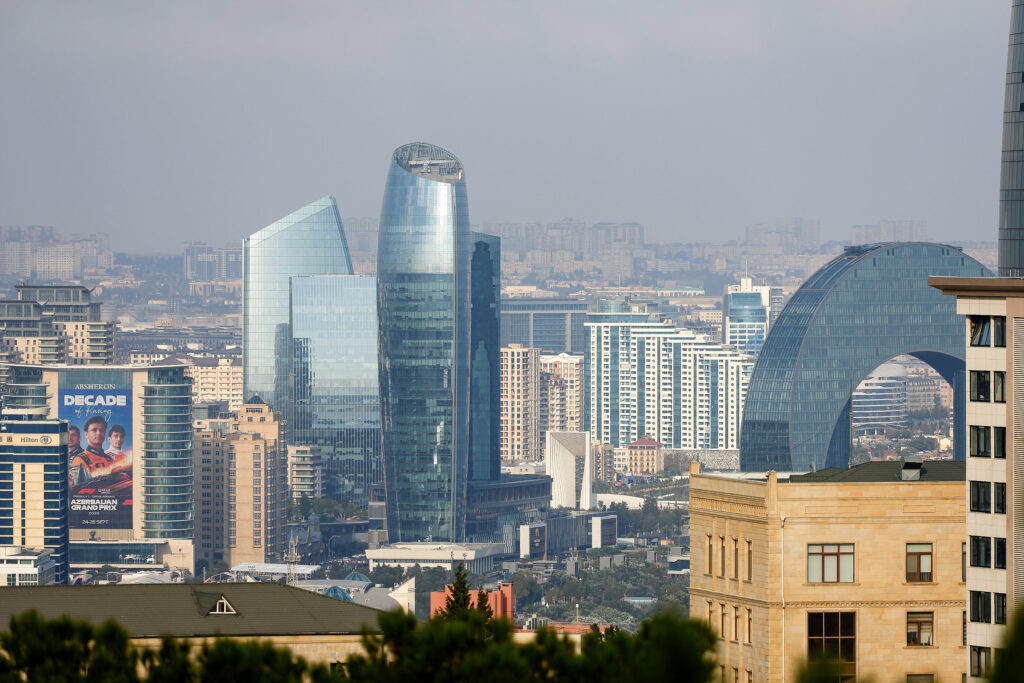
It was Russell’s third win of the 2026 Formula 1 season and the eighth of his career. The Briton had converted a dominant pole position into a race that looked firmly under control for much of the afternoon, only to see that advantage disappear twice behind the Safety Car and almost vanish altogether in the final metres. Yet the victory also brought a significant personal milestone: his first Formula 1 Grand Slam, achieved by taking pole position, leading every lap, setting the fastest lap and winning the race.
Verstappen’s second place and Isack Hadjar’s third gave Red Bull a double podium, underlining how far the team had progressed since its difficult start to the season.
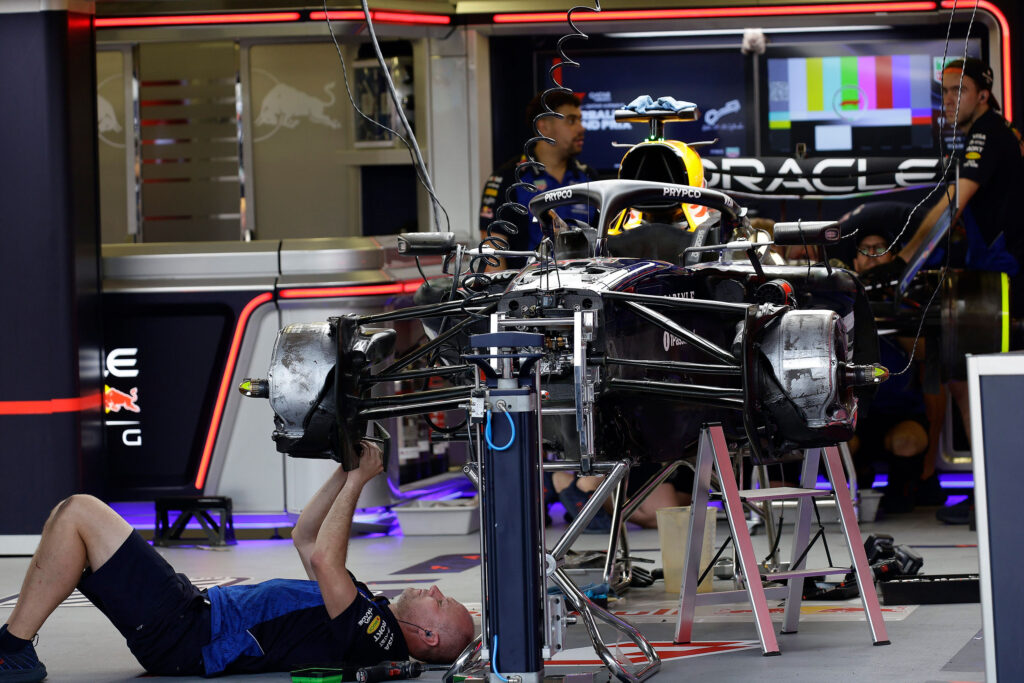
Behind them, the Azerbaijan Grand Prix produced a very different kind of drama. A collision between the two Alpine drivers eliminated both cars and Lando Norris’s McLaren, Oscar Piastri lost a potential podium through a braking error, and championship leader Kimi Antonelli recovered from 16th on the grid to finish fifth. Ferrari lacked the race pace to challenge Mercedes or Red Bull, while Haas returned to the points with both cars.
After 51 laps around the Baku City Circuit, the narrow winning margin told only part of the story. Russell had been the fastest driver over almost the entire weekend. But in Baku, a comfortable lead can disappear in seconds.
Russell dominates qualifying as Antonelli crashes out
The Azerbaijan Grand Prix was held on Saturday, 26 September, with the entire weekend brought forward by a day to avoid a clash with the country’s Remembrance Day on Sunday. Practice took place on Thursday and Friday morning, followed by qualifying on Friday afternoon.
Mercedes had looked competitive from the opening session, but the true extent of Russell’s advantage emerged in Q3. The Briton produced a remarkable 1:42.526, beating Charles Leclerc’s Ferrari by 0.837 seconds. It was the largest pole-position margin of the 2026 season and one of Russell’s most emphatic qualifying performances in Formula 1.
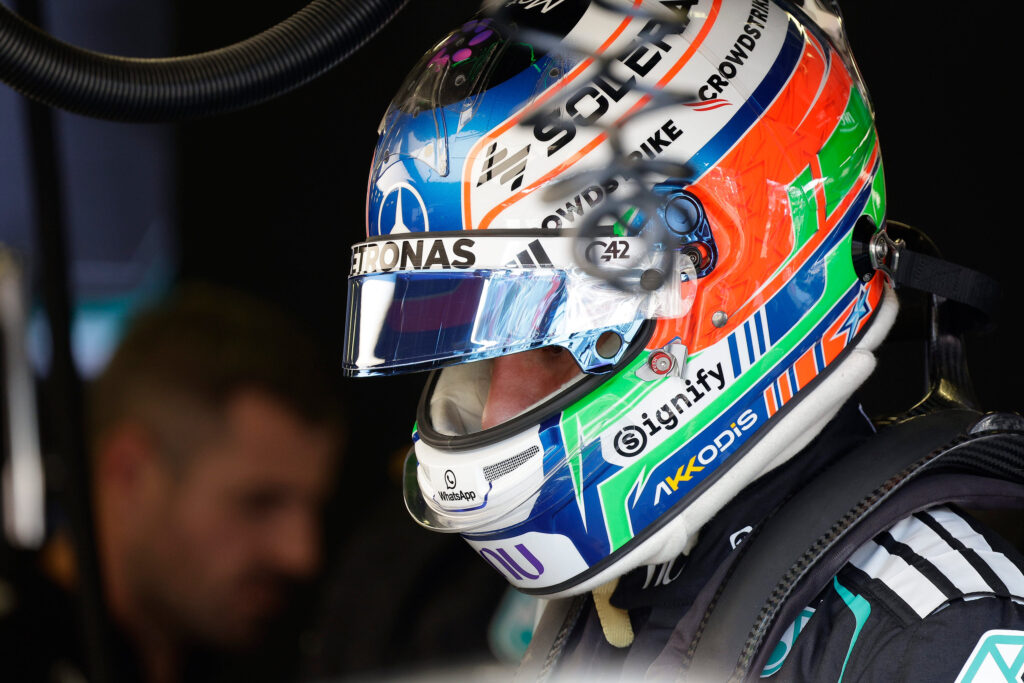
The competition behind him was considerably closer. Leclerc’s 1:43.363 was only one thousandth of a second faster than Oscar Piastri’s McLaren, while Hadjar qualified fourth for Red Bull. Norris and Lewis Hamilton completed the top six. Four manufacturers were represented among the leading positions, but none could match the speed of Russell’s Mercedes over a single lap.
For championship leader Antonelli, the session ended almost before it had begun. The Italian struck the barrier at Turn 1 during Q1, damaging the left-front corner of his Mercedes and preventing him from setting a representative time. Instead of joining Russell in the fight for pole, he would start 16th.
Verstappen also had a frustrating qualifying session. A power-unit problem compromised his performance and left him eighth on the grid, well below where Red Bull’s underlying pace suggested he could have qualified. The team replaced the affected power-unit components within his permitted allocation before the race, restoring confidence in the car’s performance.
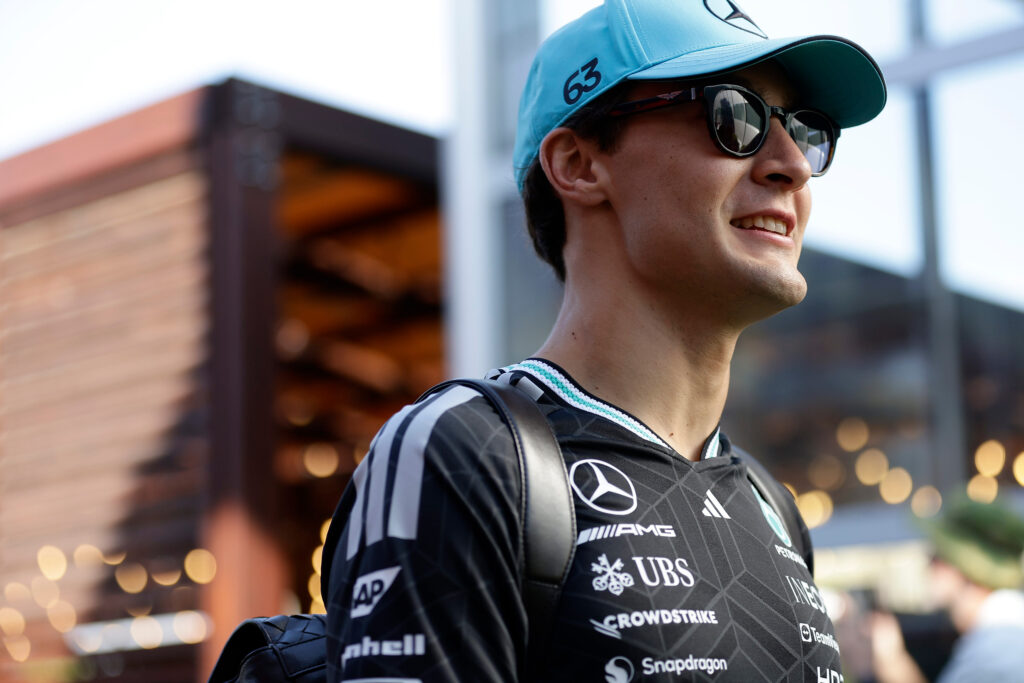
The starting order changed further when Carlos Sainz was penalised for a yellow-flag infringement. Having qualified ninth, the Williams driver received a five-place grid penalty and was demoted to 14th. It was an unwelcome setback at a circuit where overtaking is possible, but where maintaining position through the technical middle sector can still make progress difficult.
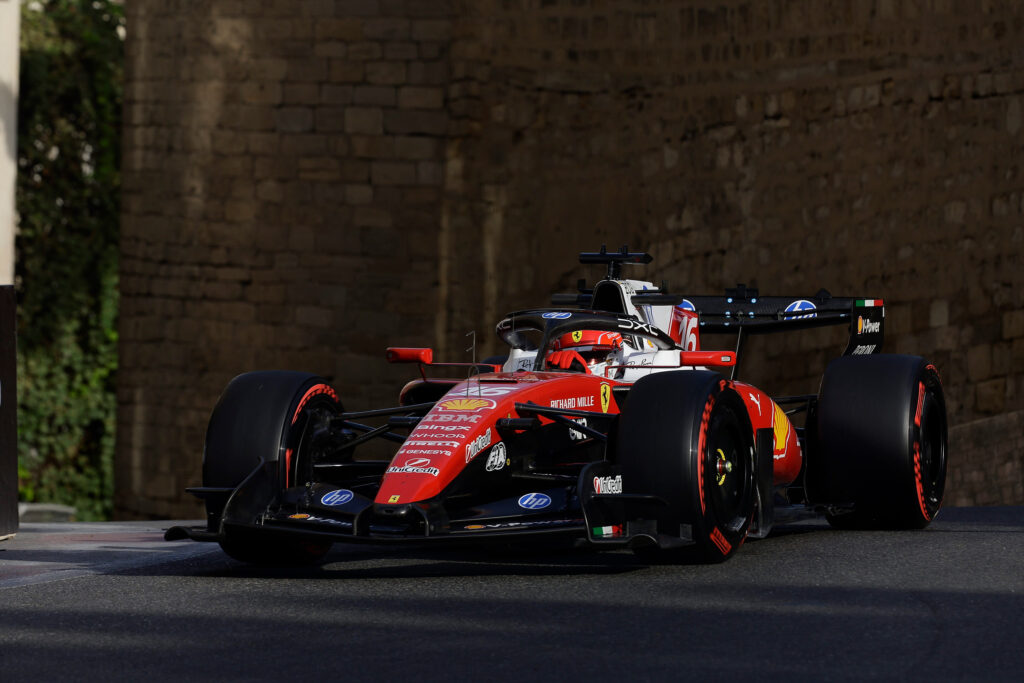
Russell, meanwhile, had a clear view into Turn 1 — and a Mercedes that appeared to have the pace to escape from everyone else.
Mercedes controls the opening 30 laps
Russell made a clean start and retained the lead, while Piastri immediately passed Leclerc to move into second place. The McLaren driver settled into a defensive battle as Verstappen worked his way through the field from eighth, passing several rivals before closing on the leading group.
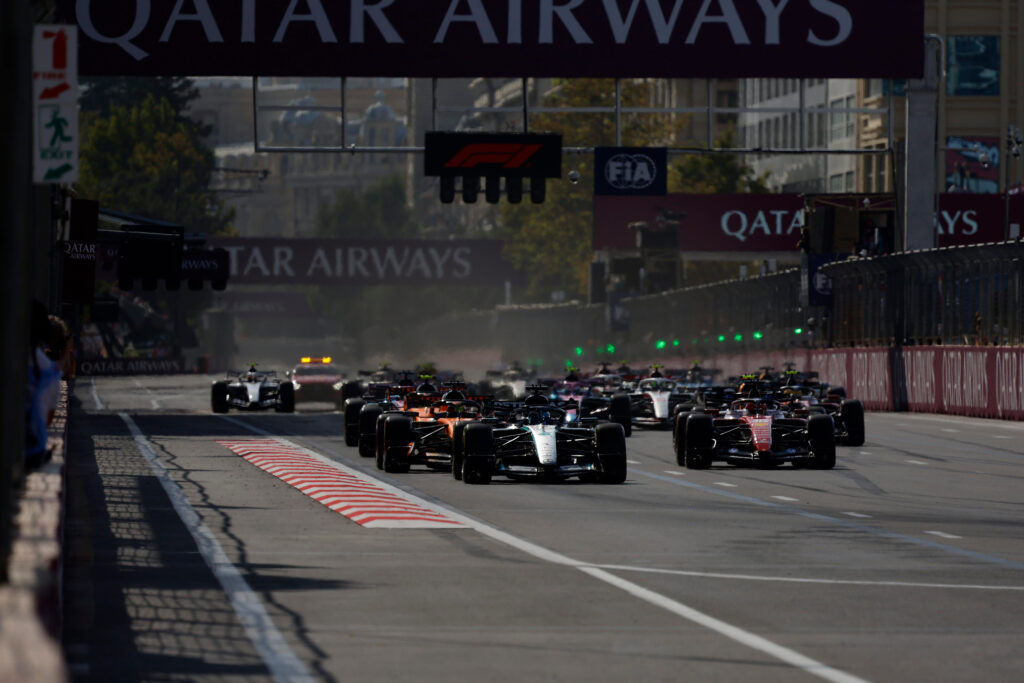
Hadjar initially remained close to the front in the second Red Bull and showed strong speed on the Soft compound. The team eventually instructed him to let Verstappen through, allowing the Dutchman to challenge Piastri directly. But the Australian defended effectively, particularly through the corners leading onto Baku’s long main straight, where McLaren was struggling with traction and top speed.
That fight was exactly what Russell needed.
With his rivals occupied, the Mercedes driver could concentrate on managing his tyres and maintaining a consistent pace. He built an advantage of several seconds during the opening laps, then continued to extend it as the first stint developed.
By the end of lap 29, Russell led Piastri by 11.222 seconds, with Verstappen another 0.930 seconds behind the McLaren. In a race initially expected to require just one scheduled tyre change, Mercedes had established an extremely comfortable strategic position. There was no immediate need to respond to its rivals; Russell could run his own race.
Tyre behaviour was an important reason for that stability. Pirelli had brought the C3, C4 and C5 compounds to Baku, designated Hard, Medium and Soft respectively. The two softer options proved particularly effective, with extremely low degradation allowing the drivers to maintain competitive pace over long stints.
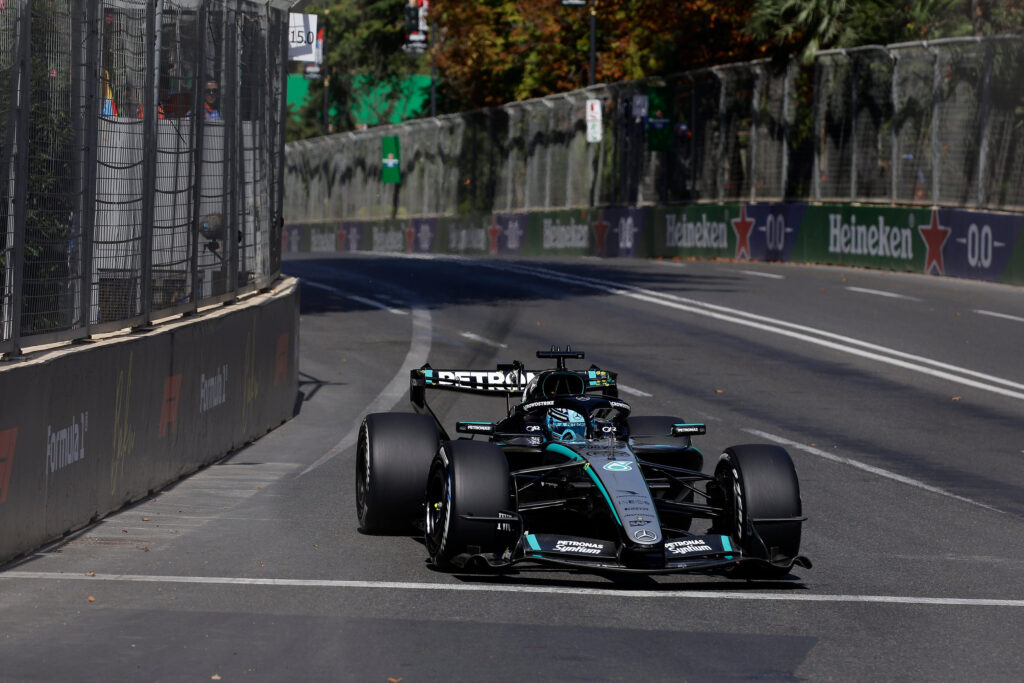
The difference was more about grip and temperature than outright durability. The Soft offered better mechanical grip and greater confidence under braking, while the Medium could cover long distances without meaningful degradation but proved harder to bring back into its ideal operating window after a neutralisation.
Russell and Verstappen started on Medium tyres, while Piastri and Hadjar chose Softs. Although Piastri was able to hold second place during the opening stint, the need to switch compounds later would become increasingly significant.
Russell was not entirely free of concerns. Around the halfway point, he brushed the wall and asked Mercedes to monitor his tyre pressures, worried that the contact might have caused damage. The car continued without an obvious problem, however, and his pace remained strong.
For almost thirty laps, Mercedes appeared to be heading towards a straightforward victory. Then Alexander Albon crashed his Williams, and the entire race changed.
Two Safety Cars turn the race upside down
Albon locked his wheels approaching Turn 5 and struck the barriers, leaving his Williams stranded and requiring a Safety Car for recovery.
The timing presented most of the leaders with an opportunity to make their tyre changes. Russell switched from Medium to Soft, with Verstappen doing the same. Piastri and Hadjar, having started on Softs, moved to Medium.
Red Bull executed an efficient double-stack pit stop, preserving the positions of both drivers. Yet the strategic difference between its cars was now significant: Verstappen had the more competitive Soft for the final stint, while Hadjar faced the challenge of racing on Medium tyres that were less responsive during restarts.
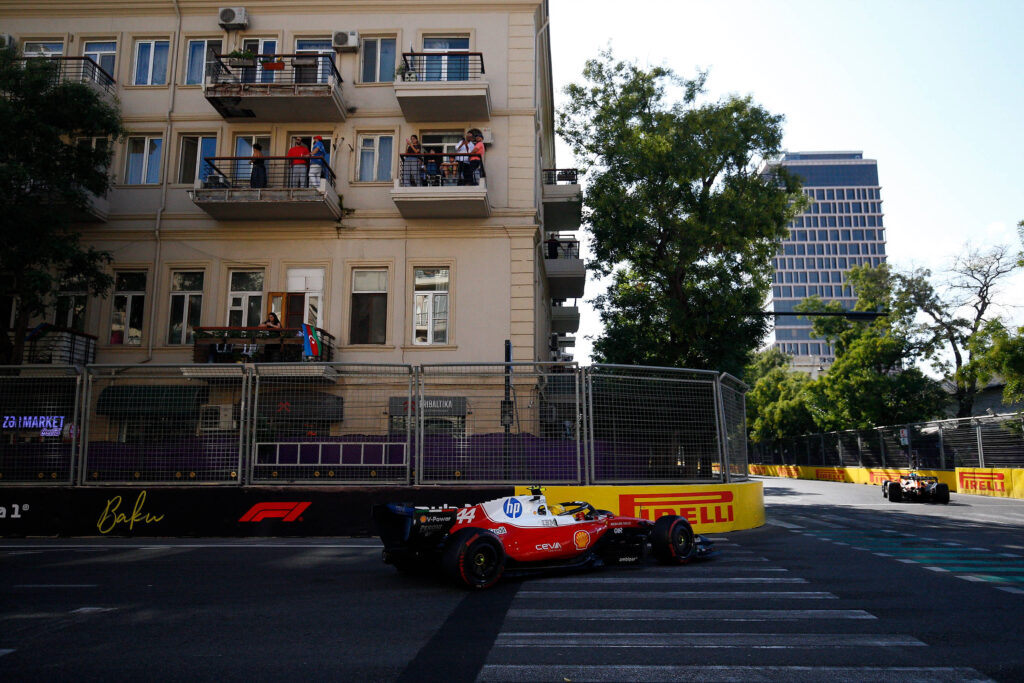
The first restart immediately demonstrated that difference.
Russell retained the lead, but Verstappen used the grip of his Soft tyres to attack Piastri and move into second place. Having spent much of the opening stint unable to find a way past the McLaren, the Dutchman now had a clear opportunity to challenge the Mercedes directly.
Further back, however, the restart produced a major accident.
Approaching Turn 1, Franco Colapinto arrived too quickly on cold tyres and brakes. The Alpine driver locked up and struck his team-mate Pierre Gasly, whose car was pushed into Lando Norris’s McLaren. All three suffered race-ending damage.
The collision was particularly costly for Alpine. Both cars had started inside the top ten and were running in points-scoring positions when the first Safety Car appeared. What had promised to be one of the team’s stronger weekends instead ended with two retirements and a major loss of championship points.
Colapinto accepted responsibility afterwards, acknowledging that he had made a serious mistake. The stewards imposed a ten-second penalty which, because he could not serve it before retiring, was converted into a five-place grid penalty for the following Grand Prix in which he would participate.
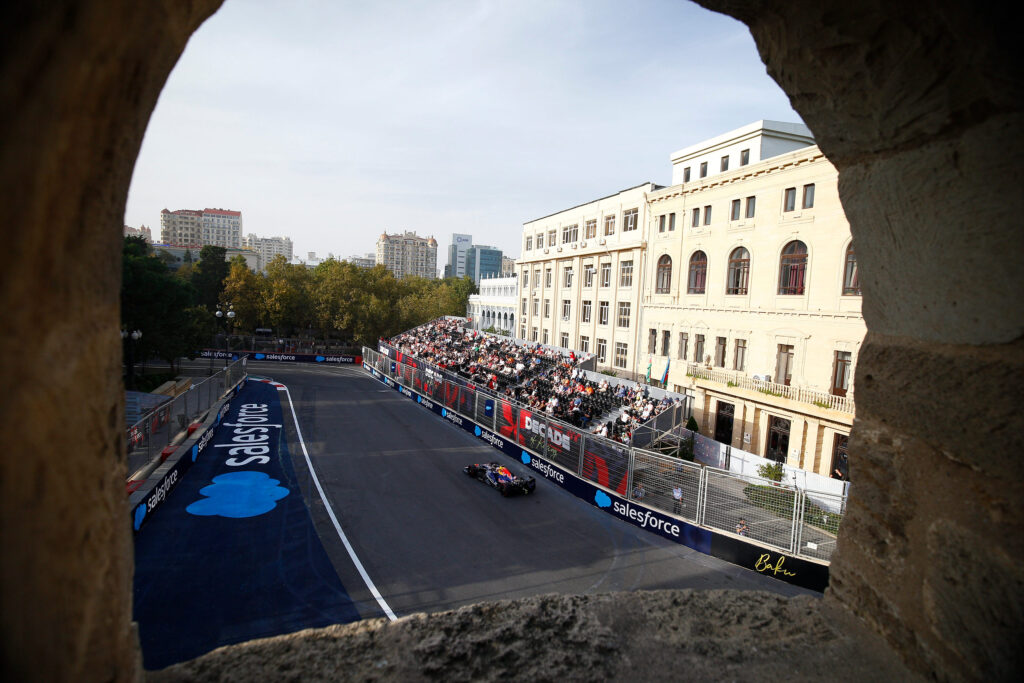
The incident also provoked a strong reaction from Norris, who had already endured a difficult afternoon in a McLaren lacking straight-line speed. The Briton had made mistakes of his own earlier in the race but remained in contention for points until the Alpine collision ended his day.
Almost simultaneously, the Racing Bulls drivers were involved in another intra-team incident. Arvid Lindblad made contact with Liam Lawson at Turn 1, sending the New Zealander into a spin. Both continued, although Lawson lost valuable positions.
The stewards subsequently reviewed the Racing Bulls incident and took no further action, concluding that neither driver was predominantly responsible in the circumstances of the restart.
A second Safety Car was required to clear the damaged Alpine and McLaren cars. Russell’s advantage disappeared once again.
When racing resumed, Verstappen was directly behind the Mercedes — this time with no McLaren between them.
Piastri’s podium hopes collapse as McLaren leaves empty-handed
The two neutralisations exposed the weaknesses of McLaren’s strategy and, ultimately, its car.
Piastri had driven an excellent opening stint. Starting third, he passed Leclerc immediately and then defended second place against sustained pressure from the Red Bull drivers. Despite the car’s difficulties on the straights, his braking and positioning kept Verstappen behind for much of the afternoon.
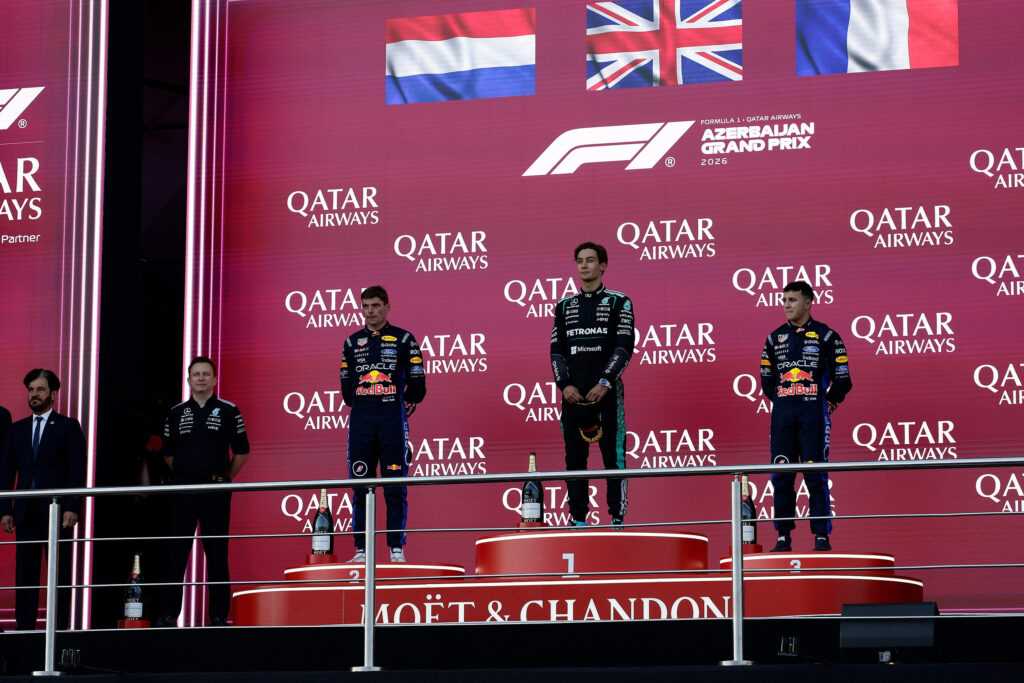
The first restart cost him second place. The second would prove even more damaging.
With his Medium tyres struggling to reach the necessary temperature, Piastri locked the front wheels under braking for Turn 1 on lap 40 and ran into the escape road. By the time he had turned the car around and rejoined, much of the field had passed.
The mistake dropped him from third towards the back of the order and left the tyres badly flat-spotted. The resulting vibrations and reduced grip made a recovery exceptionally difficult. Piastri continued to the finish but never returned to the points.
He crossed the line in 14th place but was ultimately classified 13th, after Gabriel Bortoleto received a post-race ten-second penalty for overtaking Sergio Pérez under yellow flags. The infringement occurred between Turns 6 and 7 following the first restart. The penalty dropped the Audi driver to 15th and promoted both Piastri and Pérez by one place.
For McLaren, the outcome was a major disappointment. Norris retired as an innocent casualty of the Alpine collision, while Piastri lost a likely podium with a braking error. But team principal Andrea Stella acknowledged that the underlying performance of the car also contributed to the result.
McLaren had brought upgrades to Baku, including developments intended to improve performance in slow corners, and the initial data suggested they were working as expected. The difficulty was that the car still lacked sufficient straight-line speed, repeatedly forcing the drivers to defend rather than attack.
Stella made clear that the problem could not be attributed to a single cause. Aerodynamic drag remained one limitation, but the team also needed to examine whether its gear ratios were appropriate for circuits featuring exceptionally high speeds. Power-unit optimisation presented another area for improvement, with McLaren unable to extract the same race performance from its Mercedes power unit as the works team.
There were additional complications. Norris had experienced an intermittent power-unit issue that carried over from qualifying into the race, while the team had also identified irregularities involving fuel injection. Those problems affected the consistency of power delivery and made the car even harder to race.
Stella nevertheless stressed that the upgrade package itself appeared to have delivered the expected gains. The difficulty was that improvements in one area were not enough to compensate for weaknesses elsewhere.
For the third time in the season, McLaren left a Grand Prix without scoring a point. It was an unusually severe result for a team that had arrived with realistic ambitions of challenging for the podium.
Verstappen takes the fight to the final metres
Following the second restart, Russell and Verstappen gradually broke clear of the chasing group. Both were running on Soft tyres, and the gap between them remained close enough to make a challenge possible on almost every lap.
Verstappen tried to exploit Baku’s long straights and the additional energy available through Overtake Mode, but Russell was particularly effective through the technical middle sector and the sequence of corners leading onto the main straight.
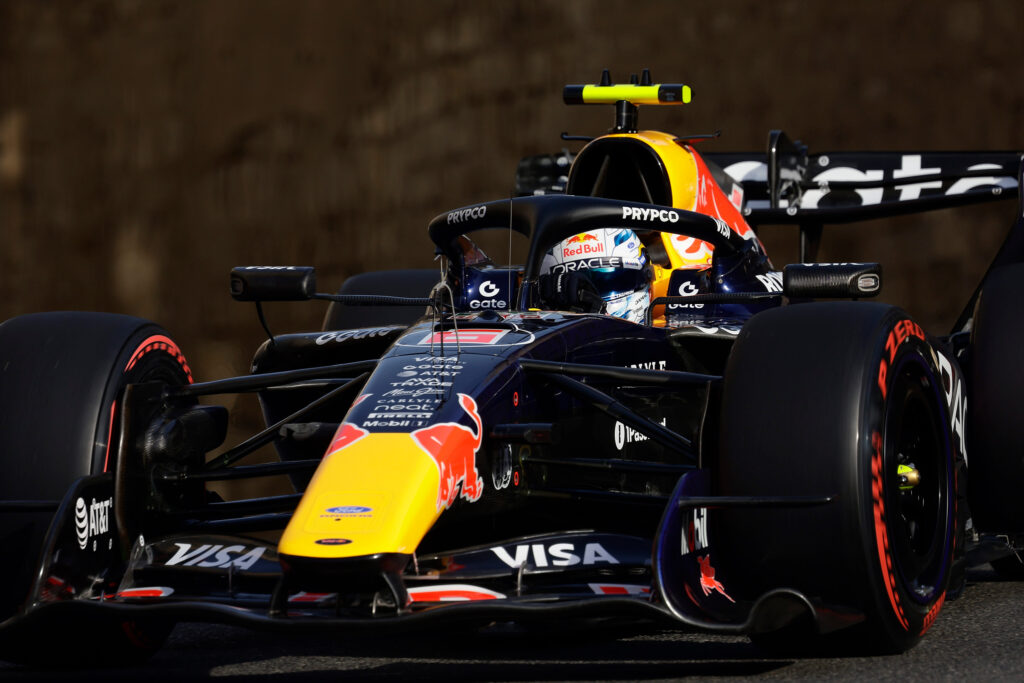
Their different strengths created a fascinating pattern. Russell built small advantages through the corners, Verstappen attempted to recover them on the straights, and the gap fluctuated without either driver gaining complete control of the battle.
The Dutchman pushed hard enough to brush the barriers, including an incident approaching Turn 16 that prompted him to ask Red Bull to check for possible tyre damage. Russell was equally committed, using the Mercedes’ performance to make the Red Bull work for every tenth.
But the leader was not simply hanging on.
On lap 49, Russell set the fastest lap of the Grand Prix with a 1:44.916, beating Verstappen’s best of 1:44.993 from the previous lap. The performance showed that the Mercedes still had the speed to resist the challenge on outright pace.
By the end of lap 50, Russell’s advantage had grown to approximately 0.906 seconds. With only one lap remaining, the Red Bull appeared to have run out of time.
Then Bottas crashed.
The Cadillac driver had endured a difficult race towards the back of the field. On the penultimate lap, he ran wide at Turn 1, an excursion he later believed may have confused the car’s energy-management systems.
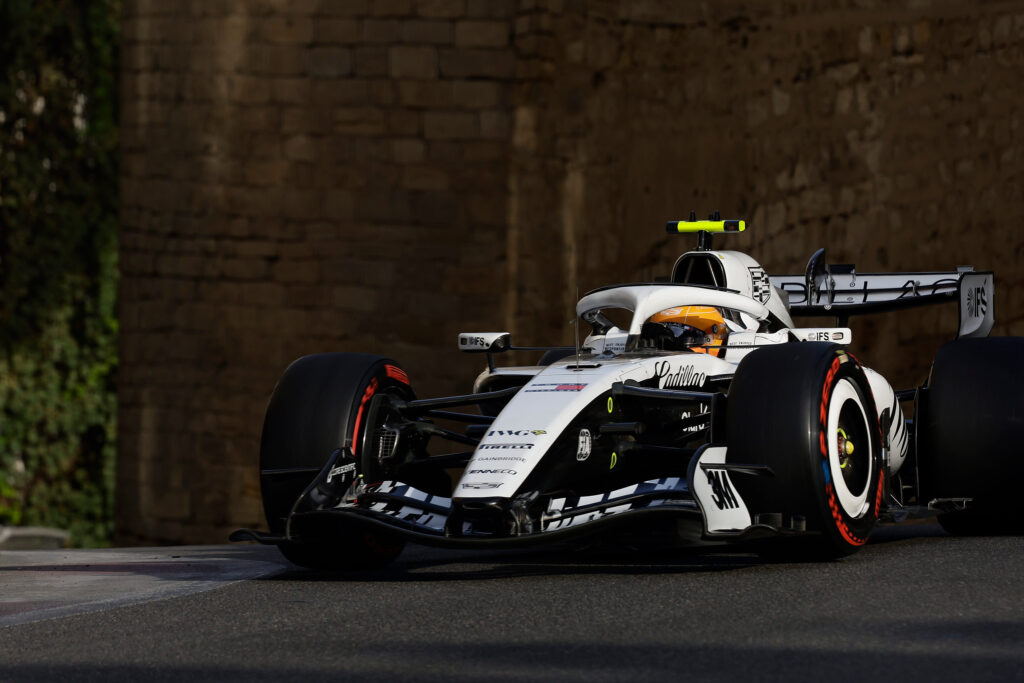
Approaching Turn 15, Bottas experienced what he described as a major interruption in energy recovery and abnormal rear braking behaviour. When he applied the brakes, the front axle appeared to be doing almost all the work, while the rear was no longer providing the expected regenerative braking contribution.
The Cadillac struck the barriers, ending Bottas’s race and bringing out yellow flags. The team subsequently investigated the suspected technical problem.
As the leaders approached Turn 15 on their final lap, Russell reduced his speed in response to the warning flags. But when he accelerated again, the power unit was slow to recover its turbo boost, leaving him briefly without the acceleration he expected.
The effect was immediate.
Verstappen closed dramatically through the final sector and used the slipstream along the main straight to draw almost alongside the Mercedes. What had been a gap of nearly a second became a direct race to the line.
Russell held his position by the smallest of margins, taking the chequered flag 0.196 seconds ahead of Verstappen.
Afterwards, the Mercedes driver explained that lifting for the yellow flags had left him without the expected turbo boost when he accelerated again. The problem almost cost him a victory that, for much of the afternoon, had appeared secure.
Verstappen acknowledged that Russell’s delayed boost recovery created the final opportunity. He had been close throughout the last stint, but the Mercedes remained difficult to attack in the middle sector. Even with the late advantage, there was not quite enough road left.
The final lap reduced Russell’s lead by 0.710 seconds, but the result was never simply a case of Mercedes losing speed over the closing stint. Until the Bottas incident, Russell had been gradually increasing his advantage.
The finishing margin therefore told a very different story from the first thirty laps. Russell had possessed the fastest car for most of the weekend; the final two tenths were the product of a race that had repeatedly taken his advantage away.
Hadjar completes a Red Bull double podium as Ferrari falls short
While the battle for victory occupied the final laps, Isack Hadjar secured an important third place in his first race back after injury.
The Frenchman had missed the Dutch, Italian and Spanish Grands Prix after suffering a wrist injury during training over the summer break. Liam Lawson had temporarily taken his place at Red Bull, with Yuki Tsunoda returning to Racing Bulls. Baku marked Hadjar’s first competitive appearance in six weeks.
He approached the weekend cautiously, gradually increasing his pace during practice before qualifying fourth. In the race, he ran close to Verstappen during the opening stint and occasionally appeared ready to challenge his team-mate before the team prioritised the Dutchman’s pursuit of Piastri.
After switching to Medium tyres, Hadjar could not match the speed of Russell and Verstappen on Softs. Nevertheless, he maintained a comfortable advantage over Leclerc and finished 10.704 seconds behind the winner.
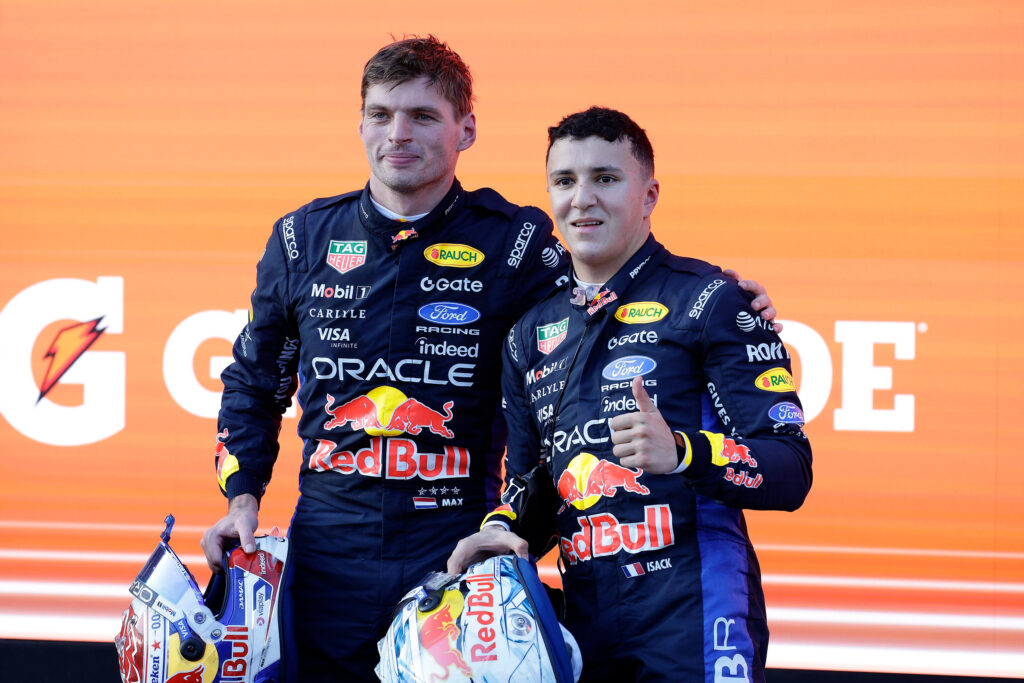
It was the third podium of Hadjar’s Formula 1 career and his second of the 2026 season. The Frenchman described it as his first achieved entirely on outright pace, having benefited from other drivers’ problems or penalties on his previous visits to the podium.
For Red Bull, the double podium was further evidence of genuine progress. Team principal Laurent Mekies described Baku as the team’s strongest weekend of the season, although he was careful to note that the improved competitiveness still had to be demonstrated at circuits with very different characteristics.
Ferrari, meanwhile, was unable to convert its strong qualifying performance into a podium.
Leclerc started second but was beaten away by Piastri and subsequently lost ground to both Red Bulls. His pace was consistent, but not competitive enough to close on the leaders. Fourth place, 14.136 seconds behind Russell, was ultimately the maximum available without mistakes ahead.
Hamilton finished sixth after another difficult afternoon in which Ferrari struggled with straight-line efficiency and tyre operating temperatures. He also lost a position to Antonelli during the closing stages.
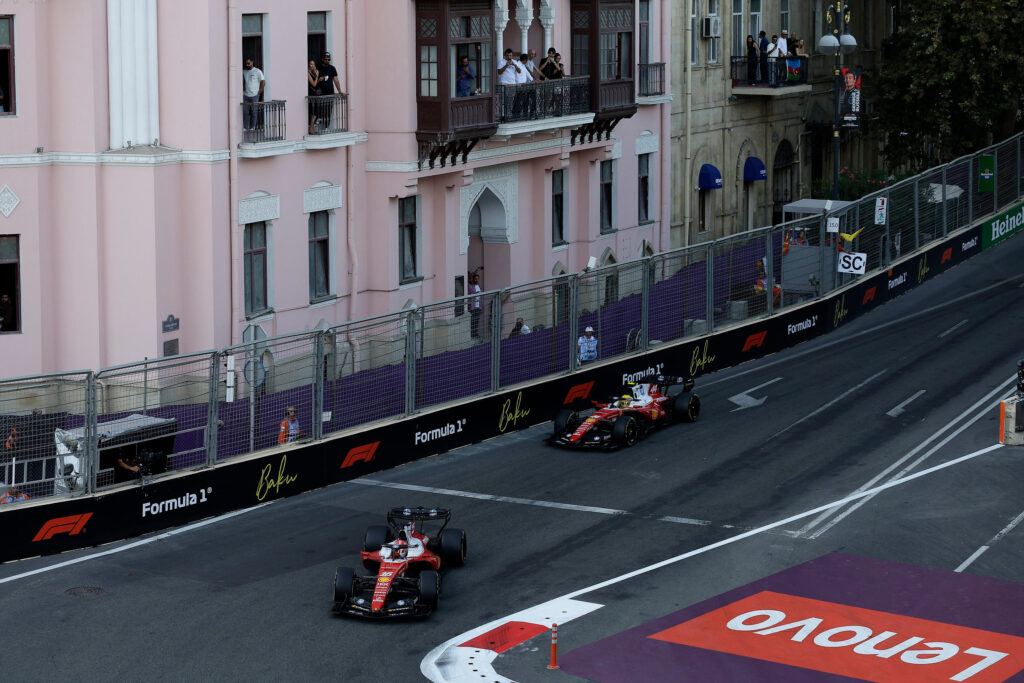
Team principal Frédéric Vasseur acknowledged that Ferrari’s limitations on Baku’s long straights were particularly costly. Strong single-lap performance had masked some of those weaknesses during qualifying, but over a race distance the team lacked the performance required to fight Mercedes and Red Bull.
Even so, fourth and sixth represented a useful points haul for Ferrari, particularly with McLaren failing to score.
Antonelli limits the damage as Haas returns to the points
Antonelli’s recovery from 16th to fifth was an important result in the context of the drivers’ championship.
The Italian had arrived in Azerbaijan with an 81-point advantage over Russell, but his Q1 accident threatened to make the weekend extremely costly. His opening laps were far from spectacular, and he initially lost a position before gradually finding a rhythm and working his way through the midfield.
By the first Safety Car, Antonelli had reached the points-paying positions. The two restarts and incidents ahead helped him gain further places, but he also made decisive overtakes of his own.
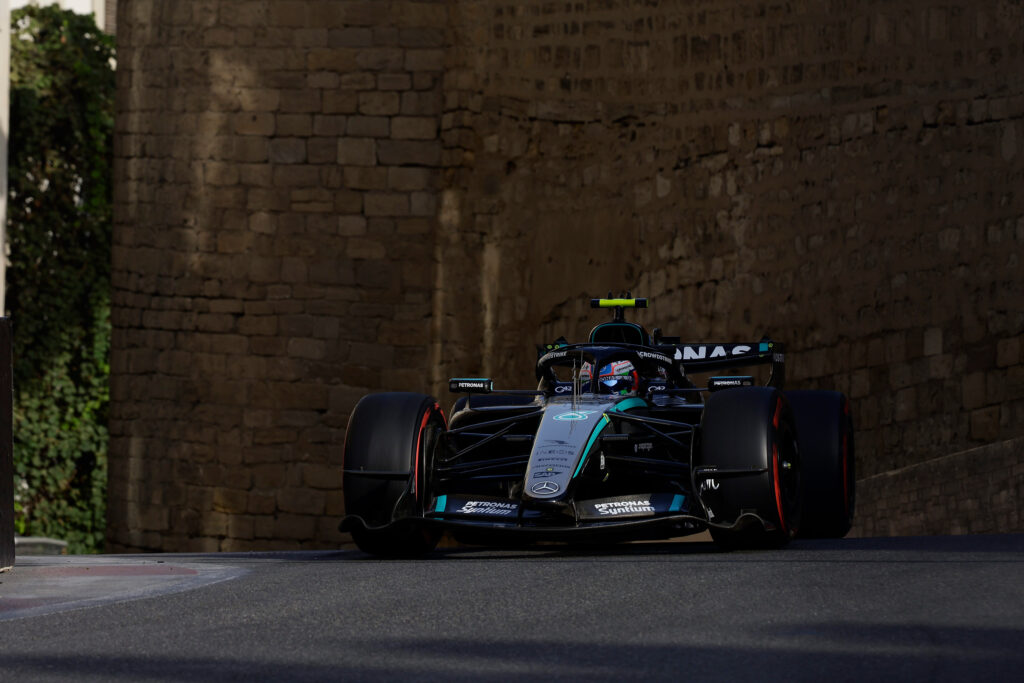
On lap 43, he passed Hamilton on the main straight and moved into fifth. He then closed on Leclerc, but the Ferrari maintained just enough pace to finish 0.376 seconds ahead.
Antonelli admitted afterwards that he had approached the race with damage limitation in mind, avoiding unnecessary risks after the qualifying mistake. He also struggled with the balance and suffered floor damage during the race, which complicated his recovery. Fifth place was not the result Mercedes might have expected from its championship leader, but ten points prevented the weekend from becoming a major setback.
The midfield fight produced another important result for Haas.
Esteban Ocon finished eighth and Oliver Bearman ninth, giving the American team its first points since Monaco and its first double top-ten finish of the season. Both drivers had to defend against rivals with strong straight-line performance, but the team executed its strategy effectively enough to bring both cars home in the points.
They were narrowly beaten by Lindblad, who recovered from his earlier collision with Lawson to finish seventh. The Racing Bulls rookie passed Bearman before catching Ocon on the final run to the chequered flag, taking seventh by just 0.030 seconds.
It was a remarkable recovery after a difficult weekend for Racing Bulls, although the team had been fortunate that its intra-team collision did not end both drivers’ races.
Sainz completed the top ten for Williams, recovering from his grid penalty to earn the final point. Nico Hülkenberg finished 11th for Audi, followed by Lawson. Piastri, Pérez and Bortoleto completed the classified finishers on the lead lap after the Audi driver’s penalty.
For Alpine, the loss of both cars proved particularly damaging in the midfield championship battle. Racing Bulls was able to extend its advantage, despite a weekend in which Alpine had shown the pace to challenge for a strong points finish.
Russell secures his first Grand Slam and closes the championship gap
Russell’s victory reduced Antonelli’s lead in the drivers’ championship from 81 to 66 points. The Italian remained comfortably ahead with 302 points, but Russell increased his total to 236 and kept the championship contest alive.
Hamilton held third on 199 points, followed by Norris on 186, Leclerc on 179 and Verstappen on 163. Despite Red Bull’s strong showing, the Dutchman remained some distance behind the leading Mercedes pair after a difficult opening part of the season.
In the constructors’ championship, Mercedes strengthened its already commanding position, moving to 538 points. Ferrari remained second with 378, while McLaren’s scoreless weekend left it third on 306. Red Bull continued its recovery with 263.
Yet the championship tables only partly reflected the changing competitive order.
Russell had qualified nearly nine tenths faster than anyone else, then built a lead of more than eleven seconds before the first Safety Car. On outright pace, Mercedes had been the benchmark at Baku. But Red Bull was close enough to exploit the restarts, and Verstappen’s improved performance on Soft tyres turned the final stint into a genuine contest.
McLaren demonstrated that it could still challenge near the front, yet the combination of limited straight-line speed, power-unit optimisation problems, difficult tyre preparation and an ill-timed accident resulted in a disastrous afternoon. Ferrari again showed strong qualifying pace without the race performance required to fight for victory. And Hadjar’s comeback suggested that Red Bull’s improvement was no longer confined to Verstappen’s side of the garage.
For Russell, the Azerbaijan Grand Prix was one of his most complete weekends of the season. He delivered an outstanding pole lap, controlled the opening stint, survived two restarts and defended against a determined Verstappen. Even when a loss of turbo boost threatened to undo almost everything on the final lap, he found enough momentum to reach the finish first.
His reward was more than an eighth career victory. Russell achieved his first Grand Slam, joining the select group of Formula 1 drivers to have combined pole position, victory, fastest lap and leading every lap of a Grand Prix.
At Baku, victory appeared comfortable for nearly thirty laps, uncertain for another twenty and almost lost in the final seconds.
After 306.042 kilometres of racing, Russell had 0.196 seconds to spare.
Azerbaijan Grand Prix 2026 — Top 10
| Pos. | No. | Driver | Team | Result |
| 1 | 63 | George Russell | Mercedes | 1:38:02.143 |
| 2 | 3 | Max Verstappen | Red Bull Racing | +0.196 |
| 3 | 6 | Isack Hadjar | Red Bull Racing | +10.704 |
| 4 | 16 | Charles Leclerc | Ferrari | +14.136 |
| 5 | 12 | Kimi Antonelli | Mercedes | +14.512 |
| 6 | 44 | Lewis Hamilton | Ferrari | +22.382 |
| 7 | 41 | Arvid Lindblad | Racing Bulls | +31.159 |
| 8 | 31 | Esteban Ocon | Haas | +31.189 |
| 9 | 87 | Oliver Bearman | Haas | +31.929 |
| 10 | 55 | Carlos Sainz | Williams | +32.416 |
Fastest lap: George Russell, Mercedes — 1:44.916, lap 49.
Drivers’ championship after Azerbaijan
| Pos. | Driver | Points |
| 1 | Kimi Antonelli | 302 |
| 2 | George Russell | 236 |
| 3 | Lewis Hamilton | 199 |
| 4 | Lando Norris | 186 |
| 5 | Charles Leclerc | 179 |
| 6 | Max Verstappen | 163 |
| 7 | Oscar Piastri | 120 |
| 8 | Isack Hadjar | 86 |
| 9 | Liam Lawson | 59 |
| 10 | Pierre Gasly | 41 |
Constructors’ championship after Azerbaijan
| Pos. | Team | Points |
| 1 | Mercedes | 538 |
| 2 | Ferrari | 378 |
| 3 | McLaren | 306 |
| 4 | Red Bull Racing | 263 |
| 5 | Racing Bulls | 83 |
| 6 | Alpine | 68 |
| 7 | Haas | 27 |
| 8 | Audi | 17 |
| 9 | Williams | 12 |
| 10 | Aston Martin | 3 |
| 11 | Cadillac | 0 |

