

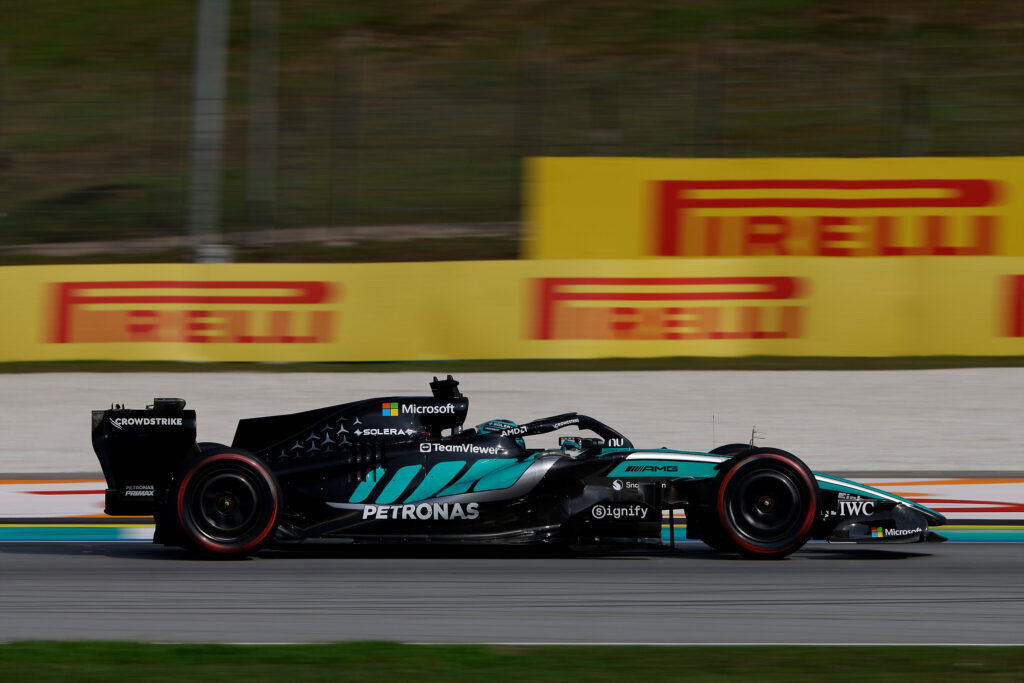
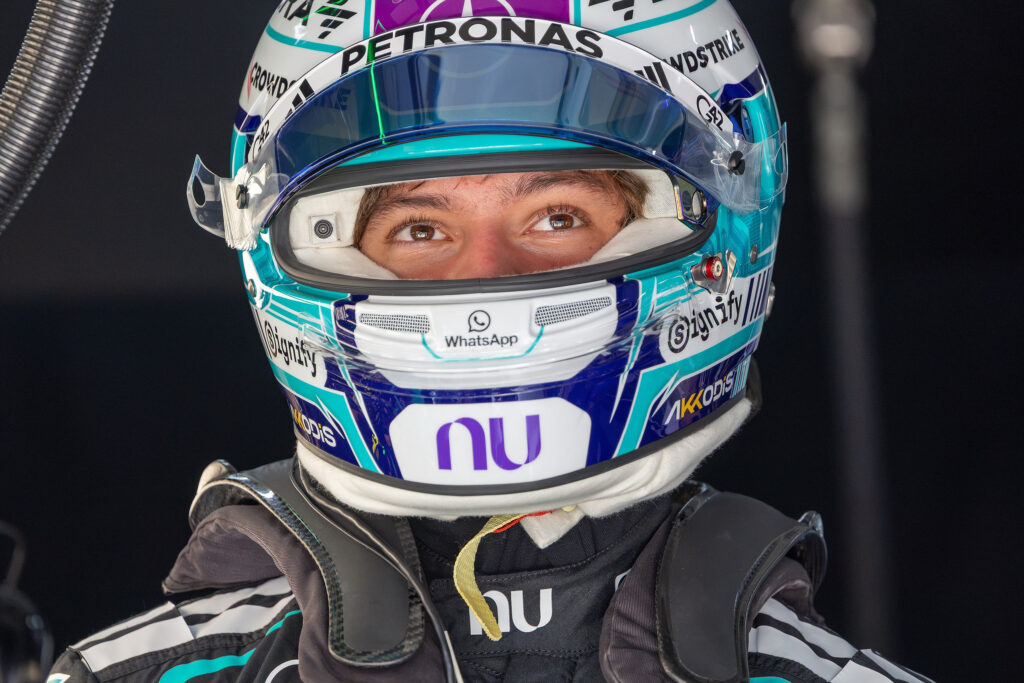
With only a handful of laps remaining in the Bahrain Grand Prix in Malaysia, George Russell’s Mercedes ground to a halt on Sepang’s start-finish straight. The Briton had been running third behind Max Verstappen and team-mate Kimi Antonelli when a suspected power-unit failure ended his race during the final Safety Car period. The field had already been neutralised following Alexander Albon’s retirement. When racing resumed, Lewis Hamilton and Charles Leclerc passed Isack Hadjar, while Verstappen held the lead to secure Red Bull’s first victory of 2026.
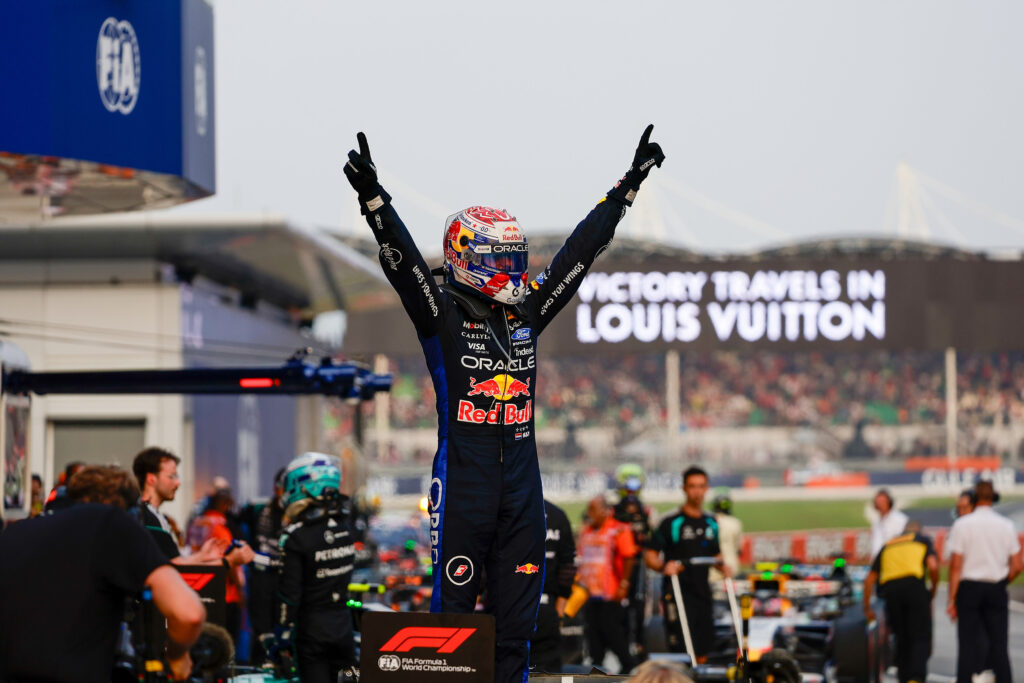
It was the four-time World Champion’s 72nd Grand Prix victory, but the significance went well beyond another addition to his personal record. For the first time, a car powered by Red Bull Ford Powertrains had won a Formula 1 race. After a difficult start to the new technical era, with reliability concerns and a performance deficit to Mercedes, Red Bull had delivered a historic success in the first season of its own power-unit programme. Verstappen completed a remarkable weekend by taking pole position, winning the race and setting the fastest lap on the 55th and final tour.
Yet Formula 1’s return to Malaysia was memorable for far more than the winner. A tropical downpour delayed the start before an extraordinary software problem forced race control to suspend the starting procedure altogether. Mercedes seized first and second at the start, Ferrari’s gamble on slick tyres nearly destroyed its afternoon, and McLaren spent much of the race trying to recover from its own strategic misjudgements. Changing conditions, Safety Cars and technical problems repeatedly reshaped the order.
After 55 laps, Verstappen crossed the line 2.307 seconds ahead of Antonelli. Hamilton, who had started second before falling towards the rear of the field, recovered to third, 4.919 seconds behind the winner. Leclerc completed the top four, with Hadjar fifth.
For Mercedes, however, the outcome was dominated not by Antonelli’s eighteen points but by Russell’s retirement — another costly mechanical failure in a championship increasingly shaped by the contrasting fortunes of its two drivers.
Sepang returns as Verstappen claims Red Bull’s first pole of 2026
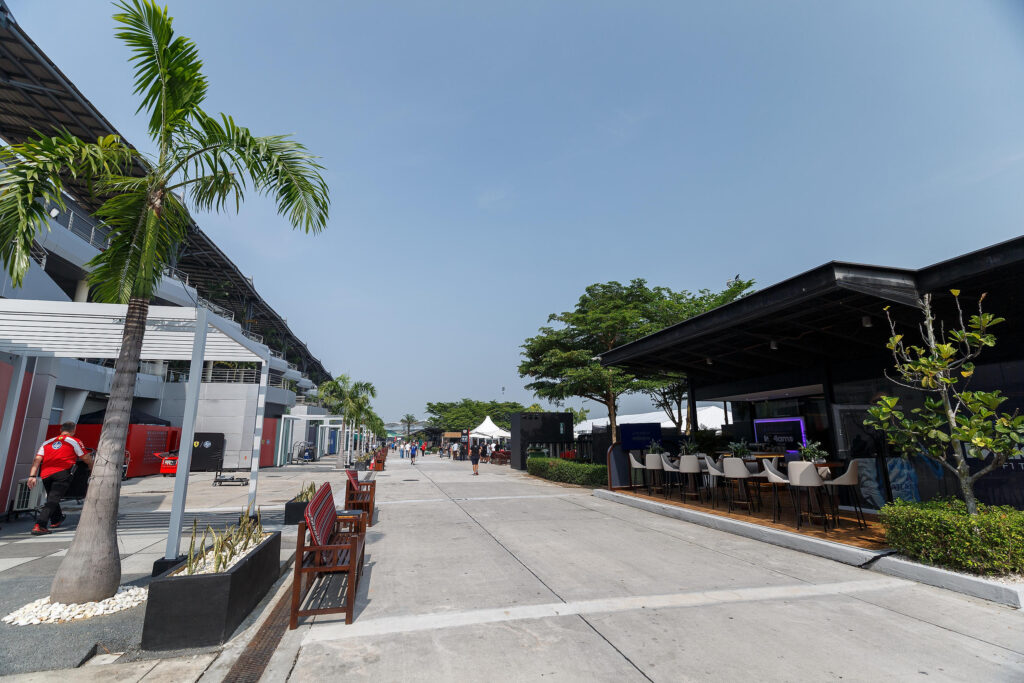
Sepang returned to the Formula 1 calendar after a nine-year absence in exceptional circumstances. The Bahrain Grand Prix had originally been scheduled for the spring at Sakhir, but the situation in the Middle East made it impossible to stage the event as planned. In July, Formula 1 and the FIA announced an agreement with the governments of Bahrain and Malaysia to hold the race at Sepang International Circuit instead.
The event retained its Bahrain identity and official title, Formula 1 Gulf Air Bahrain Grand Prix in Malaysia 2026, despite taking place at the Malaysian circuit that had hosted Formula 1 from 1999 until 2017.
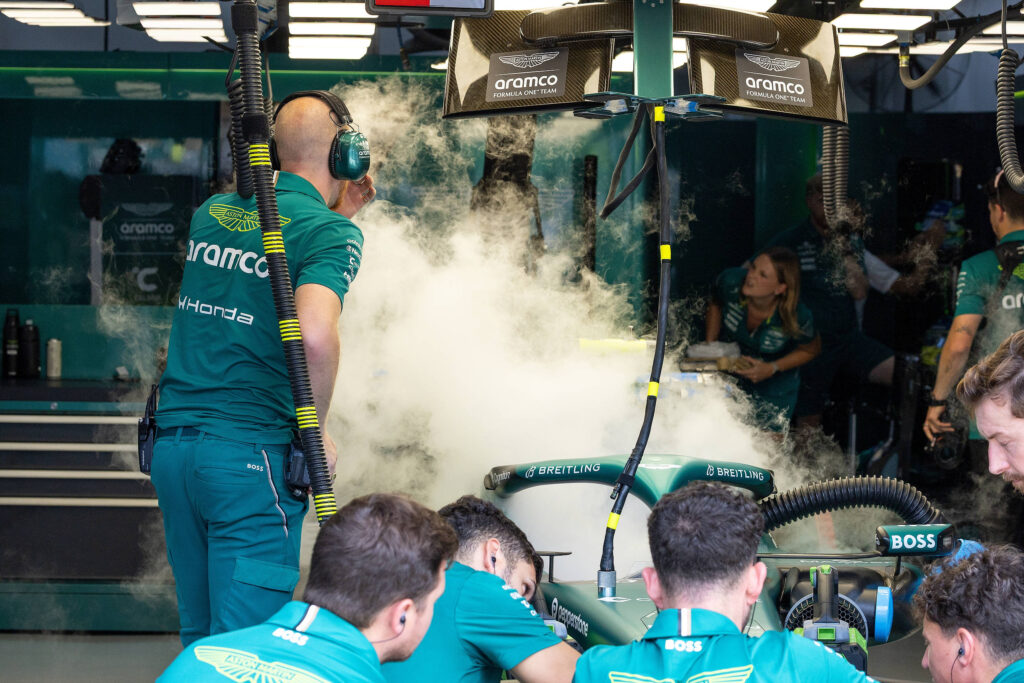
For the teams, returning to Sepang presented a substantial technical challenge. The last Formula 1 cars to race there belonged to a very different generation, while the current regulations placed new demands on energy management, aerodynamics and tyre preparation.
The 5.543-kilometre circuit combines two long straights with fast, loaded corners and slower sections where traction on corner exit is crucial. Heat, humidity and the possibility of sudden tropical rain add further complications.
Pirelli selected the C2, C3 and C4 compounds. Based on Friday’s running, two- or three-stop strategies looked realistic, with the high-energy corners placing considerable stress on the tyres. But the weather forecast suggested that all conventional calculations could quickly become irrelevant.
There was no single dominant driver throughout practice. Verstappen topped FP1, Charles Leclerc set the pace in FP2, and Antonelli was fastest in Saturday’s final session. Red Bull looked competitive, but Ferrari and Mercedes remained close enough to challenge.
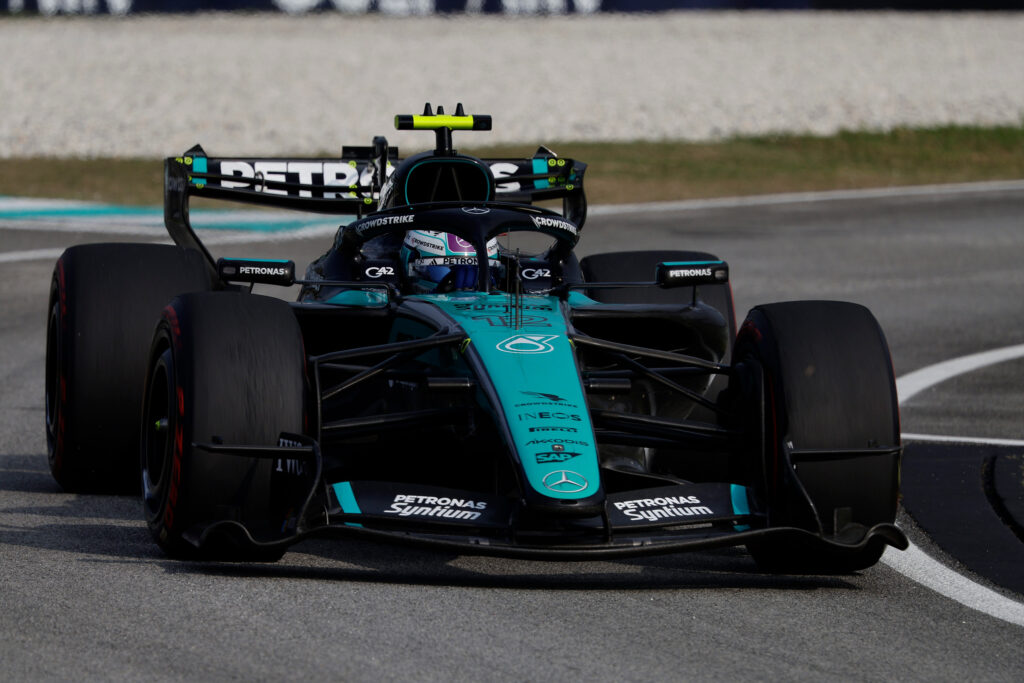
Qualifying, however, belonged to Verstappen.
The Dutchman was fastest in all three segments and produced a 1:35.130 in Q3, beating Hamilton’s Ferrari by 0.298 seconds. It was Red Bull’s first pole position of the season and the 49th of Verstappen’s Formula 1 career.
Hadjar initially qualified third in the sister Red Bull, ahead of Antonelli and Leclerc. Norris and Piastri followed in their McLarens, while Russell could manage only eighth.
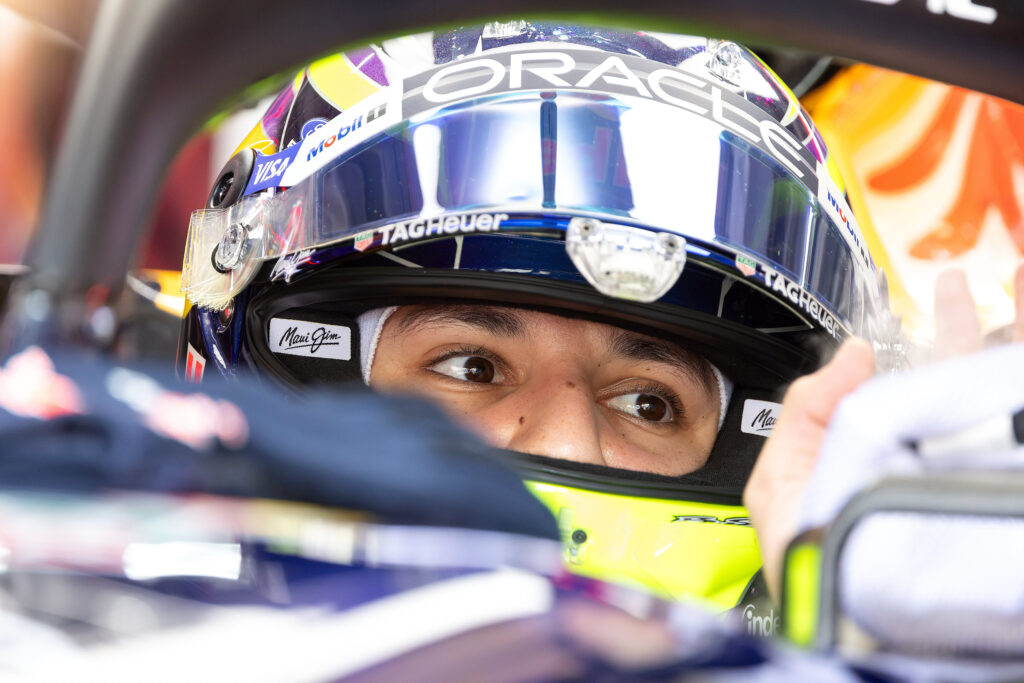
The starting grid changed when Hadjar received a five-place penalty for exceeding his permitted power-unit component allocation. He dropped to eighth, promoting Antonelli to third and Leclerc to fourth. Russell moved up to seventh. Further penalties left Franco Colapinto and Arvid Lindblad starting towards the rear of the field.
Red Bull had the fastest car over a qualifying lap, but an endurance-style test of strategy was not what awaited it on Sunday. The challenge would instead be a Grand Prix disrupted by rain, changing grip and an unusual technical problem that no team had anticipated.
A tropical storm and the software failure that stopped the start
A severe thunderstorm swept over Sepang shortly before the scheduled 3pm local start. Heavy rain left standing water around the circuit and significantly reduced visibility. Race control initially postponed the start by forty minutes.
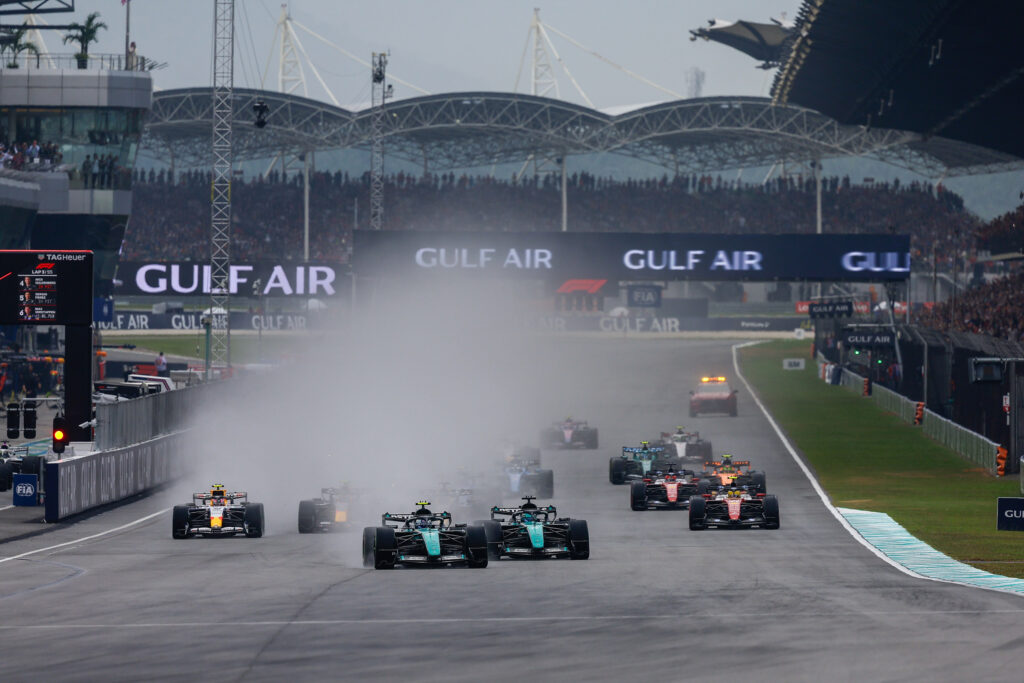
When conditions improved, the cars ventured out behind the Safety Car for formation laps. Even then, it was clear that the track remained treacherous.
Hadjar lost control exiting Turn 2 and ran through the gravel before recovering. Shortly afterwards, Verstappen reported a sudden loss of power. Hamilton experienced a similar problem, telling Ferrari that pressing the throttle was producing virtually no response. His car briefly came to a halt on the main straight.
Several cars from different power-unit manufacturers began displaying comparable symptoms. Race control suspended the starting procedure, with the field returning to the pit lane.
What initially appeared to be a series of unrelated mechanical failures was eventually traced to the common software configuration governing energy management.
The FIA published its formal investigation on 8 October. It found that, when cars were running at very low engine speeds in certain circuit sectors, the software’s scheduled 250kW reduction in power could restrict output more severely than intended. Once the loss occurred, the affected cars could not recover the expected power within those sectors. The figure described a reduction of 250kW, not an absolute maximum power limit of 250kW.
The combination of low-speed running behind the Safety Car, wet-weather settings and Sepang’s sector configuration had exposed a problem that previous simulations and track testing had not reproduced.
The starting procedure was suspended at 15:45. Within five minutes, the FIA technical team had identified the cause and issued an updated software configuration. Further guidance followed, and teams began integrating the revised settings.
By 16:20, the installation process had been completed. At 16:33, the cars left the pit lane to resume the starting procedure.
The FIA subsequently stressed that the original software had been tested, including during practice sessions in Belgium and the Netherlands. The failure arose from a specific combination of circumstances rather than the absence of any previous validation.
By the time the cars were ready to race, the original conditions had changed considerably. The rain had eased, the track was drying, and every team faced a critical choice: start on Intermediate tyres or gamble that slicks would soon become competitive.
The planned 56-lap distance had been reduced to 55 laps, but it was the split in tyre choices that immediately determined the early running order.
Ferrari’s slick gamble fails as Mercedes seizes the lead
Verstappen, Antonelli, Russell and Hadjar were among the drivers who selected Intermediate tyres for the start. Others committed to slicks, hoping the high temperatures would dry the circuit quickly enough to compensate for their initial lack of grip.
Ferrari started both Hamilton and Leclerc on Softs. McLaren initially chose Mediums for Norris and Piastri.
During the formation procedure, however, Piastri recognised that the track remained too wet and came into the pits for Intermediates. Several other drivers made the same decision, while Norris and the two Ferraris stayed on slicks.
When the lights went out, Verstappen made a poor start and lost the lead to both Mercedes cars. Antonelli emerged first, Russell moved into second, and the Red Bull driver narrowly defended third from the fast-starting Liam Lawson.
Verstappen later described a delay in power delivery at the start. Although the FIA’s original software problem had been corrected, the Dutchman still experienced an unsatisfactory response when accelerating away from the grid.
For Ferrari, the opening laps were disastrous.
Hamilton fell from the front row towards the back of the field as the Soft tyres struggled for grip. Leclerc also lost positions and made contact with Nico Hülkenberg’s Audi, damaging his front wing. He was forced into an early pit stop for a replacement wing and Intermediate tyres.
Hamilton, however, chose to remain on Softs.
His reasoning was simple: if the circuit continued to dry, another stop would be more costly than surviving the difficult opening laps. Ferrari discussed the possibility of changing tyres, but the seven-time World Champion remained convinced that the situation would improve.
By the end of lap eight, Hamilton was down in 18th place, 83.216 seconds behind the leader. For a driver who had qualified second, the strategy appeared to have gone badly wrong.
Yet the track was changing. The racing line gradually became drier, and the Ferrari began finding more grip. Hamilton was still far behind, but his decision not to abandon the original strategy would soon become an important part of the race.
At the front, Verstappen was recovering from his difficult start. He passed Russell at Turn 4 on lap six and began closing on Antonelli. The Mercedes driver retained the lead, but the Red Bull was increasingly threatening.
At the end of lap eight, Antonelli ran slightly wide at the final corner, allowing Verstappen to close almost onto his gearbox.
Before the Dutchman could launch an attack, Valtteri Bottas spun his Cadillac into the gravel at Turn 13, triggering the race’s first Safety Car.
The timing could hardly have been better for drivers who had started on Intermediates. The circuit was now ready for slicks, and the neutralisation offered a relatively inexpensive opportunity to change tyres.
For Hamilton, the Safety Car was equally significant. His 83.216-second deficit at the end of lap eight shrank to approximately 6.5 seconds when the field bunched up. Ferrari’s initial tyre call had still been wrong, but the neutralisation had unexpectedly given the Briton another chance.
The switch to Softs puts Verstappen in control
Mercedes fitted Medium tyres to both its cars during the Safety Car period. Red Bull chose Softs for Verstappen and Hadjar.
That difference proved decisive.
On the drying circuit, the softer C4 offered stronger mechanical grip, especially under acceleration from slow corners. At the same time, the rain had left the asphalt much cooler than during practice, reducing thermal degradation and making the Soft far more durable than pre-race calculations had suggested.
After the stops, Antonelli retained the lead, with Verstappen second and Russell third. Hadjar ran fourth, while Hamilton and Leclerc were only 15th and 17th.
At the restart at the beginning of lap 13, Verstappen attacked immediately. He used the slipstream along the main straight, went around the outside at Turn 1 and completed the pass on the exit of Turn 2.
Russell took advantage of the battle ahead and passed Antonelli at Turn 5 to move into second.
From that point, however, neither Mercedes driver could match the Red Bull’s pace. Verstappen quickly opened a gap of more than three seconds, while Russell and Antonelli struggled to extract consistent grip from their Medium tyres.
Antonelli informed Mercedes that he had more pace than Russell. Rather than immediately issuing a team order, Mercedes allowed the drivers to race. On lap 21, the Italian passed his team-mate at Turn 4 and reclaimed second place.
The change did little to reduce the leader’s advantage.
On lap 24, Antonelli made a mistake at the final corner, ran wide and struck the pit-entry marker, losing additional time. Verstappen’s advantage grew to approximately seven and a half seconds.
Red Bull’s performance was not simply the product of a fortunate tyre choice. The car worked well through Sepang’s faster sections, while chassis upgrades and improved power-unit optimisation had reduced the team’s deficit to Mercedes. After several difficult months, Verstappen finally had a package capable of controlling a race on outright pace.
The next round of stops began among the leaders on lap 32, when Russell switched to Softs. Antonelli and Verstappen followed one lap later. All three were now running the same compound, but Red Bull retained a lead of approximately eleven seconds.
Russell questioned the timing of his stop over the radio, concerned that the team had committed too early to a final stint on Softs. That concern would ultimately be overtaken by events when a late neutralisation created another opportunity to change tyres.
Hamilton fights back from 18th
While Verstappen established control at the front, Hamilton was producing one of the most compelling recovery drives of the season.
Starting on Soft tyres had seemed a costly mistake, but the British driver refused to abandon the strategy. As the circuit dried, the Ferrari became faster, and the first Safety Car allowed him to attack rivals without carrying the enormous time deficit accumulated earlier.
By lap 22, Hamilton had climbed to fifth.
He completed 31 laps on his original Soft tyres, including time spent behind the Safety Car. He then switched to a used set of Mediums before returning to used Softs during the final Virtual Safety Car period.
Hamilton therefore completed the race with only two pit stops and without using Intermediate tyres after the actual start.
It was an unusually long first stint on the softest available compound, particularly at a circuit traditionally known for demanding tyre loads. But lower track temperatures and changing grip conditions allowed him to preserve enough performance to maintain a strong recovery pace.
After his first stop, Hamilton continued to close on Hadjar, who was holding fourth place. The Ferrari was now among the quicker cars on the circuit, although the Medium tyres were not providing the same confidence as the Softs used by the leaders.
Leclerc faced a more complicated recovery. His early contact with Hülkenberg had required a front-wing change and disrupted the team’s intended strategy. Nevertheless, he gradually climbed through the field and reached the closing stages close enough to Hamilton to benefit from any opportunity ahead.
Ferrari team principal Frédéric Vasseur admitted afterwards that the choice to start on slicks had been incorrect. The team expected the circuit to dry faster than it did, and the advantage of Intermediate tyres in the opening laps proved much greater than anticipated.
Yet Vasseur also praised Hamilton’s decision to stay out. The driver had assessed the changing conditions and successfully extended a stint that initially appeared almost impossible.
That made Ferrari’s final result particularly difficult to judge. Third and fourth represented a remarkable recovery, but the team’s pace in dry conditions suggested that a correct initial tyre choice might have produced an even stronger outcome.
A late Safety Car ends Russell’s podium hopes
By the final third of the Grand Prix, Verstappen was comfortably leading, with Antonelli and Russell holding second and third.
Mercedes lacked the pace to challenge Red Bull for victory, but a double podium appeared within reach. For a team fighting for both championships, it would still have been a valuable result.
The situation changed on lap 43 when Alexander Albon stopped his Williams with a suspected technical problem, bringing out the Virtual Safety Car.
The neutralisation created an opportunity for additional pit stops at a reduced time cost. Red Bull immediately called Verstappen in for another set of previously used Soft tyres. The Dutchman briefly surrendered the lead to Antonelli, but Mercedes brought both drivers into the pits on the following lap.
Verstappen consequently returned to first place.
As marshals worked to recover Albon’s Williams, the Virtual Safety Car was upgraded to a full Safety Car. The field closed up, eliminating the advantage Verstappen had established during the preceding stint.
For Red Bull, this meant another restart to manage. Antonelli would have a chance to attack directly, while the two Ferraris were closing on Hadjar in the battle for the final podium position.
During this existing Safety Car period, before racing resumed, Mercedes suffered a major setback. Russell’s car suddenly stopped on the start-finish straight, just before Turn 1. His race ended after 49 completed laps. Albon’s retirement had triggered the neutralisation; Russell’s subsequent failure did not cause the Safety Car to be deployed.
Mercedes initially attributed the retirement to a suspected power-unit failure. The Briton had been on course for third place and an important championship result, but instead left Sepang with no points.
Team principal Toto Wolff described Malaysia as Mercedes’ worst weekend of the season. His frustration extended beyond the mechanical failure: the team had been slower than expected and had struggled to compete with Red Bull even when both cars were running normally.
Russell acknowledged that the car had been difficult to drive on Medium tyres, although its balance improved considerably once he switched to Softs. He had accepted that victory was beyond reach, but losing a podium so close to the finish was particularly painful.
For Antonelli, the same circumstances worked in the opposite direction. Second place was already a useful result; his team-mate’s retirement would substantially increase his championship advantage.
Verstappen masters the restart as Hadjar loses the podium
When the Safety Car finally returned to the pits, Verstappen had Antonelli directly behind him. The comfortable gap he had previously enjoyed was gone, and the final laps offered the Mercedes driver one last opportunity.
Verstappen judged the restart perfectly.
He accelerated at the right moment, prevented Antonelli from getting close enough to attack and quickly established a small but useful advantage. The Mercedes driver attempted to respond, but Red Bull remained the faster car.
Behind them, a much more dramatic battle developed.
Russell’s retirement had promoted Hadjar to third, but Hamilton and Leclerc were immediately behind the Frenchman.
On lap 53, Hamilton attacked into Turn 1 and moved past the Red Bull for third place. Shortly afterwards, Leclerc completed another pass, dropping Hadjar to fifth.
The Red Bull driver’s defence was compromised by technical problems. Hadjar later explained that he suffered a shortage of power for two laps after the final restart. Combined with understeer, the issue left him unable to resist the Ferraris effectively.
Fifth place after starting eighth was still a strong result, but the Frenchman had spent much of the afternoon among the leading contenders. Red Bull had come close to a double podium, only to lose it in the final minutes.
For Ferrari, the outcome completed an extraordinary recovery. Hamilton had climbed from 18th to third, while Leclerc had overcome an early front-wing change to finish fourth.
At the front, Verstappen made no mistakes. On the 55th and final lap, he set the fastest lap of the race — 1:38.220 — before taking the chequered flag.
Antonelli finished 2.307 seconds behind, followed by Hamilton at 4.919, Leclerc at 7.258 and Hadjar at 8.571.
The victory was Verstappen’s first of the season and the 72nd of his Formula 1 career.
More importantly, it marked the first Grand Prix win for Red Bull Ford Powertrains. Team principal Laurent Mekies paid tribute to the engineers who had spent years developing the new power-unit project at Milton Keynes.
The result also demonstrated just how far Red Bull had progressed. Only a week earlier in Azerbaijan, Verstappen had missed victory by 0.196 seconds. At Sepang, the team possessed the pace to control most of the race, even after a difficult start and repeated neutralisations.
McLaren recovers as Aston Martin earns valuable points
The midfield battle was dominated by teams attempting to recover from their initial tyre choices.
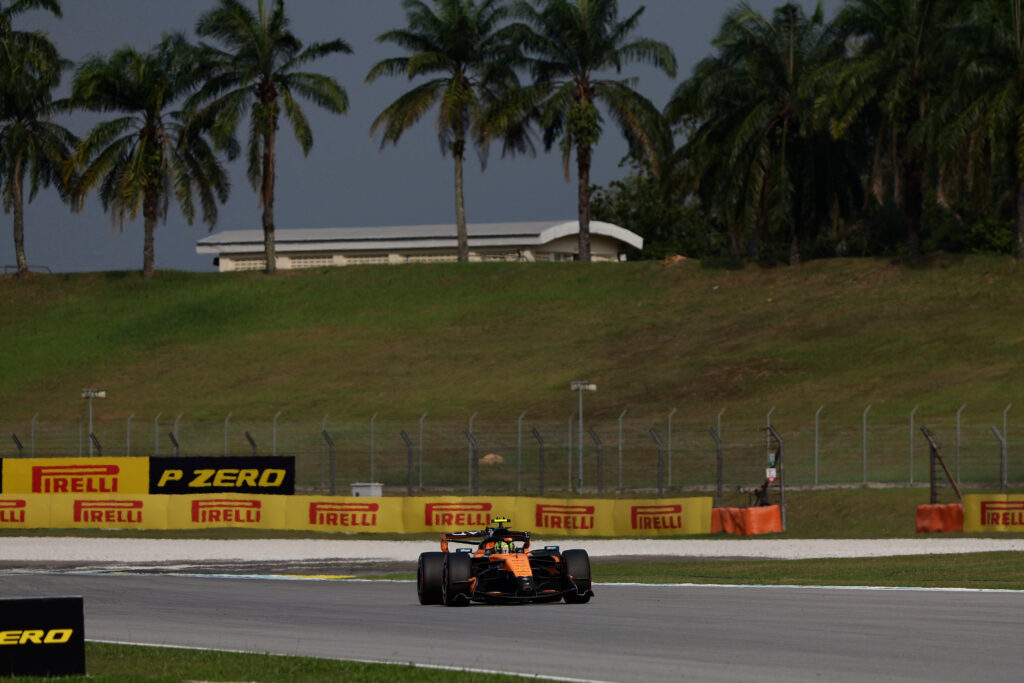
Piastri made the correct decision to switch to Intermediates during the formation procedure, while Norris remained on Mediums and lost substantial time during the opening laps.
Both McLarens used Hard tyres after the first Safety Car, then adopted different strategies as the race developed. Their pace was sufficient to recover positions, but neither car could consistently match the Red Bulls, Mercedes or Ferraris.
Norris suffered another setback behind the final Safety Car. As the field slowed sharply following Russell’s stoppage, he nearly hit Piastri’s car, ran into the gravel and lost several positions.
He eventually recovered to ninth, while Piastri finished sixth, less than a second behind Hadjar.
McLaren team principal Andrea Stella admitted that strategy alone did not explain the disappointing result. In his assessment, McLaren had approximately the fourth-fastest car at Sepang, meaning that even a cleaner race would probably not have put the team in contention for victory.
Liam Lawson finished seventh for Racing Bulls. The New Zealander had made an excellent start and ran among the leaders in the opening laps, but gradually gave way to the faster cars as strategies converged. Six points remained a deserved reward.
Fernando Alonso finished eighth, giving Aston Martin an important result after a difficult season. The Spaniard fought hard in the midfield and used the changing conditions to help secure four points.
The final point went to Arvid Lindblad, who had started at the back after power-unit penalties. The Racing Bulls rookie made steady progress through the field and passed Nico Hülkenberg’s Audi late in the race to secure tenth.
Haas could not repeat its double points finish from Azerbaijan. Oliver Bearman and Esteban Ocon finished 14th and 15th, while Alpine also left Sepang empty-handed, with Colapinto 13th and Gasly 16th.
Williams endured a difficult afternoon. Albon retired with a technical problem, and Carlos Sainz lost positions following contact with Gabriel Bortoleto, for which the Audi driver received a ten-second penalty.
Cadillac brought only Sergio Pérez to the finish, in 19th place. Bottas had already retired early after the spin that triggered the first Safety Car.
A historic Red Bull Ford victory reshapes the championship picture
Verstappen’s victory at Sepang was one of the defining technical milestones of the 2026 Formula 1 season.
For the first time, Red Bull had won a Grand Prix with its own power unit, developed in partnership with Ford under the new regulations. It was a significant achievement for a project that had begun the year facing questions about reliability and performance.
Yet the biggest championship winner in Malaysia was Antonelli.
Russell’s victory in Azerbaijan had reduced the Italian’s advantage to 66 points. At Sepang, Antonelli finished second while his Mercedes team-mate retired.
The championship leader moved to 320 points, with Russell remaining on 236. The gap increased to 84 points, with seven rounds remaining.
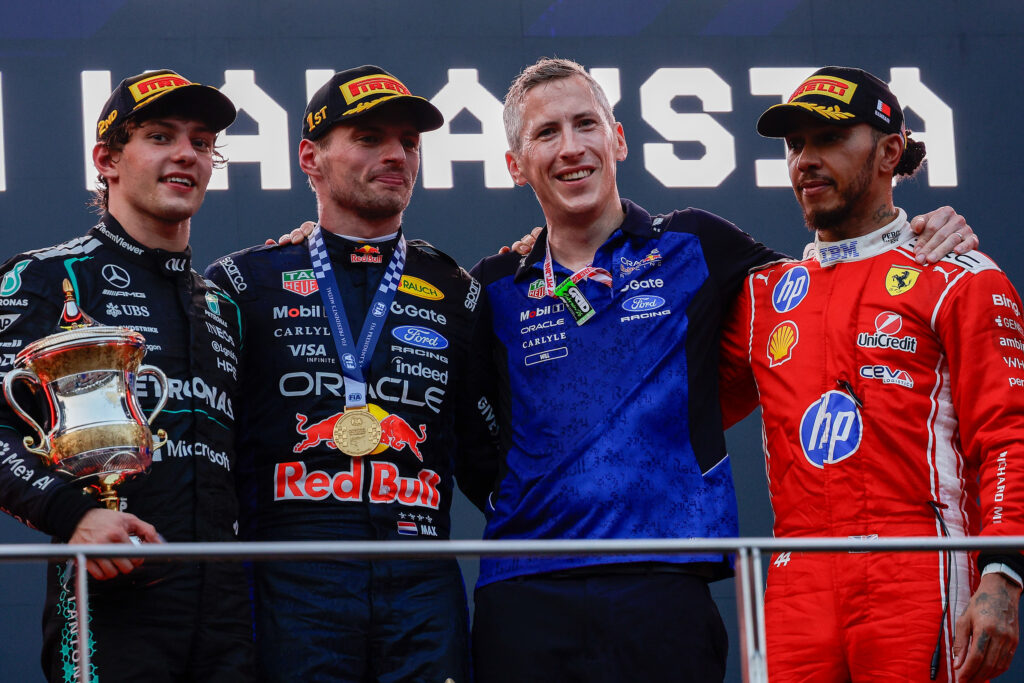
Hamilton strengthened his hold on third place with 214 points, while Leclerc moved to fourth on 191. Norris and Verstappen were level on 188.
In the constructors’ championship, Mercedes remained comfortably ahead with 556 points. Ferrari moved to 405 thanks to its third- and fourth-place finishes, McLaren stood on 316, and Red Bull closed the gap with 298.
For Ferrari, Sepang produced conflicting emotions. Recovering to third and fourth after a disastrous opening was a major achievement, but the team had paid heavily for its choice of slicks. Starting on Intermediates might have allowed both drivers to fight much closer to the front throughout.
Mercedes left Malaysia with Antonelli’s eighteen points but another retirement for Russell. The team still enjoyed a substantial championship advantage, although Red Bull had clearly been faster at Sepang.
And for Verstappen, the result carried a special historical connection.
The last time Formula 1 visited Malaysia, in 2017, the Dutchman also won at Sepang. That had been only the second Grand Prix victory of his career.
Nine years later, he returned to the same circuit to claim his 72nd victory. This time, however, the success represented something more than another win for the driver.
For the first time in Formula 1, Red Bull Ford Powertrains had won a Grand Prix.
Bahrain Grand Prix in Malaysia 2026 — Top 10
| Pos. | No. | Driver | Team | Result |
| 1 | 3 | Max Verstappen | Red Bull Racing | 1:47:14.808 |
| 2 | 12 | Kimi Antonelli | Mercedes | +2.307 |
| 3 | 44 | Lewis Hamilton | Ferrari | +4.919 |
| 4 | 16 | Charles Leclerc | Ferrari | +7.258 |
| 5 | 6 | Isack Hadjar | Red Bull Racing | +8.571 |
| 6 | 81 | Oscar Piastri | McLaren | +9.454 |
| 7 | 30 | Liam Lawson | Racing Bulls | +12.753 |
| 8 | 14 | Fernando Alonso | Aston Martin | +13.372 |
| 9 | 1 | Lando Norris | McLaren | +13.993 |
| 10 | 41 | Arvid Lindblad | Racing Bulls | +15.928 |
Fastest lap: Max Verstappen, Red Bull Racing — 1:38.220, lap 55.
Race distance: 55 laps, Sepang International Circuit.
Drivers’ championship after the Bahrain Grand Prix in Malaysia
| Pos. | Driver | Points |
| 1 | Kimi Antonelli | 320 |
| 2 | George Russell | 236 |
| 3 | Lewis Hamilton | 214 |
| 4 | Charles Leclerc | 191 |
| 5 | Lando Norris | 188 |
| 6 | Max Verstappen | 188 |
| 7 | Oscar Piastri | 128 |
| 8 | Isack Hadjar | 96 |
| 9 | Liam Lawson | 65 |
| 10 | Pierre Gasly | 41 |
Constructors’ championship after the Bahrain Grand Prix in Malaysia
| Pos. | Team | Points |
| 1 | Mercedes | 556 |
| 2 | Ferrari | 405 |
| 3 | McLaren | 316 |
| 4 | Red Bull Racing | 298 |
| 5 | Racing Bulls | 90 |
| 6 | Alpine | 68 |
| 7 | Haas | 27 |
| 8 | Audi | 17 |
| 9 | Williams | 12 |
| 10 | Aston Martin | 7 |
| 11 | Cadillac | 0 |

