
At the end of April, Indianapolis Motor Speedway once again became the main testing ground of the NTT IndyCar Series season. The official spring test ahead of the 110th running of the Indianapolis 500 took place on April 28–29, 2026, and the first detailed analyses and conclusions from the two days of running appeared on April 30. This is an important clarification: in the IMS calendar, the Indianapolis 500 Open Test was listed specifically for April 28–29, with free admission for spectators and sessions held on the legendary 2.5-mile oval.
The Test That Opens the “Month of Indy”
The Indianapolis 500 Open Test is traditionally viewed not as an ordinary practice session, but as the first serious indication of the competitive order before the main event of the American open-wheel season. Teams come to Indianapolis not only in search of a fast lap. They also evaluate car balance in traffic, behavior in dirty air, the effectiveness of long-run setups, the performance of Firestone tires, and the interaction between driver and engineer on the most specific oval on the calendar.
The test format was divided into several blocks. On Tuesday, April 28, experienced oval drivers were the first to take to the track. That was followed by the Rookie Orientation Program and refresher sessions for selected participants, after which the track was opened to all cars. On Wednesday, April 29, the field had two general sessions — one in the morning and one in the afternoon. IMS also noted that spectators could watch the test free of charge from the Southeast Vista grandstands and the Turn 2 Mounds area.
Day One: Experience Once Again Proved Decisive
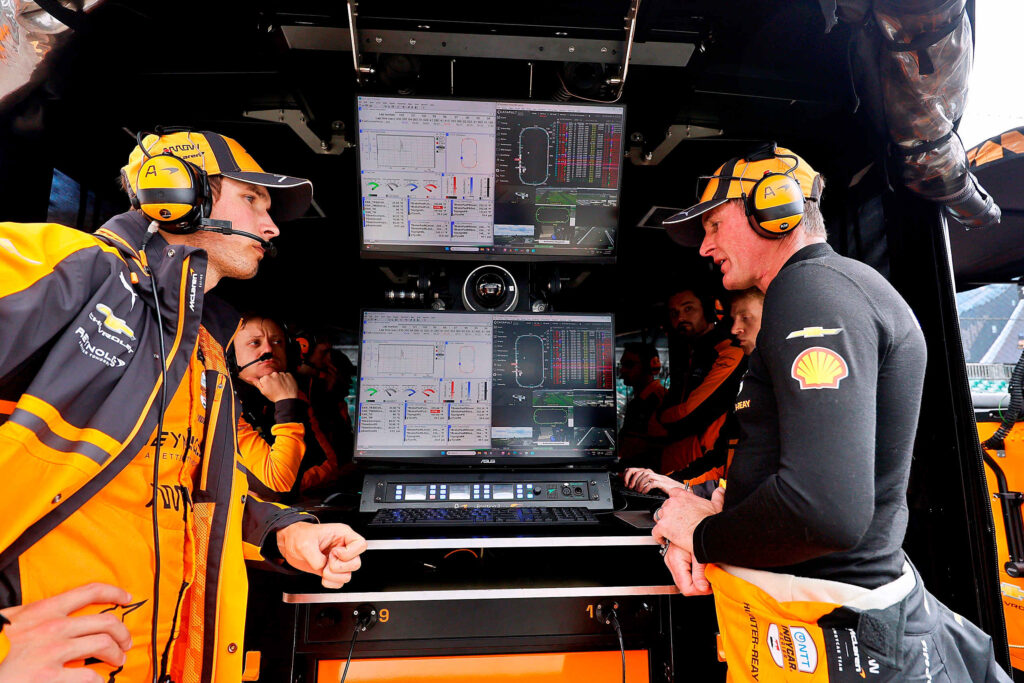
The first day was dominated by veterans. The best time on April 28 was set by Conor Daly in the Dreyer & Reinbold Racing Chevrolet — 00:39.9300. The top five included drivers with vast Indianapolis 500 experience: Hélio Castroneves, Takuma Sato, Scott Dixon and Alexander Rossi. INDYCAR highlighted the main trend of the day: experience still matters enormously at Indianapolis, especially when it comes to running in large packs and making proper use of the aerodynamic tow.
According to the official combined results from the first day, Daly was followed by Hélio Castroneves — 00:39.9645, Takuma Sato — 00:40.0355, Scott Dixon — 00:40.0776 and Alexander Rossi — 00:40.1128. In total, 32 of the 33 cars that ran on track completed 2,262 laps, and the day passed without major incidents.
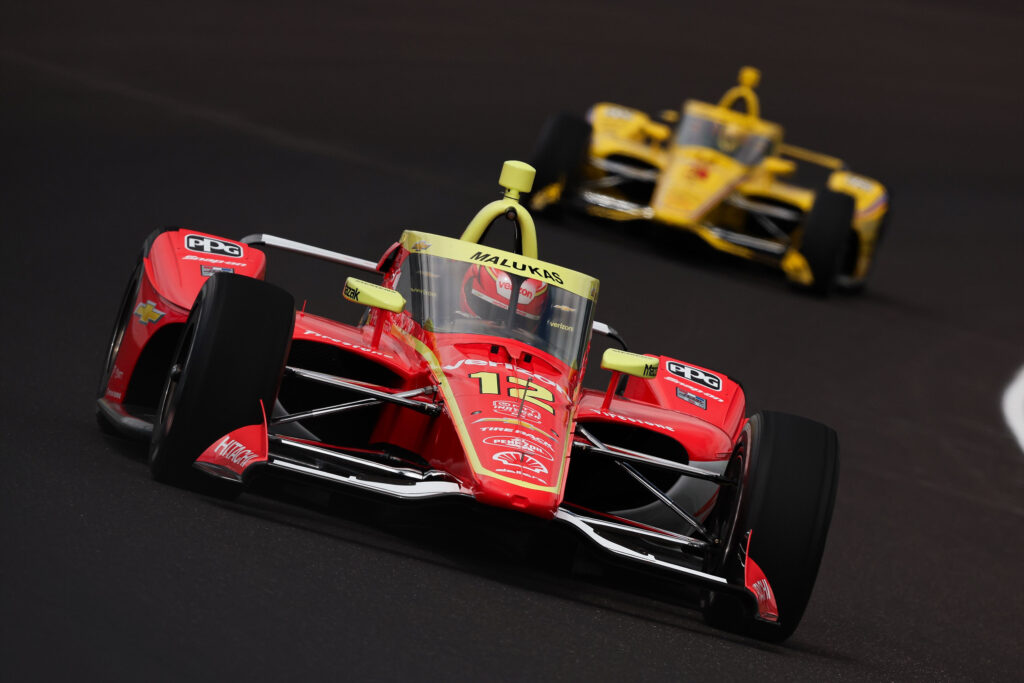
The no-tow pace was especially revealing. In that category, Jack Harvey led the first day with the best lap without aerodynamic assistance — 00:40.8500. This result added further weight to Dreyer & Reinbold Racing’s performance. The team, which traditionally focuses heavily on preparing cars for the Indianapolis 500, looked competitive not only in heavy traffic but also in terms of pure pace.
Day Two: Caio Collet Makes a Strong Statement
If the first day belonged to the veterans, the second produced a loud statement from a rookie. Caio Collet, driving the A.J. Foyt Enterprises Chevrolet, set the fastest time of the entire test — 00:39.7560. The lap came early on Wednesday after the start had been delayed by 75 minutes due to a damp track caused by overnight and morning rain.
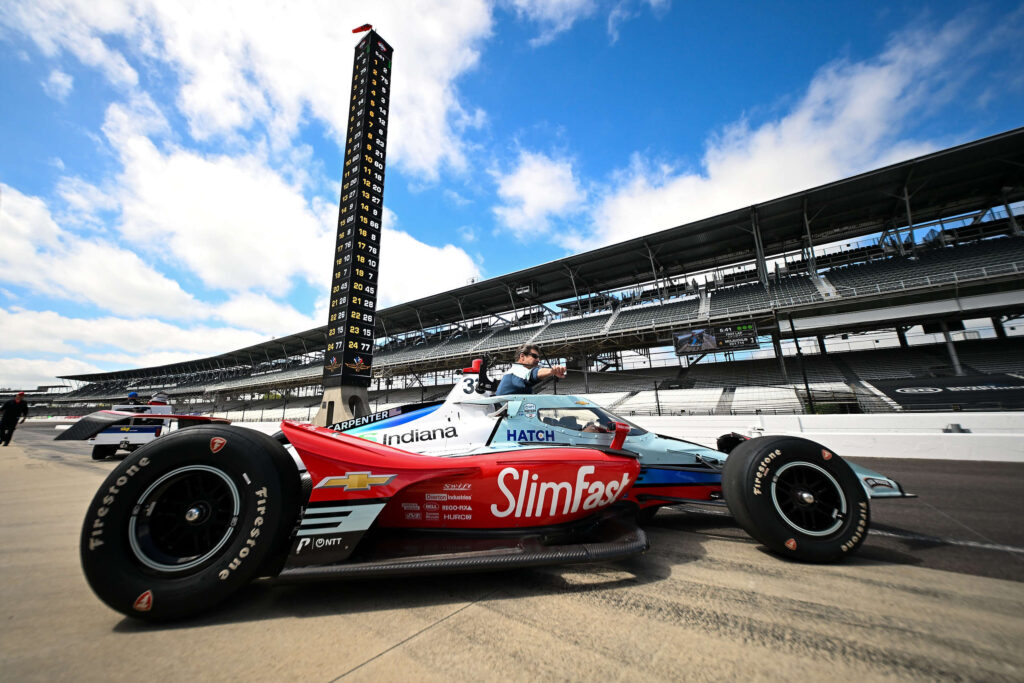
Formally, it was a lap set with aerodynamic assistance, but the fact that a rookie topped the charts at Indianapolis Motor Speedway was still highly notable. In the two-day combined results, Collet finished first, ahead of Josef Newgarden — 00:39.7838, Conor Daly — 00:39.9300, Alex Palou — 00:39.9517 and Hélio Castroneves — 00:39.9645. Across the two days of testing, the field completed a total of 4,697 laps.
Collet was not the only rookie to attract attention. Jacob Abel, Dennis Hauger and Mick Schumacher also showed well in the overall classification. For Schumacher, who is adapting to a completely different racing philosophy compared with European series, running on the Indianapolis oval carried particular importance. At this track, finding a fast lap is not enough — a driver must also learn to feel confident in the airflow of rival cars and in tightly packed groups.
Why the Tow Does Not Tell the Whole Story
The main feature of tests like these is the need to separate outright lap times from true baseline performance. A fast lap with a tow often says less about the car’s ultimate potential and more about how well a driver positioned himself in the aerodynamic wake of the group ahead. That is why teams and analysts pay such close attention to non-tow times — laps set without significant aerodynamic assistance.
In this category, the fastest driver across the test was Jack Harvey — 00:40.7034. He was followed by Hélio Castroneves — 00:40.7462, Kyle Kirkwood — 00:40.8584, Alexander Rossi — 00:40.9814 and Felix Rosenqvist — 00:41.0190. Caio Collet was tenth in the non-tow classification with a time of 00:41.0510. For a rookie, that was still a respectable result, but it also showed that his overall lead in the combined standings was largely connected to a well-timed lap in traffic.
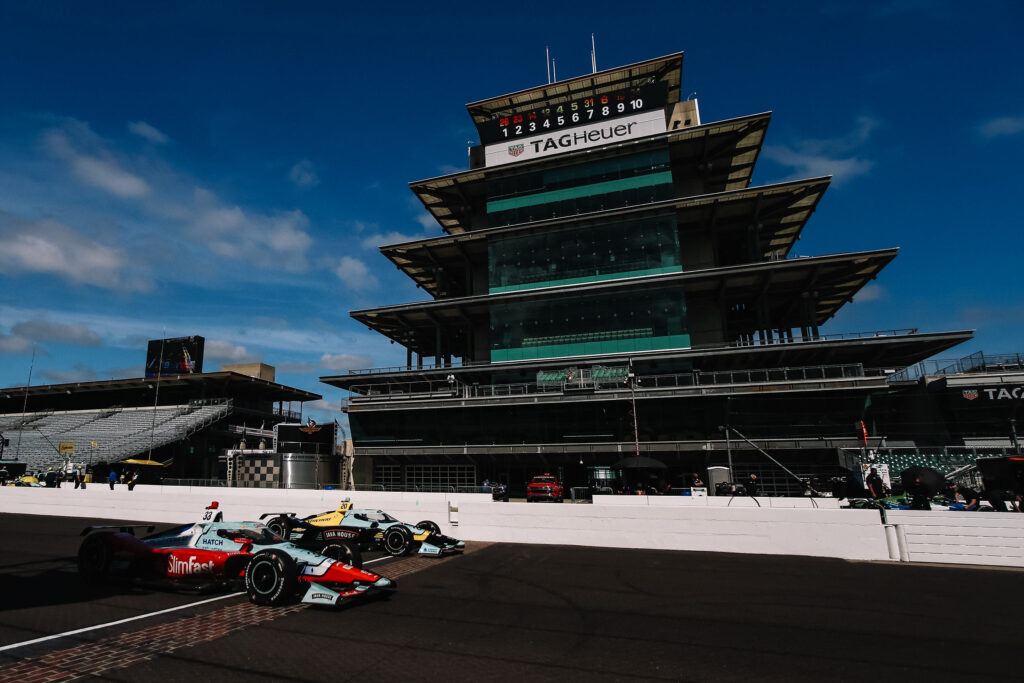
That is why testing at Indianapolis cannot be read like a qualifying sheet. In May, several factors matter at once: clean pace without traffic, performance in a pack, stability over long runs, the ability to overtake, and the car’s behavior on worn tires. A team may not top the overall timing sheet and still have a very strong race package.
Dreyer & Reinbold Racing — One of the Main Signals from the Test
One of the most notable storylines was the form of Dreyer & Reinbold Racing. Conor Daly ended the first day on top with a time of 00:39.9300, while Jack Harvey posted the best non-tow result of the entire test — 00:40.7034. For a team that specializes in preparing cars for the Indianapolis 500, this was a strong signal: the pace was not accidental and appeared in different conditions.
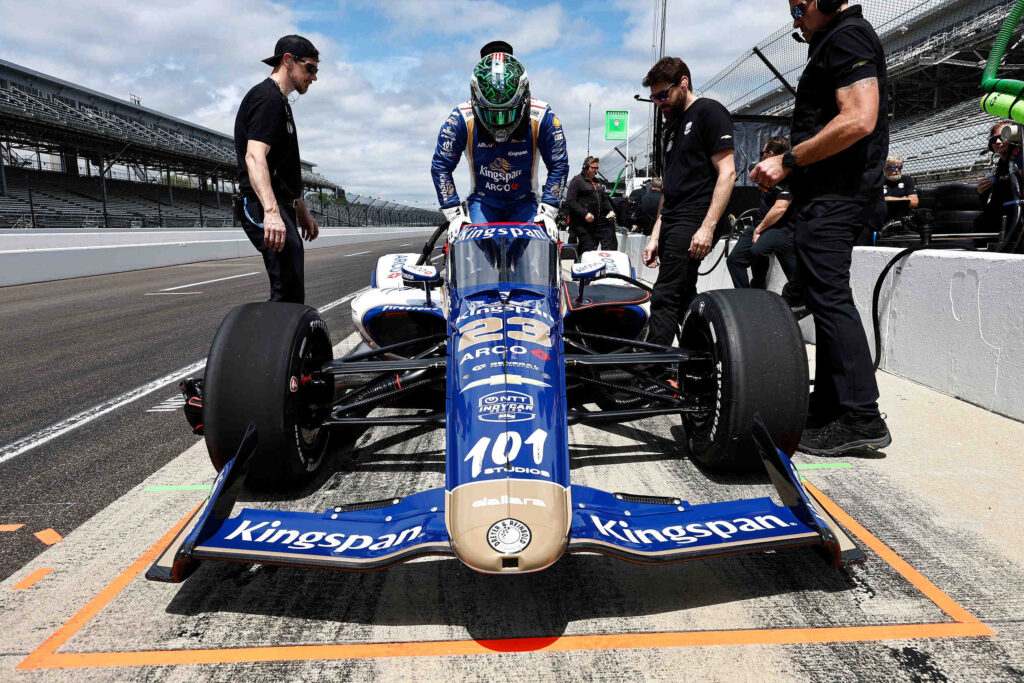
INDYCAR’s post-test analysis also identified Dreyer & Reinbold Racing as one of the major stories of the two days. Daly was quick not only on Tuesday but also on Wednesday, while Harvey confirmed the team’s potential with his no-tow pace.
The Favorites: Newgarden, Palou, O’Ward and Dark Horse Daly
After the test, the group of potential May contenders looked broader. Josef Newgarden finished second in the combined standings with a time of 00:39.7838, Alex Palou was fourth — 00:39.9517, Pato O’Ward sixth — 00:39.9807, and David Malukas ninth — 00:40.1111. All of them belong to the group of drivers from whom a fight for victory in the Indianapolis 500 can logically be expected.
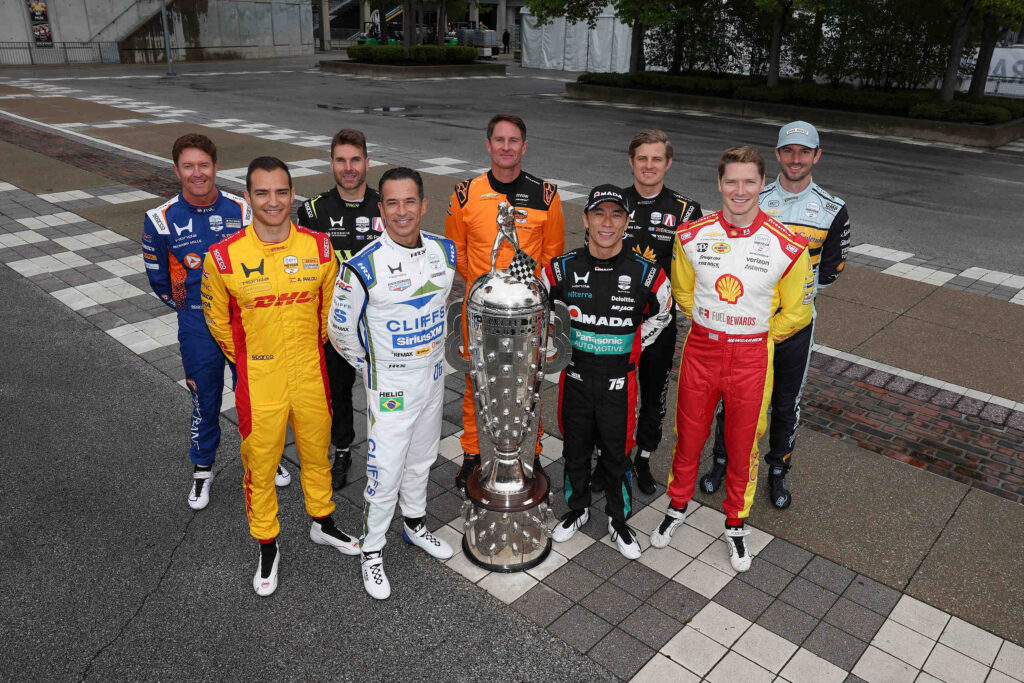
Conor Daly also deserves special attention. In INDYCAR’s post-test coverage, he was considered one of the notable figures in the May storyline, and his best lap of 00:39.9300 confirmed that Dreyer & Reinbold Racing had arrived at the test with a competitive package.
The Rookies — The Most Intriguing Layer of the Test
The confident performance of the rookies became one of the central themes of the two days. Caio Collet topped the overall classification with a time of 00:39.7560, Jacob Abel finished 13th — 00:40.2038, Dennis Hauger 17th — 00:40.3123, and Mick Schumacher 20th — 00:40.3946. For Indianapolis 500 debutants, this is an important psychological milestone: completing orientation, adapting to high speed, experiencing heavy traffic, and avoiding serious mistakes.
INDYCAR emphasized that the series’ rookies looked confident in the final Wednesday session, while Collet set the best time of the entire test. At the same time, it is important to understand that winning the Indianapolis 500 as a rookie is extremely difficult. Still, the 2026 rookie class already looks like one of the strongest in recent memory.
What the Test Says Ahead of the Indianapolis 500
The main conclusion after two days of running at Indianapolis is that the May program promises to be extremely competitive. Chevrolet and Honda both have fast cars, the veterans still know how to extract the maximum from traffic, and the younger drivers do not look like mere outsiders. The gaps between groups are minimal, and much will depend on who adapts best to the conditions during official practice, qualifying and the race itself.
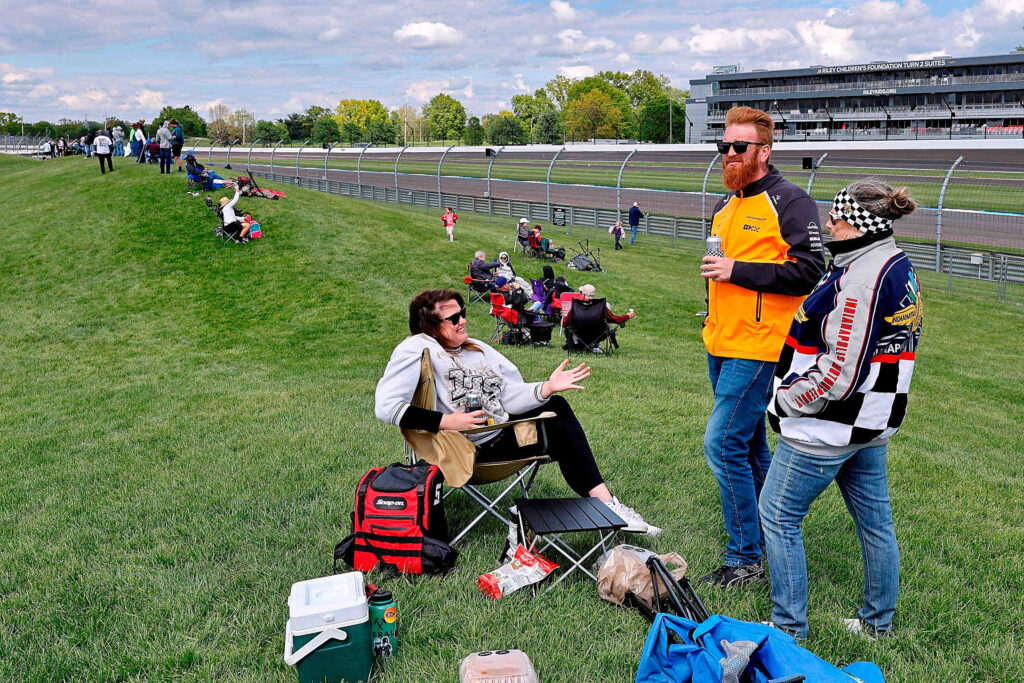
The test also served as a reminder that the Indianapolis 500 cannot be won with one fast lap alone. Pit stops, strategy, traffic management, composure on restarts and the ability to keep the car in the right balance window until the final 50 laps are all crucial. But if the Open Test is viewed as the first major indicator, the key names after April are Caio Collet, Josef Newgarden, Conor Daly, Alex Palou, Hélio Castroneves, Jack Harvey and Dreyer & Reinbold Racing — a team that definitely should not be underestimated.
Official practice for the 110th Indianapolis 500 is scheduled to begin on May 12, while the race itself is planned for May 24, 2026.

